Mesh pot strategy
Use a small plastic mesh orchid pot nested inside a decorative cachepot so roots get high airflow while you can still maintain consistent moisture around the medium.

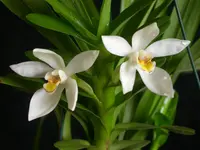
Maxillaria lutescens is a compact epiphytic orchid that typically grows on trees, forming clumps of small pseudobulbs and narrow leaves. It produces modest, often yellowish flowers that are more appreciated for their subtle charm than for showy displays.
This species is native to tropical regions of Central and South America, where it thrives in warm, humid forests with good air movement. Its preference for consistent moisture, high humidity, and stable temperatures means it can be moderately challenging for beginners.
Those familiar with basic orchid culture will find it easier to care for Maxillaria lutescens, especially if they can provide bright filtered light and an airy, fast-draining substrate.

Care Difficulty
Hard Care

Light Preference
Bright Indirect Light

Water Requirements
Keep Soil Moist

Temperature Preference
Tropical / Frost Sensitive

Hardiness Zone
11–12

Soil Texture
Sandy, Loamy, Organic-rich

Soil pH
Acidic (5.5–6.5)

Soil Drainage
Moist but well-drained

Fertilization
Moderate (every 2–4 weeks)
Scan your plant to receive care tips personalized for your specific plant
Available on iOS and Android
This orchid prefers bright, filtered light that mimics forest canopy conditions.
This species prefers evenly moist conditions with brief drying at the surface between waterings.
This orchid grows best in intermediate to warm temperatures with mild seasonal variation.
This orchid prefers consistently moist air and reacts quickly to dry indoor conditions.
This orchid needs a very airy, fast-draining medium rather than conventional potting soil.
This species grows well in containers when the pot supports its fine, spreading root system.
This orchid benefits from light, consistent feeding during its active growth but is sensitive to excess salts.
Pruning needs are minimal and focus mainly on hygiene rather than shaping.
This orchid prefers slightly tight conditions but declines if left in exhausted or decomposed media.
Division is the standard home method for increasing plants of Maxillaria lutescens.
This orchid is not frost hardy and needs sheltered conditions during cold months.

Plant Health Check
Not sure what's wrong with your plant? Check your plant's health inside the app.
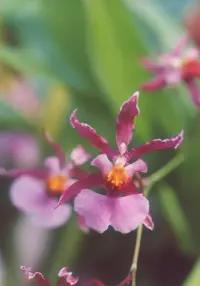
This species produces small, pale yellow flowers that hang slightly pendulous on short stalks, giving an elegant, nodding appearance rather than the upright form seen in many related orchids.
The flowers are lightly scented with a sweet, sometimes honey-like fragrance that is noticeable at close range but not overpowering, which helps attract small pollinators without expending much energy on heavy scent production.
In nature it usually grows as an epiphyte on tree branches, anchoring to bark with its roots and storing water and nutrients in small, clustered pseudobulbs adapted to periodic drying.
This orchid performs best in controlled indoor or greenhouse conditions where warmth, humidity, and filtered light stay stable. In suitable subtropical climates, it can grow outdoors in protected, shaded spots, but temperature swings and drafts reduce vigor.
Keep your plants happy and healthy with plant identification, disease detection, and easy care guidance.