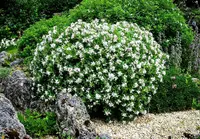
Mirabilis elegans Care

About Mirabilis elegans

Mirabilis elegans is a small, herbaceous flowering plant known for its delicate, tubular blooms that often open toward evening. It typically forms a compact, branching clump with slender stems and simple leaves. Native to parts of South America, it is adapted to relatively dry, open habitats, which influences its needs in cultivation.

This species is generally considered easy to grow when given well-drained soil and a bright, warm position. Its tolerance of modest care and less-than-perfect conditions makes it suitable for beginners who want to learn how to care for Mirabilis elegans without complex routines.

Main Plant Requirements

Care Difficulty

Moderate Care

Light Preference

Full Sun

Water Requirements

Moderate Water

Temperature Preference

Warm Climate

Hardiness Zone

8–11

Soil Texture

Sandy, Loamy, Organic-rich

Soil pH

Slightly acidic (6.5–7.0), Neutral (7.0)

Soil Drainage

Well-drained

Fertilization

Minimal (feed rarely)

Get Personalized Care Plan

Scan your plant to receive care tips personalized for your specific plant

Available on iOS and Android

How to Care for the Mirabilis elegans

This sun-loving perennial blooms best with strong light and some protection from harsh extremes.

  • Provide 6–8 hours of direct sun, ideally with morning sun and light afternoon shade, as Mirabilis elegans can scorch in very hot western exposure.
  • In hotter regions, give full sun in spring and fall, but shift to partial shade (4–5 hours direct sun plus bright open shade) during peak summer heat.
  • Watch foliage color and flowering: sparse blooms and stretched stems signal too little light, while bleached, crispy leaves indicate excessive sun.

This species prefers evenly moist, well-drained soil that never stays soggy for long periods.

  • Water when the top 3–5 cm of soil feels dry, soaking the root zone deeply, then allow excess to drain away to protect the tuberous roots from rot.
  • During active growth and flowering, increase watering frequency in hot, dry weather; reduce slightly in cool, overcast periods once growth slows.
  • Monitor leaves and stems: drooping, thin leaves and dry soil indicate underwatering, while yellowing lower leaves, soft stems, or a sour soil smell suggest overwatering.

This plant grows best in warm, frost-free conditions that mirror a mild to warm summer climate.

  • Aim for 65–80°F (18–27°C) during active growth for reliable flowering and healthy foliage development.
  • Protect from cold: growth slows below 55°F (13°C), and light frost near 32°F (0°C) can damage or kill top growth, especially young plants.
  • In hot spells above 90°F (32°C), provide mulch and some afternoon shade, as prolonged extreme heat can stress plants and shorten flower longevity.

This species grows well in typical indoor humidity but benefits from slightly moist air in heated homes.

  • Aim for 40–60% relative humidity for steady growth and flowering.
  • Dry indoor air is usually tolerated, but curled, crispy leaf edges or stalled buds indicate humidity stress rather than drought.
  • Raise humidity locally with nearby water trays or grouped plants instead of misting, which adds little lasting moisture.

Mirabilis elegans prefers loose, well-drained mineral soil that does not stay wet for long.

  • Use a mix of roughly 50–60% sandy or loamy garden soil, 20–30% coarse sand, and 10–20% compost to support tuber development.
  • Ensure fast drainage; water should pass through the mix in seconds, not minutes, to prevent root and tuber rot.
  • Target a slightly acidic to neutral pH around 6.0–7.0, avoiding very acidic or chalky conditions that can limit nutrient uptake.
  • Improve aeration in heavy soil by blending in coarse sand or fine gravel rather than only peat-based potting mix.

This species is suitable for container growing outdoors where winters are cool or soil is heavy.

  • Choose a deep pot that allows the tuber and roots to extend downward, as shallow containers restrict storage organ development.
  • Use a relatively heavy or wide-based container to prevent tipping when the top growth becomes dense and leafy.
  • Ensure drainage holes are fully open and raise the pot slightly on feet or blocks so excess water escapes quickly after rain or watering.

This species benefits from light feeding during the active growing season but does not need heavy fertilization.

  • Use a balanced, water-soluble fertilizer (around 10-10-10 or 20-20-20) diluted to 1/2 strength.
  • Apply every 4–6 weeks in spring and summer while Mirabilis elegans is in active growth.
  • Skip fertilizer in late fall and winter when growth slows or plants are dormant.
  • Organic compost or a mild slow-release fertilizer can be mixed into the soil at planting for steady nutrition.

Pruning helps maintain compact growth and consistent flowering on this plant.

  • Carry out main pruning in late winter or early spring before vigorous new growth starts.
  • Remove dead, damaged, or diseased stems first, then thin crowded shoots to improve air flow.
  • Lightly shorten long or straggly stems to shape the plant and encourage branching and more blooms on Mirabilis elegans.
  • Use clean, sharp hand pruners and make cuts just above a leaf node to reduce dieback.

This species is most often grown in the ground, so focus on careful transplanting rather than frequent repotting.

  • Transplant in spring after frost risk has passed, when young plants show strong but manageable root systems.
  • Look for roots circling the pot, slow growth, or quick drying soil as signs a container plant needs a larger pot.
  • Move up only 1 pot size, handle the brittle tuberous roots gently, and avoid breaking thick roots.
  • Water thoroughly after transplanting, then keep soil evenly moist and shaded for 3–5 days to limit transplant shock.

Mirabilis elegans is commonly propagated from seeds, with cuttings used less often.

  • Sow fresh seeds in late winter to spring, indoors or in a sheltered cold frame.
  • Use a well-drained seed mix, keep at 65–75°F, and maintain light, even moisture for germination.
  • Lightly cover seeds, as some need darkness, and provide bright, indirect light once seedlings emerge.
  • For softwood stem cuttings, use a rooting hormone, free-draining medium, and high humidity until roots form.

This plant prefers mild climates and benefits from simple root protection in colder regions.

  • In areas with frost, treat it as a tender perennial or annual unless soil is very well drained.
  • Apply a 5–8 cm layer of dry mulch over the root zone in late fall to insulate tuberous roots.
  • Container plants in cold climates should be moved indoors to a bright, cool, frost-free space.
  • Reduce watering significantly in winter so stored tubers do not rot in cold, wet soil.

Care Tips

Support tall stems

Install low, unobtrusive stakes or a short ring support early in the season so developing stems can be loosely tied and kept upright during wind or heavy rain.


Pinch for branching

When young plants reach 10–15 cm, pinch out the soft tips of the main shoots once to encourage bushier growth and more flowering stems later in the season.

Staggered sowing

Make 2–3 sowings at 2-week intervals in late spring so flowering is spread over a longer period rather than peaking all at once.

Deadhead strategically

Regularly remove spent flowers but leave a few healthy seed pods near the end of the season if self-sown volunteers are desired the following year when growing Mirabilis elegans.

Lift and store tubers

In colder climates, dig up tuberous roots after frost blackens the foliage, dry them for several days in a shaded, airy place, then store in barely moist peat or vermiculite at 40–45°F for replanting next spring.

Common Pests and Diseases

Leaf miners

This pest lives inside the leaf tissue and creates winding, pale tunnels that distort the foliage and reduce photosynthesis.

Solution

Remove and discard affected leaves as soon as tunnels appear, then monitor new growth closely; for repeated problems, use a neem oil or spinosad spray directed at young foliage in the late afternoon to target larvae while minimizing impact on beneficial insects.

Spider mites

These insects thrive in hot, dry conditions and cause fine stippling, dulling of leaf color, and very fine webbing on the undersides of leaves.

Solution

Rinse foliage thoroughly with a firm stream of water, focusing on leaf undersides, then maintain higher ambient humidity and, if needed, apply insecticidal soap or neem oil every 5–7 days until no new damage appears.

Rust

This disease produces small orange, brown, or rust-colored pustules on the undersides of leaves, often with yellowing patches above.

Solution

Remove and dispose of infected leaves, avoid overhead watering, improve spacing and airflow, and in persistent cases use a sulfur or copper-based fungicide according to label directions to protect new growth while growing Mirabilis elegans outdoors.

Powdery mildew

This disease shows as a white or gray powdery coating on leaves and stems, leading to distorted growth and reduced vigor in crowded or shaded conditions.

Solution

Increase sun exposure and airflow, water at soil level, remove heavily affected foliage, and treat remaining leaves with a sulfur, potassium bicarbonate, or horticultural oil spray applied during cooler parts of the day.

Aphids

These insects cluster on young shoots and flower buds, sucking sap and excreting sticky honeydew that can attract sooty mold on the foliage.

Solution

Dislodge colonies with a strong stream of water, pinch off heavily infested tips, encourage natural predators such as lady beetles, and, if needed, apply insecticidal soap or neem oil every few days until populations collapse.

Interesting Facts

Andean native habitat

This species is native to dry, open regions of the central Andes in Chile and Argentina, where it often grows in rocky or well-drained soils at moderate elevations.

Twilight flowering habit

Like other four-o’clocks, its funnel-shaped flowers typically open in late afternoon and evening, an adaptation that aligns pollen availability with crepuscular and nocturnal pollinators such as moths.

Tubers for persistence

The plant forms underground tuberous roots that store reserves, allowing it to resprout after periods of seasonal drought or top growth damage, which is important for growing Mirabilis elegans in climates with dry summers.

FAQs about Mirabilis elegans

This species is attractive to evening and night-active pollinators. The tubular, scented flowers typically draw moths and sometimes nocturnal bees. Planting several together increases visibility and nectar availability, supporting local pollinator activity in summer.

Grow Healthy Plants with Botan Care

Keep your plants happy and healthy with plant identification, disease detection, and easy care guidance.

Botan plant care app — identify plants on mobile

Explore More Plants