Lemon-scented Geranium Care (Pelargonium crispum)

Also known as: Lemon Geranium, Lemon Storksbill
Lemon-scented Geranium

About Lemon-scented Geranium

Lemon-scented geranium, Pelargonium crispum, is a compact, bushy herbaceous plant grown mainly for its strongly lemon-scented, textured leaves. It belongs to the scented geranium group rather than true geraniums.

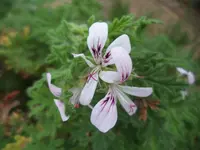
Plants typically grow as small, woody-based shrubs with many branching stems and small, crinkled, bright green leaves. In suitable conditions they produce delicate clusters of pale pink to lilac flowers.

Pelargonium crispum originates from South Africa’s Western Cape, where it grows in sunny, well-drained habitats. This background makes it generally easy to grow in containers or gardens, provided it has good light, moderate watering, and free-draining soil.

Overall, it is a forgiving plant, and learning how to care for Lemon-scented Geranium is straightforward for most home gardeners.

Main Plant Requirements

Care Difficulty

Easy Care

Light Preference

Full Sun

Water Requirements

Moderate Water

Temperature Preference

Tropical / Frost Sensitive

Hardiness Zone

9–11

Soil Texture

Sandy, Loamy, Organic-rich

Soil pH

Slightly acidic (6.5–7.0), Neutral (7.0)

Soil Drainage

Well-drained

Fertilization

Light (every 4–6 weeks)

Get Personalized Care Plan

Scan your plant to receive care tips personalized for your specific plant

Available on iOS and Android

How to Care for the Lemon-scented Geranium

Pelargonium crispum grows best in bright, direct sun with some protection from harsh afternoon rays.

  • Provide 4–6 hours of direct morning sun, with light afternoon shade, especially in hot summer climates to reduce leaf scorch.
  • Tolerates light or dappled shade for part of the day, but growth becomes looser and flowering decreases if it receives less than 4 hours of direct light.
  • In winter, especially in cooler regions, place Lemon-scented Geranium where it receives maximum sun, such as a south- or west-facing exposure.

Pelargonium crispum prefers thorough watering followed by a partial dry-out period.

  • Allow the top 2–3 cm of soil to dry before watering again, using a finger test rather than a fixed schedule.
  • Use sharply drained soil so excess water runs out quickly; persistent wetness causes yellowing leaves, soft stems, and root rot.
  • In cooler months or low light, reduce watering frequency, watching for limp, curling leaves as a sign the plant has stayed dry for too long.

This species prefers mild, stable temperatures and does not tolerate hard frost.

  • Aim for 60–75°F (16–24°C) for active growth, with slightly cooler nights improving leaf fragrance and overall vigor.
  • Protect from temperatures below 32°F (0°C); foliage is damaged by frost, and the plant may die if roots freeze in the ground or in pots.
  • In hot spells above 90°F (32°C), provide afternoon shade and good air movement to limit heat stress and leaf scorch.

This species prefers relatively dry air and usually thrives in typical indoor humidity.

  • Aim for 30–50% humidity; very humid rooms above 60% can increase leaf and stem rot risk.
  • Lemon-scented Geranium tolerates dry, heated rooms if soil moisture is stable and watering is not excessive.
  • Watch for humidity stress as limp, fungus-prone leaves in persistently damp air; improve air flow rather than misting.

Pelargonium crispum prefers a light, sharply drained, slightly fertile mix that dries quickly between waterings.

  • Use a mix of 50–60% peat or coco coir potting substrate with 30–40% perlite or coarse grit and 10–20% compost.
  • The soil should feel airy and crumbly, never compacted, so roots receive steady oxygen supply.
  • Aim for a slightly acidic to neutral pH of about 6.0–7.0, avoiding very acidic or strongly alkaline mixes.
  • Avoid heavy clay, water-retentive mixes, or trays that stay wet, which promote root rot and stem base collapse.

This species is very suitable for container growing on patios, balconies, and bright windowsills.

  • Choose a relatively wide, not overly deep pot to match its bushy, shallow-rooted habit and limit overly wet lower layers.
  • Select terracotta or other porous materials to let the mix dry faster in cool or low-light conditions.
  • Place pots where wind or handling will not tip them, as top growth can become unevenly weighted on one side.

Pelargonium crispum benefits from moderate feeding during the active growing season for compact, leafy growth.

  • Use a balanced liquid fertilizer (around 10-10-10 or 20-20-20) diluted to 1/2 strength for Lemon-scented Geranium in pots.
  • Apply every 2–4 weeks from spring through late summer when growth is strongest.
  • Pause or reduce feeding to 1× in 6–8 weeks during fall and winter when growth slows.
  • Avoid heavy compost or strong slow-release products that keep soil too rich or wet.

Pelargonium crispum responds well to thoughtful pruning that maintains a bushy, scented canopy.

  • Best time is late winter or early spring, before vigorous new growth begins.
  • Use clean, sharp scissors or hand pruners to remove dead, damaged, or leggy stems back to healthy nodes.
  • Thin crowded interior shoots to improve air movement and light penetration.
  • Lightly tip back young stems after flowering to encourage branching and a compact shape.

Pelargonium crispum in containers appreciates occasional repotting to refresh soil and prevent root binding.

  • Check for roots circling the pot, pushing from drainage holes, or slowed growth as signals to repot.
  • Plan repotting in early spring, every 2–3 years, stepping up only 1 pot size with free-draining mix.
  • Water lightly before sliding the plant out, then gently loosen circling roots without tearing large sections.
  • Replant at the same soil level, water to settle, then keep in bright, indirect light for 3–7 days to limit stress.

Pelargonium crispum is most commonly propagated from stem cuttings taken during the warm growing months.

  • Take 7–10 cm non-flowering tip cuttings in late spring or summer, cutting just below a node.
  • Remove lower leaves, leaving 2–3 at the tip, and let cut ends dry for 30–60 minutes to callus slightly.
  • Insert cuttings into a free-draining mix, keeping it barely moist and in bright, indirect light at 68–75°F.
  • Bottom heat and good air flow promote fast rooting; transplant once roots fill the starter cell or small pot.

Pelargonium crispum is frost-sensitive and needs protection in climates with freezing winters.

  • Move container plants indoors before temperatures drop near 40°F, placing them in bright light.
  • In mild climates, grow in pots or very sheltered spots, since foliage is damaged by light frost.
  • Reduce watering in winter so soil stays lightly moist, never saturated in cool conditions.
  • In ground, lift and pot plants in fall or treat as annuals where winters are consistently below freezing.

Care Tips

Pinch For Bushiness

Regularly pinch out soft shoot tips with clean fingers or scissors every 3–4 weeks during active growth to keep plants compact and encourage dense foliage for better scent release.

Seasonal Hardening Off

Before moving plants outdoors in spring, gradually increase their exposure to direct sun and wind over 7–10 days to prevent leaf scorch and shock.

Scent-Preserving Harvest

If cutting foliage for culinary or aromatic use, harvest in the morning after dew has dried and use sharp, disinfected scissors to minimize tissue damage and maintain strong lemon fragrance.

Targeted Pest Monitoring

Inspect the undersides of leaves and tight stem joints weekly for aphids, whiteflies, and spider mites, and treat early with a gentle insecticidal soap spray before infestations become established.

Winter Growth Control

In cooler, low-light months, reduce pinching and avoid frequent repotting so the plant slows naturally, a key part of Pelargonium crispum plant care that maintains a compact, long-lived specimen.

Common Pests and Diseases

Geranium budworm

This pest feeds on flower buds and young leaves, causing chewed petals, deformed blooms, and small dark droppings on foliage. Symptoms include tight buds that fail to open and tunnels inside buds when they are cut open.

Solution

Hand-pick caterpillars and remove damaged buds, especially at dusk when they are more active. For heavier infestations, use a biological control containing Bacillus thuringiensis (Bt) and reduce outdoor night lighting that attracts the adult moths.

Pelargonium rust

This disease causes small yellow spots on the upper leaf surface and powdery orange-brown pustules on the undersides. Over time, leaves yellow, dry, and fall off, especially in crowded, humid conditions.

Solution

Remove and discard all affected leaves and improve air circulation by thinning and spacing plants. Keep foliage dry, water at soil level, and if needed apply a labeled fungicide for rust, rotating products to prevent resistance.

Botrytis blight

This disease appears as soft brown spots on leaves, stems, or flowers, often covered with gray fuzzy mold in humid or cool, stagnant air. Symptoms include wilting flower stalks and mushy petals that stick to healthy tissue and spread the infection.

Solution

Promptly remove faded flowers and any soft, moldy tissue and dispose of it in the trash. Improve airflow, avoid overhead watering, keep the plant drier in cool weather, and use a suitable fungicide if conditions stay damp and symptoms continue.

Aphids

These insects cluster on tender shoot tips and flower stalks, sucking sap and causing curled, sticky leaves coated with honeydew and sometimes sooty black mold. New growth may look distorted or stunted.

Solution

Rinse colonies off with a firm stream of water and pinch back heavily infested tips. For ongoing problems, apply insecticidal soap or neem oil thoroughly to all plant surfaces and encourage beneficial insects outdoors by avoiding broad-spectrum insecticides.

Whiteflies

These insects rest on the undersides of leaves and fly up in a small white cloud when the plant is disturbed, feeding on sap and excreting sticky honeydew. Symptoms include yellowing leaves, reduced vigor, and possible sooty mold growth on the sticky surfaces.

Solution

Use yellow sticky traps to monitor and reduce adult numbers, and regularly shake the plant over the traps. Treat the undersides of leaves with insecticidal soap or horticultural oil, repeating applications as needed and ensuring good coverage as part of Pelargonium crispum care instructions.

Interesting Facts

Naturally lemon scented

The foliage releases a distinct lemon fragrance due to volatile oils concentrated in tiny surface glands on the leaves, especially when they are gently rubbed or bruised.

Crinkled miniature leaves

This species has small, crisped or crinkled leaves that give it a fine, textured appearance and a larger surface area relative to leaf size, which helps release more scent.

Cape fynbos origin

It is native to the winter-rainfall fynbos regions of South Africa’s Western Cape, where it has adapted to dry summers, nutrient-poor soils, and strong coastal light.

Botan icon

Did you know?

In 19th-century Europe, lemon-scented geraniums like Pelargonium crispum were grown in glasshouse collections and conservatories primarily for their aromatic leaves, which were prized for flavoring sugar, desserts, and potpourri long before they became common as modern houseplants.

FAQs about Lemon-scented Geranium

Lack of blooms usually relates to insufficient light, excess nitrogen fertilizer, or old, unpruned stems. Provide strong light, use a balanced or low-nitrogen feed, and lightly prune after flowering to stimulate new, flower-bearing growth.

Grow Healthy Plants with Botan Care

Keep your plants happy and healthy with plant identification, disease detection, and easy care guidance.

Botan plant care app — identify plants on mobile

Explore More Plants