Sturdy staking
Install a strong stake or tripod support early in the season and loosely tie main stems with soft ties so tall, top-heavy plants stay upright and flowers are displayed well during late-season winds and storms.

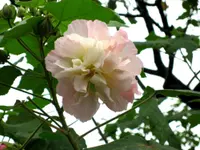
Confederate rose, Hibiscus mutabilis, is a large, deciduous shrub or small tree in the mallow family. It is grown mainly for its showy, color-changing flowers. The blooms often open pale and deepen to rich pink tones by the end of the day, giving the plant a striking, multi-colored appearance. The foliage is broad and somewhat maple-like, creating a dense, leafy canopy. This species is native to China and thrives in warm, temperate to subtropical climates, where it can reach impressive size with minimal problems. It is generally considered forgiving and suitable for gardeners who want to care for Confederate rose with moderate effort, provided it receives sun, regular moisture, and reasonably fertile, well-drained soil.

Care Difficulty
Moderate Care

Light Preference
Full Sun

Water Requirements
Regular Water

Temperature Preference
Warm Climate

Hardiness Zone
7–9

Soil Texture
Loamy, Clay, Organic-rich

Soil pH
Acidic (5.5–6.5), Slightly acidic (6.5–7.0)

Soil Drainage
Moist but well-drained

Fertilization
Light (every 4–6 weeks)
Scan your plant to receive care tips personalized for your specific plant
Available on iOS and Android
Hibiscus mutabilis grows best with strong, direct light balanced by some daily shade.
Hibiscus mutabilis prefers evenly moist, not soggy, soil throughout the growing season.
This species grows best in warm, frost-free conditions with only moderate heat stress tolerance.
This species grows best with moderately humid air but adapts to many garden conditions.
Hibiscus mutabilis prefers deep, moist, well-drained soil that supports fast, vigorous growth.
This shrub can be grown in large containers if the pot supports its size and moisture needs.
Hibiscus mutabilis benefits from consistent feeding during its active growing season.
Thoughtful pruning supports healthy structure and abundant blooms in Hibiscus mutabilis.
Hibiscus mutabilis is often grown in the ground, but container plants or young shrubs benefit from careful transplanting.
Hibiscus mutabilis is commonly propagated from cuttings and sometimes from seed.
Cold tolerance of Hibiscus mutabilis depends on climate, so winter care varies by region.

Plant Health Check
Not sure what's wrong with your plant? Check your plant's health inside the app.
Individual flowers typically open white in the morning, turn pink by midday, and deepen to rose-red by evening, a process linked to pH-sensitive plant pigments called anthocyanins that shift with temperature and age of the petal tissue.
Unlike many tropical hibiscus species that stay evergreen, this species is a deciduous shrub or small tree that sheds its leaves in cooler seasons while maintaining woody stems that can reach several meters in mild climates.
The plant has been cultivated in Chinese gardens for centuries and later became a traditional fall-flowering shrub in Southern US landscapes, where its large, showy blooms led to many heirloom selections still grown today.

Some old cultivated forms of this species have become locally naturalized in warm regions, so in certain areas what appears to be a wild thicket of flowering shrubs is actually the long-established escape of historical garden plantings rather than a truly native population.
Lack of blooms usually comes from insufficient sun, heavy spring pruning, or excess nitrogen fertilizer. Ensure full to nearly full sun, avoid cutting stems hard in spring, and use a balanced or low‑nitrogen fertilizer.
Keep your plants happy and healthy with plant identification, disease detection, and easy care guidance.