aluminium plant Care (Lamium galeobdolon)

Also known as: artillery plant, yellow archangel, Aluminium weed
aluminium plant

About aluminium plant

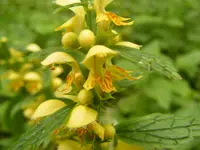
Lamium galeobdolon, often grown as an ornamental groundcover, is a low, spreading perennial with yellow hooded flowers and softly variegated, nettle-like leaves. It forms dense mats that can quickly cover shady spots.

This plant is native to woodlands in parts of Europe and western Asia, where it thrives in cool, moist, humus-rich soil. It is considered easy to grow but can become vigorous in mild, damp climates.

It suits partial to full shade and prefers evenly moist, well-drained soil, which is important to understand when learning how to care for aluminium plant.

Main Plant Requirements

Care Difficulty

Easy Care

Light Preference

Partial Shade

Water Requirements

Moderate Water

Temperature Preference

Cold Hardy

Hardiness Zone

3–8

Soil Texture

Loamy, Silty, Organic-rich

Soil pH

Acidic (5.5–6.5), Slightly acidic (6.5–7.0)

Soil Drainage

Moist but well-drained

Fertilization

Minimal (feed rarely)

Get Personalized Care Plan

Scan your plant to receive care tips personalized for your specific plant

Available on iOS and Android

How to Care for the aluminium plant

This woodland perennial prefers cool, dappled light similar to a lightly shaded forest floor.

  • Provide 2–4 hours of gentle morning sun with bright to medium shade the rest of the day, especially in warmer regions.
  • Grow as aluminium plant under deciduous trees or in north- or east-facing sites where it receives filtered light through branches.
  • Avoid strong midday and afternoon sun, which can scorch leaves and fade variegation; in deep shade, expect looser growth and fewer flowers.

This groundcover prefers consistently moist but not saturated soil, particularly during active growth.

  • Water when the top 2–3 cm of soil feel dry, aiming for evenly moist soil that never stays soggy.
  • In spring and early summer, monitor more often during warm, dry spells; reduce watering frequency in cool, rainy, or dormant periods.
  • Watch for yellow, soft stems or a sour smell as signs of overwatering, and crisp, drooping foliage or slow recovery after dusk as signs of underwatering.

This hardy perennial tolerates a wide range of outdoor temperatures but grows best in mild conditions.

  • Optimal growth occurs around 55–75°F (13–24°C), with strongest spreading in cool spring and fall weather.
  • Lamium galeobdolon is generally winter-hardy, surviving down to about 0–5°F (-18 to -15°C) when planted in the ground with mulch.
  • It tolerates short heat spells up to about 85–90°F (29–32°C) if soil stays moist and the site is shaded; extended extreme heat can cause leaf scorch and dormancy.

Lamium galeobdolon handles a wide humidity range and usually does not need special humidity management outdoors.

Lamium galeobdolon prefers moist, humus-rich soil that drains freely but does not dry out quickly.

  • Use a loamy soil enriched with leaf mold or compost to mimic a woodland floor structure.
  • Ensure drainage is moderate to fast; add 20–30% grit or coarse sand where soil stays wet after rain.
  • Aim for slightly acidic to neutral pH around 6.0–7.0, avoiding highly alkaline or compacted sites.
  • Improve aeration by incorporating partially decomposed bark or fine wood chips into heavy clay before planting.

This species grows reliably in containers when moisture and spread are controlled.

  • Choose a wide, shallow container to accommodate its creeping root system and limit invasive spread into surrounding areas.
  • Use a heavier pot material such as ceramic when placed outdoors so the spreading foliage does not tip the container in wind.
  • Raise the container on pot feet so trailing stems do not sit in runoff water that collects under the base.

Lamium galeobdolon benefits from light, thoughtful feeding but grows acceptably in average garden soil without heavy inputs.

  • Apply a balanced, diluted liquid fertilizer (such as 10-10-10 at 1/2–1/4 strength) every 4–6 weeks in spring and early summer.
  • Use a thin layer of compost around the root zone once in spring to support steady growth and groundcover density.
  • For aluminium plant indoor care in containers, mix a slow-release granular fertilizer into fresh potting mix at the start of the growing season.
  • Stop feeding by late summer and avoid fertilizing in winter dormancy to prevent weak, soft growth.

Lamium galeobdolon responds well to light, timely pruning that keeps the groundcover dense and healthy.

  • Shear or trim lightly after flowering in late spring to neaten the mat and encourage fresh foliage.
  • Remove dead, damaged, or diseased stems at the base with clean hand pruners to reduce disease pressure.
  • Thin crowded or overly vigorous patches to maintain airflow and prevent smothering neighboring plants.
  • Cut back straggly stems by 1/3 in late summer if needed to control spread and maintain shape.

Lamium galeobdolon is most often grown in the ground and benefits from occasional division and transplanting rather than frequent repotting.

  • Transplant or divide in early spring or early fall when temperatures are mild and soil is evenly moist.
  • Lift clumps, gently tease apart rooted sections, and replant divisions at the same depth, spacing them 20–30 cm apart.
  • Transplant when patches become overcrowded, bare in the center, or spread into unwanted areas.
  • Water thoroughly after planting, then keep soil slightly moist for 1–2 weeks to reduce transplant shock and support root recovery.

Lamium galeobdolon spreads readily, and propagation is most practical through division and simple layering.

  • Divide established clumps in early spring or early fall, ensuring each piece has roots and several shoots.
  • Pin down naturally creeping stems so nodes contact moist soil; once rooted, cut and transplant the new plantlets.
  • Take short softwood stem cuttings in late spring, remove lower leaves, and root in moist, well-drained substrate in bright shade.
  • Seeds can germinate in cool, moist conditions, but division gives faster, more predictable results for home gardeners.

Lamium galeobdolon is generally cold hardy in temperate climates and needs minimal winter care in the ground.

  • In colder regions, apply a 3–5 cm layer of organic mulch around the root zone after soil cools to buffer freeze–thaw cycles.
  • Allow foliage to die back naturally; remove mushy or diseased leaves during mild spells to limit fungal issues.
  • Move container-grown plants into a sheltered, unheated but frost-sheltered area, keeping the potting mix just barely moist.

Care Tips

Contain Spreading Edges

Install a shallow root barrier or sink bottomless plastic pots into the ground to stop runners from invading lawns or beds while still allowing good groundcover.

Layering for Renewal

Pin a few healthy trailing stems to bare soil with U-shaped wire pins so they root in place, then cut the old woody section once the new plantlets are established to keep the patch dense and youthful.

Mulch Path Management

Lay a 5–8 cm strip of coarse bark or gravel along paths and borders where the plant meets hard edges to discourage stolons from rooting and make unwanted shoots easy to pull.

Targeted Frost Protection

In colder regions, throw a breathable fabric or loose leaf mulch over young or recently divided plants before forecast hard frosts to reduce heaving and dieback of shallow roots.

Divide To Control Vigor

Lift and divide congested mats every 2–3 years, replant only the freshest outer pieces, and compost the woody center to maintain vigor and simplify caring for aluminium plant in shaded areas.

Common Pests and Diseases

Slugs and snails

This pest feeds on tender foliage, often leaving irregular holes and ragged edges on the leaves, especially in damp, shaded spots. Symptoms include slime trails on soil or foliage and damage concentrated on young shoots.

Solution

Hand-pick slugs and snails in the evening, use iron phosphate slug bait around plant edges, and reduce hiding spots such as dense debris or boards. Keeping mulch thinner and slightly drier at the surface helps discourage them while still supporting good Lamium galeobdolon care.

Powdery mildew

This disease causes a white or gray powdery coating on leaf surfaces, which can lead to yellowing, distortion, and reduced vigor. Symptoms include leaves that look dusted with flour, often in crowded, shaded, or poorly ventilated plantings.

Solution

Improve air circulation by thinning overcrowded stems and avoid frequent overhead watering so foliage dries quickly. Remove heavily infected leaves and, if needed, apply a sulfur or potassium bicarbonate fungicide labeled for ornamental groundcovers according to the product directions.

Leaf spot

This disease produces small brown, tan, or purplish spots on leaves that may enlarge and merge, causing sections of foliage to yellow and die back. Symptoms include spotted, thinning foliage that looks patchy in affected areas of the groundcover mat.

Solution

Remove and dispose of affected leaves to reduce fungal spores, and water at soil level instead of overhead to keep foliage dry. If the problem recurs, apply a broad-spectrum ornamental fungicide in early spring as new growth emerges and improve spacing to promote airflow across the planting.

Aphids

These insects cluster on young stems and leaf undersides, sucking sap and causing curling, distortion, and sticky honeydew on foliage. Symptoms include misshapen new growth and, sometimes, sooty mold developing on the honeydew deposits.

Solution

Dislodge aphids by spraying the plant with a strong stream of water, focusing on the undersides of leaves. For persistent infestations, treat with insecticidal soap or a neem oil product, repeating at 5–7 day intervals until colonies decline, and encourage natural predators such as lady beetles by avoiding broad-spectrum insecticides nearby.

Spider mites

These insects are tiny sap-feeders that thrive in hot, dry conditions, causing fine stippling, dull or bronzed foliage, and sometimes delicate webbing on stems and leaf undersides. Symptoms include leaves losing their normal variegation contrast and appearing dusty or speckled when closely inspected.

Solution

Increase humidity around the planting and spray foliage thoroughly with water to knock mites off the leaves. For ongoing issues, apply insecticidal soap or horticultural oil to both upper and lower leaf surfaces, repeating as directed, and reduce heat and drought stress by keeping soil evenly moist but not waterlogged.

Interesting Facts

Silver leaf patterning

Its leaves show bright silver patches caused by reduced chlorophyll in parts of the leaf blade, creating a variegated pattern that reflects light in shady habitats.

Specialist bee visitor

In its native range, the wool-carder bee Anthidium manicatum frequently visits the yellow flowers, collecting both nectar and pollen and sometimes defending rich flower patches aggressively from other insects.

Clonal woodland spread

The plant spreads by creeping stolons just below or at the soil surface, forming dense clonal carpets in moist woodlands and sometimes outcompeting slower native ground flora.

Botan icon

Did you know?

Molecular and morphological studies show that this species has several subspecies and forms with differing hairiness and leaf markings, and some of these have escaped from ornamental plantings to become regionally invasive in parts of northern and western Europe and in some areas of North America.

FAQs about aluminium plant

This species spreads by creeping stems and rooting at the nodes, so it can become vigorous ground cover. In mild, moist climates it may escape intended areas. Use edging, containers, or regular trimming to keep it controlled.

Grow Healthy Plants with Botan Care

Keep your plants happy and healthy with plant identification, disease detection, and easy care guidance.

Botan plant care app — identify plants on mobile

Explore More Plants