


Thistle‑proof clothing
When working around plants, wear long sleeves and sturdy gloves so you can handle the burs and coarse foliage safely and remove spent stems without skin irritation or snagging clothes.

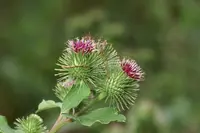
Northern burdock, Arctium nemorosum, is a vigorous biennial herb in the daisy family, known for its broad, heart-shaped leaves and hooked burrs that cling to clothing and animal fur. It forms a leafy rosette in the first year, then sends up tall flowering stems with purple thistle-like heads in the second year.
This species is native to parts of Europe and western Asia but can naturalize in temperate regions, often along woodland edges, roadsides, and disturbed ground. It is generally robust and easy to establish, though its strong taproot and self-seeding habit make it harder to remove once settled.
Those who care for Northern Burdock should note that it favors sun to light shade, moist but not soggy soil, and open ground where its roots can penetrate deeply.

Care Difficulty
Easy Care

Light Preference
Partial Shade

Water Requirements
Moderate Water

Temperature Preference
Cold Hardy

Hardiness Zone
3–8

Soil Texture
Loamy, Silty, Organic-rich

Soil pH
Acidic (5.5–6.5), Slightly acidic (6.5–7.0)

Soil Drainage
Moist but well-drained

Fertilization
Minimal (feed rarely)
Scan your plant to receive care tips personalized for your specific plant
Available on iOS and Android
Arctium nemorosum thrives in bright outdoor conditions with moderate direct sun exposure.
Arctium nemorosum prefers evenly moist, not soggy, soil with good drainage.
This species is a cool- to mild-climate perennial that tolerates a broad outdoor temperature range.
Humidity is rarely critical for this hardy, outdoor species.
This species prefers deep, loose, well-drained soil that allows its taproot to develop without obstruction.
This species is generally unsuitable for containers because its long taproot needs deep, unconfined soil.
This biennial wild species generally needs little feeding in reasonably fertile soil.
Arctium nemorosum benefits from light, targeted pruning rather than structural shaping.
This deep-rooted biennial is better transplanted young and is rarely maintained long term in containers.
Arctium nemorosum is most commonly raised from seed rather than vegetative methods.
This species is generally cold hardy in temperate climates and needs minimal winter care once established.

Plant Health Check
Not sure what's wrong with your plant? Check your plant's health inside the app.
This species is strongly associated with moist, nutrient-rich, partially shaded woodlands and forest edges, unlike some other burdocks that tolerate more open, disturbed ground.
It can be distinguished from the common burdock by its relatively narrower, more elongated leaves and less strongly heart-shaped bases, which botanists use as a key field character.
The plant is native to much of central and northern Europe, where it forms part of the herb layer in deciduous and mixed forests, but it is far less widespread and less weedy than Arctium lappa and Arctium minus.
This species spreads readily from seed and can become locally abundant if not managed. Deadhead flower burrs before they dry, and remove unwanted seedlings early to prevent dense stands and reduce competition with nearby vegetation.
Keep your plants happy and healthy with plant identification, disease detection, and easy care guidance.

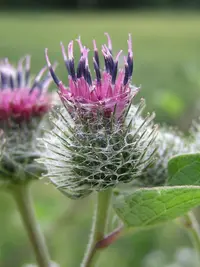
woolly burdock
Arctium tomentosum
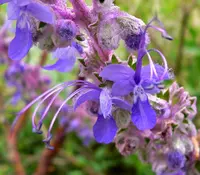
woolly bluecurls
Trichostema lanatum
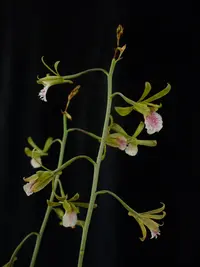
Chinese Crown Orchid
Eulophia graminea
 POPULAR
Sensitive Plant
Mimosa pudica
Bishop's Weed
Aegopodium podagraria 'Variegatum'
stinking chamomile
Anthemis cotula
pineapple weed
Matricaria discoidea
 POPULAR
Madagascar jasmine
Stephanotis floribunda