Chinese Crown Orchid Care (Eulophia graminea)

Chinese Crown Orchid

About Chinese Crown Orchid

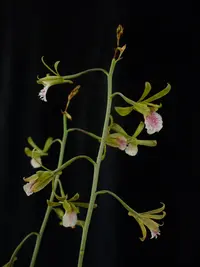
Chinese crown orchid (Eulophia graminea) is a terrestrial orchid that grows from underground pseudobulbs and forms clumps of slender, grass-like leaves. Its flower spikes carry many small, intricate blooms, often greenish with patterned lips, giving the plant a delicate but distinctive look.

This species is native to parts of Asia but has naturalized in several warm regions, sometimes even popping up in lawns or garden beds. It is relatively adaptable once settled but can be slow to adjust after disturbance, which affects how easy it is to grow.

In cultivation, it prefers bright, filtered light, free-draining, slightly gritty soil, and steady moisture without waterlogging, which is important to understand when learning how to care for Chinese Crown Orchid.

Main Plant Requirements

Care Difficulty

Moderate Care

Light Preference

Partial Sun

Water Requirements

Moderate Water

Temperature Preference

Tropical / Frost Sensitive

Hardiness Zone

10–11

Soil Texture

Sandy, Loamy, Organic-rich

Soil pH

Acidic (5.5–6.5), Slightly acidic (6.5–7.0)

Soil Drainage

Moist but well-drained

Fertilization

Light (every 4–6 weeks)

Get Personalized Care Plan

Scan your plant to receive care tips personalized for your specific plant

Available on iOS and Android

How to Care for the Chinese Crown Orchid

This terrestrial orchid prefers bright, indirect light with some direct sun at cooler times of day.

  • Provide 3–5 hours of gentle morning sun with bright, filtered light the rest of the day; avoid harsh midday sun in hot climates.
  • Plant Chinese Crown Orchid where it receives dappled shade under shrubs or open trees; it tolerates light shade but may flower less in deep shade.
  • Watch foliage color: pale, scorched, or crispy leaves indicate too much sun, while dark, floppy growth and weak flowering suggest insufficient light.

This species forms pseudobulbs that store water, so the soil should dry slightly between thorough waterings.

  • In active growth, water when the top 3–5 cm of soil feel dry, soaking the root zone and allowing excess to drain away fully.
  • Use a very free-draining, gritty or barky mix so water does not stand; consistently soggy soil causes root rot and shriveled, yellowing foliage.
  • During cooler months or partial dormancy, reduce watering frequency, watching for slightly wrinkled pseudobulbs as a mild underwatering signal.

This orchid prefers warm conditions but tolerates a moderate range if protected from frost and extremes.

  • Aim for 70–85°F (21–29°C) during active growth, with slightly cooler nights around 60–70°F (16–21°C) to support healthy development.
  • Protect from cold below 40°F (4°C); prolonged exposure near or below this range can damage foliage and pseudobulbs, and hard frost may kill the plant.
  • In hot spells above 90°F (32°C), provide shade and good air movement; combined heat and strong sun can cause leaf scorch and stress.

This orchid tolerates a wide humidity range but benefits from moderately moist air.

  • Aim for 40–60% humidity; typical indoor levels are usually adequate.
  • Plants handle short dry spells, but prolonged air below 30% can slow growth and wrinkle pseudobulbs.
  • Low humidity stress shows as shriveling bulbs and limp leaves; increase humidity with a nearby tray of water and pebbles or grouped plants.

Eulophia graminea prefers sharply drained, airy, mineral-based media rather than dense potting soil.

  • Use a mix such as 40% fine orchid bark, 30% coarse sand or grit, and 30% perlite or pumice for strong aeration.
  • Aim for slightly acidic to neutral pH around 6.0–7.0, avoiding strongly acidic or alkaline substrates that limit nutrient availability.
  • Ensure very fast drainage; water should exit the pot within seconds, leaving roots surrounded by moist but not saturated particles.
  • Avoid heavy peat-based mixes, unamended garden soil, or any medium that compacts and excludes air around the roots.

This species is well suited to container growing when given a stable, fast-draining setup.

  • Choose a deep, relatively narrow pot to accommodate elongated pseudobulbs while limiting excess surrounding substrate that can stay wet.
  • Select a heavier material such as ceramic or clay to stabilize tall flowering spikes against wind or accidental bumps.
  • Raise the pot slightly on feet or pot risers so drainage holes clear the saucer surface and excess water can escape rapidly.

This terrestrial orchid benefits from light, consistent feeding during active growth, but excess fertilizer harms roots.

  • Use a balanced orchid fertilizer or general balanced NPK at 1/4–1/2 strength every 2–3 weeks in spring–summer.
  • Water with plain water between feedings to flush salts from the medium and protect sensitive roots.
  • Stop feeding once foliage begins to yellow and die back, as the Chinese Crown Orchid enters dormancy.
  • Resume diluted feeding only when new shoots and roots appear, avoiding any fertilizer on dry or stressed plants.

Eulophia graminea needs only minimal pruning to keep clumps healthy and flowering well.

  • Cut spent flower spikes at the base after blooming to direct energy back to pseudobulbs and new shoots.
  • Remove only dead, diseased, or shriveled leaves and pseudobulbs, using clean, sharp scissors or pruning snips.
  • Carry out any pruning in late winter to early spring, before strong new growth starts.
  • Disinfect tools between plants to reduce the risk of spreading fungal or bacterial problems.

This terrestrial orchid prefers stable conditions and dislikes frequent disturbance of its roots and pseudobulbs.

  • Plan repotting or transplanting every 2–3 years, or when roots circle the pot, growth slows, or medium breaks down.
  • Choose late winter to early spring, just before new growth starts, to reduce shock and support quick re-establishment.
  • Gently loosen the root ball, trim only dead roots, and shift into a slightly larger container with airy, fast-draining mix.
  • Water thoroughly after moving, then keep in bright, indirect light with steady warmth until growth resumes strongly.

This species is most reliably multiplied by careful division of established clumps rather than by seed at home.

  • Divide mature plants in late winter or early spring when repotting, once new buds are visible but still short.
  • Separate clumps so each division has at least 2–3 healthy pseudobulbs and a good root system.
  • Replant divisions into a well-drained terrestrial orchid mix, firming gently to keep bulbs stable and upright.
  • Keep newly divided plants warm, slightly shaded, and evenly moist to encourage rapid root regrowth and shoot emergence.

This orchid prefers mild, frost-free winters and needs protection in regions with freezing temperatures.

  • In ground, apply a 5–8 cm mulch layer over the root zone in late fall to buffer temperature swings.
  • In areas below 32°F, grow in containers so plants can be moved indoors or to a cool greenhouse for winter.
  • Keep winter temperatures ideally above 45–50°F with reduced watering while foliage declines into dormancy.
  • Avoid wet, cold soil by using very free-draining media and letting the top layer dry slightly between waterings.

Care Tips

Monitor Rhizome Spread

Grow this species in a pot with smooth, straight sides and check yearly for rhizomes creeping to the edges so you can divide or shift it to a larger container before it becomes pot-bound and stressed.

Controlled Outdoor Summering

In mild climates, place the plant outdoors in bright shade during warm months and bring it back inside before night temperatures drop below about 60°F to encourage stronger growth and flowering without cold damage.

Use Heavy Potting

Choose a relatively heavy pot or add a top layer of coarse gravel so tall flower spikes stay stable and the plant is not easily knocked over by wind or accidental bumps.

Targeted Spike Support

Once flower spikes reach 20–30 cm, insert thin stakes just inside the pot rim and loosely tie spikes with soft ties so the flowers present well and do not snap at the base.

Post-Bloom Clean-Up

After flowering finishes and spikes turn dry and brown, cut them back close to the base to reduce disease risk and direct the plant’s resources into new pseudobulbs when caring for Chinese Crown Orchid.

Common Pests and Diseases

Scale insects

This pest feeds on sap along the pseudobulbs and leaf bases, often appearing as small brown or tan bumps. Symptoms include sticky honeydew, sooty mold on leaves, and gradual yellowing or weakening of canes and foliage.

Solution

Remove heavily infested leaves or flower stalks and gently scrape or wipe remaining scales off pseudobulbs with a cotton pad dipped in 70% isopropyl alcohol. Improve air movement around the clump and, if needed, use a targeted horticultural oil spray labeled for orchids, applied in the evening and repeated according to label directions.

Mealybugs

These insects hide in leaf axils and around pseudobulb bases, forming cottony white clusters and sucking sap. Symptoms include distorted new growth, slow flowering, and sticky honeydew that can encourage black sooty mold.

Solution

Inspect tight crevices and remove visible mealybugs with a cotton swab dipped in 70% isopropyl alcohol, then rinse the plant gently with lukewarm water. For persistent infestations, apply an insecticidal soap or horticultural oil spray, ensuring good coverage of hidden areas while avoiding direct sun until the foliage dries.

Spider mites

This pest is more frequent in hot, dry conditions and attacks the narrow leaves, causing fine stippling, a dull gray-green color, and sometimes faint webbing. Symptoms include premature leaf drop and an overall dusty appearance on foliage.

Solution

Increase ambient humidity, rinse foliage thoroughly under a gentle shower, and wipe leaves to remove mites and webbing. If activity continues, use a miticide or insecticidal soap labeled for mites, making 2–3 applications at 7–10 day intervals while keeping the plant out of direct sun until leaves are dry.

Leaf spot fungi

This disease causes small, water-soaked or yellow spots on leaves that may expand into brown or black lesions with a defined edge, especially in plants grown in dense, moist clumps. Symptoms include premature leaf yellowing and spotting that starts on older foliage or in shaded, poorly ventilated areas.

Solution

Remove and discard affected leaves or leaf sections and avoid wetting the foliage late in the day. Improve spacing and airflow, water at the base, and if spotting spreads, apply a broad-spectrum fungicide labeled for ornamental orchids, following label rates and intervals carefully.

Bacterial soft rot

This disease typically enters through wounds at pseudobulb bases or leaf sheaths, leading to rapidly collapsing, water-soaked tissue with a foul odor. Symptoms include sudden yellowing, mushy pseudobulbs, and rapid spread through crowded clumps in warm, wet conditions.

Solution

Immediately cut out all affected tissue well into healthy, firm material using a sterile blade, and discard contaminated parts and debris. Dust cut surfaces with a dry fungicide or ground cinnamon, keep the plant drier around the affected area, improve drainage and airflow, and avoid splashing water between plants to prevent spread while focusing on Eulophia graminea care instructions that emphasize sanitation and good cultural conditions.

Interesting Facts

Invasive sidewalk orchid

This terrestrial orchid has become a fast-spreading invasive species in many subtropical and tropical cities, often emerging through cracks in sidewalks, road verges, and landscaped beds where it was never intentionally planted.

Seed dispersal by ants

Its tiny, dust-like seeds are known to be moved by ants, which can help explain how the plant appears suddenly in disturbed urban and garden habitats far from any visible parent clump.

Adapted to disturbance

Unlike many orchids that require stable, undisturbed forest, this species thrives in disturbed, nutrient-poor, and compacted substrates such as road fill, construction spoil, and neglected garden edges.

Botan icon

Did you know?

Molecular and field studies suggest that many populations outside its native range originated from a small number of introductions, yet the species has rapidly expanded across multiple continents, making it one of the few orchids recognized as a problematic urban and horticultural invader.

FAQs about Chinese Crown Orchid

Lack of flowering usually relates to insufficient light, depleted nutrients, or stress after repotting or division. Check that the plant has bright conditions, a mild dry rest between growth cycles, and occasional balanced fertilizer to support spike formation.

Grow Healthy Plants with Botan Care

Keep your plants happy and healthy with plant identification, disease detection, and easy care guidance.

Botan plant care app — identify plants on mobile

Explore More Plants