Stable water salinity
Maintain a consistent brackish mix (for example 10–20 g of marine salt per 1 L of dechlorinated water) and top up with the same ratio each time to avoid osmotic shock to roots.

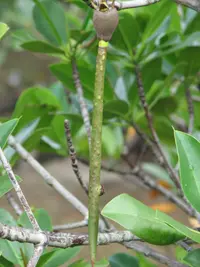
Rhizophora mucronata, commonly called a mangrove, is a woody tree adapted to grow in coastal, tidal zones. It forms dense stands with arching stilt roots that stabilize shorelines and create habitat for fish and birds.
The tree has leathery, evergreen leaves and pencil-like propagules that sprout while still attached to the parent plant. In nature it lives in salty, waterlogged mud where few other plants survive.
For home or educational setups, it is usually grown in containers or specialized aquaria. Understanding how to care for mangrove involves managing saline water, strong light, and stable, wet substrates, which makes it more suitable for committed growers than beginners.

Care Difficulty
Hard Care

Light Preference
Full Sun

Water Requirements
Aquatic

Temperature Preference
Tropical / Frost Sensitive

Hardiness Zone
11–12

Soil Texture
Sandy, Silty, Organic-rich

Soil pH
Neutral (7.0), Slightly alkaline (7.0–7.5)

Soil Drainage
Waterlogged tolerant

Fertilization
Minimal (feed rarely)
Scan your plant to receive care tips personalized for your specific plant
Available on iOS and Android
Rhizophora mucronata needs strong, consistent light to fuel rapid growth and root development.
Rhizophora mucronata is adapted to saturated, often saline substrates but still reacts to extremes in water conditions.
This species thrives in warm, stable tropical conditions and is highly sensitive to cold.
This coastal species needs constantly high humidity to perform well in non-marine settings.
Container-grown plants need a consistently wet, salty, mud-like substrate that still contains some air spaces.
This species can be grown in containers if the pot is adapted to hold both saturated substrate and stable water depth.
Rhizophora mucronata grown in containers benefits from modest, carefully controlled feeding.
Rhizophora mucronata needs only light structural pruning to stay manageable in cultivation.
This species is usually grown in large tubs or coastal beds, so focus on careful transplanting rather than frequent repotting.
Rhizophora mucronata is commonly propagated from its large viviparous propagules rather than from cuttings.
Rhizophora mucronata is a true tropical mangrove and lacks frost tolerance, so winter care is critical in cool climates.

Plant Health Check
Not sure what's wrong with your plant? Check your plant's health inside the app.
This species develops tall, arching stilt roots with prominent upward bends or knees that help anchor it in deep, soft mud and resist strong coastal currents in its native Indo-West Pacific range.
Its roots can exclude most salt at uptake, allowing the plant to use brackish or seawater while keeping internal tissues much less salty than the surrounding environment.
It produces elongated, cigar-like propagules (live seedlings) that can remain buoyant and viable in seawater for weeks, dispersing by ocean currents before rooting in suitable intertidal mudflats.

This species is a major structural component of many Southeast Asian mangrove forests and is widely used in coastal restoration projects because its strong root systems stabilize shorelines and help reduce erosion in storm-prone coasts.
Container culture is possible if the pot is large, heavy, and stable, with a deep, salty or brackish water reservoir. Roots and propagules need room, so expect frequent up‑potting or eventual relocation to a larger setup.
Keep your plants happy and healthy with plant identification, disease detection, and easy care guidance.