Moore's Kauri Care (Agathis moorei)

Also known as: Kauri
Moore's Kauri

About Moore's Kauri

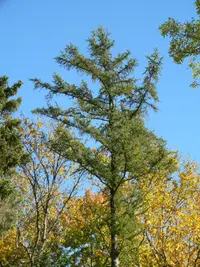
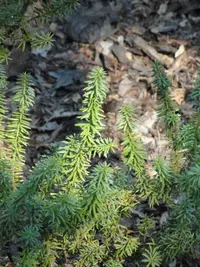
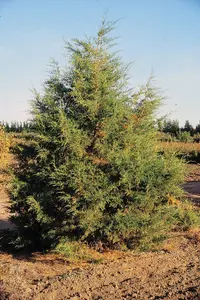
Moore's kauri, Agathis moorei, is a slow-growing evergreen conifer from New Caledonia. It forms a straight trunk with a dense, rounded crown of glossy, leathery leaves. In nature it can become a very large forest tree, but in cultivation it is usually grown as a specimen tree or, when young, as a foliage accent in mild climates. Its neat, symmetrical habit and clean look appeal to collectors and botanical gardens.

This species prefers mild, frost-free conditions, consistent moisture, and well-drained, slightly acidic soil. It is not a typical houseplant, and learning how to care for Moore's Kauri usually suits experienced growers or dedicated enthusiasts.

Main Plant Requirements

Care Difficulty

Moderate Care

Light Preference

Partial Shade

Water Requirements

Moderate Water

Temperature Preference

Warm Climate

Hardiness Zone

10–11

Soil Texture

Sandy, Loamy, Organic-rich

Soil pH

Acidic (5.5–6.5), Slightly acidic (6.5–7.0)

Soil Drainage

Moist but well-drained

Fertilization

Minimal (feed rarely)

Get Personalized Care Plan

Scan your plant to receive care tips personalized for your specific plant

Available on iOS and Android

How to Care for the Moore's Kauri

This slow-growing conifer prefers bright, gentle light that mimics high, open forest conditions.

  • Provide 4–6 hours of morning sun with light shade or dappled light in the afternoon to prevent needle scorch on young Moore's Kauri.
  • Site the tree where it receives bright, indirect light or high, shifting shade under taller trees, especially in hot summer regions.
  • In cooler coastal climates it tolerates more direct sun, but in areas with intense summer sun use partial shade and protect from reflected heat.

This species prefers evenly moist but not saturated soil, especially while young and establishing.

  • Water when the top 3–5 cm of soil feel dry, allowing deeper soil to stay slightly moist, and apply a slow, deep soak rather than light sprinkling.
  • Use free-draining, slightly acidic soil; persistent puddling, algae on the surface, or sour smell indicate poor drainage and risk of root rot in Agathis moorei.
  • In cooler months reduce watering as growth slows; watch for drooping, browning tips as a sign of drought stress, and yellowing, soft roots as overwatering.

This conifer prefers mild, frost-free conditions with limited temperature extremes.

  • Aim for 60–77°F (16–25°C) for best growth, with steady conditions and good air movement around the canopy.
  • Mature trees handle brief drops to about 28–30°F (-2 to -1°C), but young plants are more tender and benefit from protection on cold nights.
  • In hot climates, sustained temperatures above 90°F (32°C) can stress the tree, so use mulch, partial shade, and consistent soil moisture in summer.

This conifer prefers moderate, stable humidity but adapts to most household conditions.

  • Aim for 40–60% humidity; brief drops lower than this are usually tolerated if soil moisture is consistent.
  • Dry air may cause browning at needle tips and increased shedding on inner branches, especially near heating vents.
  • Increase humidity with a nearby water tray or grouped plants rather than misting, which has little lasting effect.

This species prefers deep, slightly acidic, free-draining soil that still holds consistent moisture.

  • Use a mix of roughly 50% loam-based potting soil, 25% fine bark, and 25% coarse sand or perlite to support Agathis moorei.
  • Target a pH of 5.5–6.5, avoiding strongly alkaline mixes that can reduce nutrient availability and cause chlorosis yellowing of foliage.
  • Structure the mix so water drains within a few seconds from the pot base while the top 3–5 cm remain lightly moist between waterings.
  • Avoid compacted, heavy clay or peat-only mixes, which restrict aeration, promote root rot, and prevent strong anchoring of the root system.

This tree can be grown in containers for many years if the pot provides depth, stability, and reliable drainage.

  • Choose a tall, heavy pot that resists tipping as the trunk thickens and the canopy becomes wind-sensitive outdoors.
  • Select a container material with moderate weight, such as thick-walled ceramic, to balance moisture retention with stability in gusty sites.
  • Elevate the pot slightly on feet or blocks so drainage holes remain clear and water cannot pool under the base after rain or watering.

This slow-growing conifer needs only light feeding when grown in containers or managed landscapes.

  • Use a balanced slow-release fertilizer (for example 10-10-10) or well-aged compost in spring as growth begins.
  • Apply at low to moderate label rates; for liquids, dilute to 1/2 strength to avoid root burn.
  • Feed every 6–8 weeks through the warm growing season if growth is confined or soil is poor.
  • Pause feeding in fall and winter, as Moore's Kauri has reduced nutrient demand in cool conditions.

Agathis moorei requires minimal pruning and is usually shaped by its natural growth habit.

  • Carry out any structural work or clean-up in late winter to early spring before active growth.
  • Remove only dead, diseased, crossing, or storm-damaged branches to maintain health and safety.
  • Avoid heavy crown reduction; light thinning preserves the tree’s strong central leader and natural form.
  • Use sharp, clean bypass pruners or a pruning saw, making smooth cuts just outside the branch collar.

This species is rarely kept long term in containers, so focus on careful transplanting of young trees.

  • Transplant in late winter to early spring when soil is workable and temperatures are mild.
  • Look for circling roots in pots, slowed growth, or the plant becoming top-heavy as signs it has outgrown its container.
  • Move up only 1 pot size or into a prepared ground site with deep, well-drained soil to limit transplant shock.
  • Keep the root ball intact, water thoroughly after planting, and maintain even moisture while new roots establish over several months.

Sexual and vegetative propagation of this conifer is specialized and not commonly done by home growers.

  • Seed propagation is standard; collect ripe cones, extract seeds, and sow fresh in a free-draining, slightly acidic mix.
  • Provide bright shade, consistent moisture, and mild temperatures around 64–75°F for best germination.
  • Semi-hardwood cuttings are possible but slow and often low in success, needing rooting hormone and bottom heat.
  • Label young plants clearly and grow them on in containers for several years before field planting.

This species prefers frost-free to very mild climates and benefits from basic winter protection in colder areas.

  • In regions near freezing, apply a 5–8 cm mulch layer around the root zone, keeping it away from the trunk.
  • Young or container plants can be sheltered near a south-facing wall or moved into an unheated but frost-free space.
  • Avoid waterlogged soils in winter, as saturated roots greatly increase cold injury risk.

Care Tips

Early root training

For young plants in containers, rotate the pot every 3–4 months and root-prune lightly when repotting to discourage circling roots and promote a deep, even root system that will establish faster after planting out.

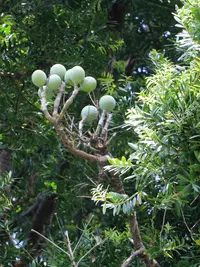
Wind-hardening seedlings

Expose young trees gradually to stronger air movement over 2–3 weeks before planting in a windy site by first opening vents or windows, then moving them outdoors in a sheltered spot, so stems and roots adapt and are less likely to snap or rock loose.

Mulch ring management

Maintain a 5–8 cm deep ring of coarse organic mulch around the base, keeping a clear collar of 5–8 cm away from the trunk, to stabilize soil moisture, suppress weeds, and reduce damage from string trimmers and mowers.

Preventing trunk scorch

In hot, exposed locations, wrap the young trunk with a breathable tree guard or use a temporary shade screen on the west side for the first 2–3 summers to reduce bark sunscald and improve long-term structure when growing Moore's Kauri.

Low-stress staking

If staking is needed in the first 1–2 years, use 2–3 stakes set outside the root ball and flexible, flat ties that allow slight movement, then remove the system once the tree stands upright on its own to avoid long-term girdling or weak anchorage.

Common Pests and Diseases

Kauri bark beetles

This pest tunnels under the bark of trunks and branches, disrupting the sap flow and causing canopy dieback and thinning foliage. Symptoms include small exit holes in bark, frass (fine sawdust) and progressive branch decline.

Solution

Prune and destroy heavily infested branches to remove breeding sites and reduce beetle populations. Maintain tree vigor with adequate watering and mulch, avoid trunk injuries, and in high‑value specimens consult an arborist about timing‑specific trunk or branch treatments targeting adult beetles during flight periods.

Scale insects

These insects attach to needles and young stems, sucking sap and leading to yellowing foliage, sticky honeydew and sooty mold growth. Infestations may weaken young Agathis moorei, especially in sheltered or indoor settings.

Solution

For light infestations, wipe or gently scrub scales off with a cloth or soft brush dipped in water with a little mild soap, then rinse foliage. For heavier problems, apply a horticultural oil thoroughly to all twig and leaf surfaces, repeating according to label directions, and improve light and airflow to reduce reinfestation when caring for Moore's Kauri.

Phytophthora collar canker

This disease is caused by soilborne water molds that attack the lower trunk and root collar, leading to dark sunken lesions, resin bleeding and gradual canopy decline. Symptoms include reduced growth, yellowing needles and dieback starting from the lower branches.

Solution

Improve drainage around the base of the tree, avoid waterlogging and keep mulch and soil off the trunk flare to reduce infection risk. Remove and destroy severely affected young plants; for valuable specimens, an arborist may recommend targeted phosphonate trunk or soil treatments combined with strict irrigation and soil hygiene management.

Needle blight

This disease affects foliage, causing browning and premature drop of needles, often starting on lower or inner branches where humidity is higher. Symptoms include small dark spots or bands on needles that expand into larger necrotic patches.

Solution

Prune out and dispose of heavily affected branches, disinfecting tools between cuts, and thin surrounding vegetation to improve light penetration and airflow. Avoid overhead watering, irrigate at soil level, and in persistent cases apply a registered fungicide for conifers, timed to new needle growth and humid periods.

Interesting Facts

Endemic New Caledonian conifer

This species is naturally restricted to the ultramafic mountains of southern New Caledonia, where it forms scattered stands on nutrient-poor, metal-rich soils that many other trees cannot tolerate.

Coppery juvenile foliage

Young trees often display striking bronze to copper-tinted new growth that gradually matures to a more typical deep green, a characteristic used by botanists to help distinguish it from some other Agathis species.

Forest structure role

In its native habitat it can become a dominant canopy tree, shaping light levels and understory composition and providing structure for epiphytes such as mosses and lichens.
Botan icon

Did you know?

Resin from this species was historically harvested in New Caledonia and used locally as a traditional adhesive and sealant, and it also contributed in a modest way to the broader historical trade in kauri resins from the southwest Pacific region.

FAQs about Moore's Kauri

Growth is slow to moderate. Young trees may add around 15–30 cm per year in suitable conditions, sometimes less in cooler or drier climates. Container plants grow even more slowly due to root restriction and limited resources.

Grow Healthy Plants with Botan Care

Keep your plants happy and healthy with plant identification, disease detection, and easy care guidance.
Botan plant care app — identify plants on mobile

Explore More Plants