Wind exposure planning
Site the plant where it receives good air movement but is not exposed to constant, extreme prevailing winds to reduce desiccation and branch breakage, especially in young specimens.

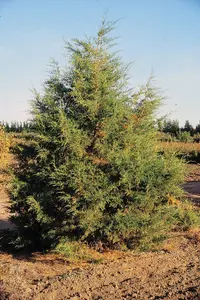
Rocky Mountain juniper, Juniperus scopulorum, is an evergreen conifer native to the Rocky Mountains and surrounding regions of western North America. It typically forms a narrow, upright tree or large shrub with dense, scale-like foliage and small, berry-like cones.
This species is naturally adapted to dry, rocky slopes and high elevations, which makes it relatively tolerant of drought, wind, and poor soils. It prefers full sun and well-drained ground, so locations that stay wet are not suitable.
Because of its toughness and low maintenance needs, many gardeners find it straightforward to care for Rocky Mountain Juniper once it is established.

Care Difficulty
Easy Care

Light Preference
Full Sun

Water Requirements
Low Water

Temperature Preference
Cold Hardy

Hardiness Zone
3–7

Soil Texture
Sandy, Loamy, Rocky

Soil pH
Slightly acidic (6.5–7.0), Neutral (7.0)

Soil Drainage
Well-drained

Fertilization
Minimal (feed rarely)
Scan your plant to receive care tips personalized for your specific plant
Available on iOS and Android
This sun-loving conifer performs best in open, exposed sites with strong light.
This drought-tolerant species prefers infrequent, deep watering once established.
This hardy conifer thrives in cold climates and tolerates a wide temperature range.
Humidity is rarely a limiting factor for Juniperus scopulorum, which prefers dry air conditions.
Juniperus scopulorum prefers mineral, fast-draining soil that never stays wet for long.
This species can be grown in containers if the pot is prepared for its deep, woody root system and eventual size.
Juniperus scopulorum generally needs modest feeding, especially in poor soils or containers.
Pruning Juniperus scopulorum focuses on maintaining structure and removing problem growth rather than heavy reshaping.
Transplanting this juniper is infrequent and should be done with care to limit root disturbance.
Juniperus scopulorum is typically propagated from semi-hardwood cuttings rather than seed for reliable traits.
This species is naturally cold hardy and usually needs minimal winter care in the ground.

Plant Health Check
Not sure what's wrong with your plant? Check your plant's health inside the app.
This species is naturally adapted to dry, rocky slopes and ridges in western North America, often growing at higher elevations where many other conifers cannot survive, thanks to its deep root system and tolerance of thin, nutrient-poor soils.
Wild populations show striking variation in shape, from narrow columnar trees to irregular, wind-sculpted forms, and this genetic diversity has been used to breed many ornamental columnar and blue-foliaged garden cultivars.
The bluish berry-like cones are a key winter food source for birds such as waxwings and robins, which also help disperse the seeds over long distances through their droppings.

Rocky Mountain juniper individuals can live for many hundreds of years, and some documented trees in harsh, exposed sites are estimated to be close to 1,000 years old, making them significant long-term components of their native ecosystems.
Brown foliage usually comes from root problems, prolonged drought, or salt and winter burn. Check for soggy or compacted soil, long dry periods, road salt exposure, and physical damage. Prune dead tips and correct the underlying stress.
Keep your plants happy and healthy with plant identification, disease detection, and easy care guidance.