BotaN logo

Burning bush Care (Euonymus alatus)

Also known as: Winged Euonymus, Winged Spindle, winged wahoo, winged burning bush, pallerosorvarinpensas
Burning bush

About Burning bush

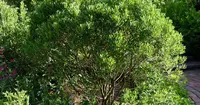
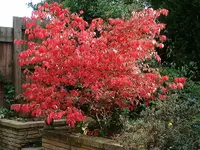
Burning bush (Euonymus alatus) is a deciduous shrub valued for its dense, rounded form and vibrant red autumn foliage. It is often used as a hedge, foundation shrub, or landscape accent. Native to East Asia, it adapts well to many temperate climates and is widely planted in North America, although it can be invasive in some regions. This shrub is generally easy to grow, with good tolerance to urban conditions, pruning, and different soil types. It prefers full sun for best color, moderately moist, well-drained soil, and benefits from thoughtful placement when you care for Burning bush.

Main Plant Requirements

Care Difficulty

Easy Care

Light Preference

Full Sun

Water Requirements

Moderate Water

Temperature Preference

Cold Hardy

Hardiness Zone

4–8

Soil Texture

Sandy, Loamy, Clay

Soil pH

Acidic (5.5–6.5), Slightly acidic (6.5–7.0)

Soil Drainage

Well-drained

Fertilization

Minimal (feed rarely)

Get Personalized Care Plan

Scan your plant to receive care tips personalized for your specific plant

Available on iOS and Android

How to Care for the Burning bush

This deciduous shrub develops best color and form in consistent sun exposure.

  • Provide 6–8 hours of direct sun daily; full sun gives the strongest red fall color on Burning bush.
  • Plant where it receives morning sun and can tolerate some light afternoon shade, especially in hotter regions to limit leaf scorch.
  • In dense shade it becomes leggy with dull foliage, so choose an open site and avoid year-round shade from nearby trees or buildings.

This shrub prefers evenly moist, well-drained soil once established in the landscape.

  • At planting, water deeply whenever the top 3–5 cm of soil feels dry, then reduce frequency as roots spread over the first 1–2 years.
  • For mature Euonymus alatus, use occasional deep soakings during dry spells rather than light daily watering, allowing the upper soil to dry between sessions.
  • Watch for pale, dropping leaves as a sign of drought stress, and for yellowing leaves with soft stems as a sign of overwatering or poor drainage.

This hardy shrub thrives in climates with cold winters and moderate summers.

  • Active growth is strongest around 60–75°F (16–24°C), typical of spring and early summer conditions in many temperate regions.
  • Established plants tolerate winter cold down to about -20°F (-29°C), though young shrubs benefit from protection from severe drying winds.
  • It handles summer heat up to about 90°F (32°C) if soil moisture is maintained; prolonged heat above this, combined with drought, can cause leaf scorch and early leaf drop.

This shrub tolerates a wide humidity range and usually does not need special humidity management outdoors.

  • Performs reliably at 30–60% humidity, typical of most outdoor garden conditions in temperate climates.
  • Handles dry air well; Burning bush rarely shows humidity-related issues unless roots are stressed or soil is very dry.
  • Possible humidity stress signs include marginal leaf browning and premature leaf drop, so first check soil moisture and root health.

Euonymus alatus prefers moderately fertile, well-structured soil that drains freely but does not dry out instantly.

  • Use a loamy or sandy-loam soil with some organic matter from compost or leaf mold to retain steady moisture without becoming heavy.
  • Aim for pH 6.0–7.5; mildly acidic to neutral conditions help roots access nutrients efficiently and reduce micronutrient lockout.
  • Where drainage is slow, incorporate coarse sand or fine gravel into the top 20–30 cm and raise the planting area into a low mound.
  • Avoid compacted clay, sites that stay waterlogged after rain, or pure sand that forces frequent irrigation and stresses roots.

This species can be grown in containers for patios or small gardens if the pot is large and stable.

  • Choose a wide, heavy container to counterbalance the woody, spreading top growth and reduce tipping in wind.
  • Select a pot depth that allows a broad root system, roughly 40–50 cm, to support shrub size and drought resilience.
  • Use thick-walled clay or concrete pots outdoors to moderate root-zone temperature swings and slow moisture loss in full sun.

Euonymus alatus grows well in average soil but responds to modest, controlled feeding during the growing season.

  • Apply a balanced slow-release fertilizer (around 10-10-10) once in early spring as new growth begins.
  • Use compost or well-rotted organic matter as a light top-dressing to improve soil structure and nutrient availability.
  • Avoid high doses; follow label rates or use at 1/2 strength to reduce salt buildup and root burn.
  • Do not feed in late fall or winter, as Burning bush is dormant and excess nutrients can stimulate tender, frost-prone growth.

Pruning Euonymus alatus helps manage size, maintain structure, and encourage dense branching.

  • Plan main pruning for late winter to very early spring, before new growth starts.
  • Remove dead, diseased, or crossing branches with clean, sharp bypass pruners or loppers.
  • Thin crowded interior stems to improve light penetration and airflow, maintaining a natural, open outline.
  • Shorten overly long shoots to shape the shrub, avoiding heavy cuts that remove most of the previous year’s growth.

This shrub is usually grown in the ground, so focus on careful transplanting rather than frequent repotting.

  • Transplant in early spring or fall when temperatures are mild to limit stress and water loss.
  • Look for signs such as roots circling a container, slow vigor, or soil drying very quickly to decide on moving a plant.
  • Lift with a broad root ball, keep roots shaded and moist, and replant at the same depth in well-drained soil.
  • Water thoroughly after planting, then maintain even moisture and apply mulch to reduce evaporation and help root re-establishment.

Euonymus alatus is commonly propagated vegetatively to maintain consistent traits.

  • Take semi-ripe stem cuttings in mid to late summer, 8–12 cm long, with several leaf nodes.
  • Remove lower leaves, dip the cut end in rooting hormone, and insert into a moist, free-draining medium such as sand-perlite mix.
  • Provide bright, indirect light, high humidity, and stable warmth around 70–75°F to support rooting.
  • Alternatively, use simple layering in spring by pegging a flexible low branch into soil until roots form, then sever and transplant.

This species is cold hardy in much of the US and usually needs minimal winter care in the ground.

  • In colder zones, apply a 5–8 cm mulch layer around the root zone to buffer freeze–thaw cycles.
  • Avoid heavy fall pruning that stimulates tender growth before freezing conditions arrive.
  • For container-grown plants, move pots into a sheltered, unheated garage or against a protected wall to reduce root freezing risk.

Care Tips

Color-boosting siting

Site plants in open exposure where they receive cool autumn nights and good air circulation, as this combination helps maximize red fall color compared with warm, sheltered spots.

Sucker management

Check the base of the plant and surrounding soil a few times a year and promptly cut or dig out root suckers so the shrub does not spread into unwanted areas or form a dense thicket.

Wildlife browsing control

In areas with deer or rabbits, use physical barriers such as wire mesh cylinders around young stems during winter to prevent repeated browsing that can permanently distort structure.

Targeted renewal cuts

Every 3–5 years, remove a few of the oldest stems right at ground level to open the center, improve light penetration, and maintain a dense but not congested framework.

Invasiveness check

Before planting or when growing Burning bush already in the ground, confirm local regulations and remove volunteer seedlings beyond the intended bed to reduce invasive spread into nearby natural areas.

Common Pests and Diseases

Euonymus scale

This pest forms white to grayish, crusty bumps on stems and leaves and can cause yellowing, thinning foliage, and dieback. Heavy infestations weaken plants and reduce the vivid fall color.

Solution

Prune out and destroy heavily infested stems, then wash remaining branches thoroughly with a strong spray of water to dislodge crawlers. For persistent problems, use horticultural oil in late winter and again when crawlers emerge, making sure to coat stems and leaf undersides according to Euonymus alatus care instructions on the product label.

Aphids

These insects cluster on tender shoots and undersides of leaves, sucking sap and causing curled, distorted growth and sticky honeydew. Sooty mold may develop on the honeydew, making leaves appear blackened.

Solution

Spray foliage with a firm jet of water to knock aphids off and repeat every few days as needed. If populations remain high, apply insecticidal soap or a light horticultural oil, coating leaf undersides and new growth while avoiding spraying in hot sun above 85°F.

Powdery mildew

This disease produces a white, powdery coating on leaves, often in shaded or crowded plantings. Symptoms include distorted new growth and premature leaf drop in severe cases.

Solution

Improve air circulation by thinning crowded branches and avoiding overhead watering late in the day. Remove and discard affected leaves, then use a labeled fungicide for powdery mildew if the problem recurs, applying from early in the season when conditions are humid and mild.

Crown gall

This disease causes rough, corky galls at the base of stems or on roots, which can restrict water and nutrient flow. Infected plants may show stunted growth, reduced vigor, and branch dieback over time.

Solution

Remove and destroy severely affected plants, including as much of the root system as possible, and avoid replanting susceptible species in the same spot for several years. Disinfect pruning tools with a 10% bleach solution or 70% alcohol after cutting near galls to prevent spreading the bacteria to healthy shrubs.

Anthracnose leaf spot

This disease creates tan to dark brown spots with irregular margins on leaves, sometimes leading to partial defoliation in wet seasons. Symptoms include more severe spotting on lower, inner foliage where humidity is higher.

Solution

Rake and discard fallen leaves to reduce sources of reinfection, and keep irrigation at the soil level instead of wetting foliage. In landscapes with recurring issues, apply a labeled fungicide at budbreak and during extended wet periods, focusing on achieving good coverage of inner canopy leaves.

Interesting Facts

Corky winged stems

The species develops distinctive corky ridges or “wings” along its green to brown stems, which are formed by extra cork tissue growing out from the twigs and are most visible on older, sun-exposed branches.

Intense fall coloration

Its leaves shift from green to vivid pinkish-red in autumn due to the breakdown of chlorophyll, which reveals red anthocyanin pigments that are especially strong in full-sun, cool-climate conditions.

Bird-dispersed seeds

The shrub produces red capsules that split to show orange-coated seeds, which are attractive to birds; after eating the fleshy aril, birds disperse the seeds and help spread the plant across the landscape.

Botan icon

Did you know?

In many parts of the northeastern and midwestern United States, burning bush is officially listed as an invasive ornamental shrub because it escapes cultivation, forms dense thickets in forests and roadsides, and can outcompete a wide range of native understory plants.

FAQs about Burning bush

Yellowing leaves usually come from root stress, often due to poor drainage, overwatering, or compacted soil. Nutrient deficiency, especially nitrogen or iron, can also cause pale foliage. Check drainage, adjust watering, and consider a balanced fertilizer.

Grow Healthy Plants with Botan Care

Keep your plants happy and healthy with plant identification, disease detection, and easy care guidance.

Botan plant care app — identify plants on mobile

Explore More Plants