Windbreak protection
In exposed sites, install a temporary mesh windbreak on the windward side for the first 2–3 winters to reduce desiccation and branch breakage while roots establish.

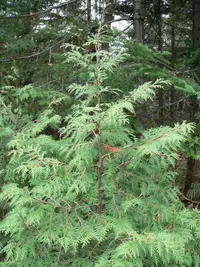
Arborvitae (Thuja occidentalis) is an evergreen conifer commonly used for hedges, windbreaks, and foundation plantings. It forms dense, upright columns or pyramids with soft, scale-like foliage.
In nature, it occurs in cool, moist forests and wetlands of northeastern North America, where it can live for centuries. Many cultivars stay compact, which makes it easier to fit into small gardens.
This species is generally easy to grow if given full sun to light shade, consistent moisture, and well-drained soil. Understanding how to care for Arborvitae helps keep its foliage dense from top to bottom.

Care Difficulty
Easy Care

Light Preference
Full Sun

Water Requirements
Moderate Water

Temperature Preference
Cold Hardy

Hardiness Zone
2–7

Soil Texture
Sandy, Loamy, Clay

Soil pH
Acidic (5.5–6.5), Slightly acidic (6.5–7.0)

Soil Drainage
Moist but well-drained

Fertilization
Minimal (feed rarely)
Scan your plant to receive care tips personalized for your specific plant
Available on iOS and Android
Thuja occidentalis grows best with consistent sun exposure suited to its site and climate.
Thuja occidentalis prefers evenly moist but not saturated soil, especially during the first 2–3 years after planting.
This species is a cold-hardy conifer that tolerates a wide temperature range once established.
This conifer tolerates a wide humidity range and usually does not need special humidity management outdoors or in large, airy spaces.
Thuja occidentalis prefers evenly moist, well-drained mineral soils with moderate organic content.
This species can be grown in containers, especially dwarf or narrow cultivars, when specific structural needs are met.
Thuja occidentalis benefits from light, controlled feeding rather than heavy fertilization.
Thuja occidentalis responds well to light, periodic pruning to maintain shape and plant health.
This species is usually grown in the ground, so care focuses more on transplanting than frequent repotting.
Thuja occidentalis is commonly propagated from cuttings for uniform hedges and landscape plants.
This conifer is cold hardy in much of the US, but young or exposed plants benefit from some winter care.

Plant Health Check
Not sure what's wrong with your plant? Check your plant's health inside the app.
The heartwood of this species contains aromatic compounds that make it highly resistant to rot and insect damage, which is why it has long been used for fence posts, shingles, and outdoor structures in its native range.
Its thin, fibrous bark can peel in narrow strips and helps the tree withstand freezing temperatures typical of northern North America without significant frost damage.
In the wild, this species often dominates cool, calcareous swamps and bog margins, forming characteristic northern cedar swamps that provide important winter shelter for deer and many bird species.
Very old individuals in undisturbed cliff habitats around the Great Lakes have been dated to well over 1,000 years, making this species one of the longest-lived trees in eastern North America despite its relatively small trunk size.
Growth rate is generally moderate. Many landscape cultivars add about 20–60 cm of height per year once established, depending on age, cultivar, climate, moisture, and soil fertility. Young plants tend to grow more slowly at first.
Keep your plants happy and healthy with plant identification, disease detection, and easy care guidance.