Bud-Protecting Placement
Site plants away from drying winter winds and direct morning sun to prevent flower buds from desiccating and browning before they open.

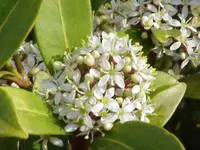
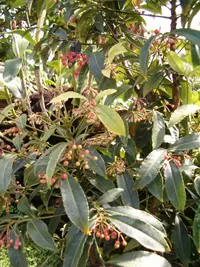
Japanese skimmia (Skimmia japonica) is an evergreen shrub grown for its dense foliage, fragrant flowers, and bright berries. It stays compact, which suits small gardens and shaded corners. Leaves are glossy and aromatic, while clusters of white to pinkish flowers appear in spring, followed by red berries on female plants if a male is nearby for pollination. It is native to woodland and mountain areas in East Asia, which explains its preference for cool, sheltered conditions. This shrub is generally considered moderate in difficulty, as it dislikes harsh sun, drying winds, and poorly drained soil. Gardeners who learn how to care for Japanese skimmia usually find it long-lived and reliable.

Care Difficulty
Moderate Care

Light Preference
Partial Shade

Water Requirements
Moderate Water

Temperature Preference
Cold Hardy

Hardiness Zone
6–8

Soil Texture
Loamy, Peaty, Organic-rich

Soil pH
Strongly acidic (4.5–5.5), Acidic (5.5–6.5)

Soil Drainage
Moist but well-drained

Fertilization
Light (every 4–6 weeks)
Scan your plant to receive care tips personalized for your specific plant
Available on iOS and Android
This shade-loving evergreen shrub thrives with bright but gentle light rather than intense direct sun.
This shrub prefers evenly moist, cool soil that never stays waterlogged.
This hardy shrub tolerates a wide temperature range but grows best in cool to mild conditions.
This evergreen shrub prefers moderate humidity and usually copes well with outdoor air levels.
Skimmia japonica prefers consistently moist, humus-rich soil with strong structure and drainage.
This shrub is well suited to container growing when moisture and stability are carefully managed.
Skimmia japonica benefits from light, steady feeding rather than heavy fertilization.
Skimmia japonica needs only light, targeted pruning to keep a compact, healthy shape.
This shrub is usually grown in the ground, so focus on careful transplanting or infrequent repotting of container plants.
This shrub is usually propagated by semi-ripe cuttings, which root slowly but reliably under the right conditions.
Mature Skimmia japonica is generally cold hardy but benefits from simple winter protection, especially in containers.

Plant Health Check
Not sure what's wrong with your plant? Check your plant's health inside the app.
This species is dioecious, meaning individual plants are either male or female, so only female plants can form berries if a compatible male is nearby for pollination.
The flower buds form in late summer, sit through autumn and winter, and then open in early spring, releasing a noticeable sweet scent when few other shrubs are in bloom.
The glossy red berries, which are poisonous to humans if eaten, are an important late-winter and early-spring food source for birds that help disperse the seeds.

Garden selections of this species have been widely used in breeding compact ornamental cultivars, so many popular named varieties seen in landscapes today, especially in Europe and Japan, trace back to a few wild Japanese populations collected in the 19th and early 20th centuries.
Lack of flowers usually comes from too much shade, pruning at the wrong time, or missing male or female partners for cross‑pollination. Poor nutrition and drought stress also reduce bud formation, so maintain steady moisture and light feeding.
Keep your plants happy and healthy with plant identification, disease detection, and easy care guidance.