Control Root Suckers
Cut unwanted suckers at or just below soil level with clean, sharp pruners 2–3 times per growing season to prevent the clonal colony from spreading into lawns, paths, or neighboring beds.

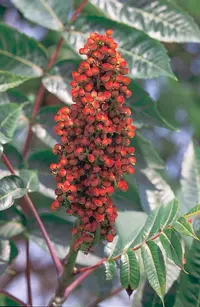
Smooth sumac (Rhus glabra) is a hardy, deciduous shrub or small tree native to much of North America. It often forms dense thickets along roadsides, prairies, and open slopes.
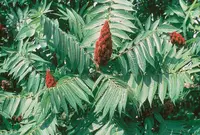
Plants typically reach a medium height with upright stems, smooth gray bark, and feathery, bright green leaves that turn vivid red in fall. Cone-shaped clusters of red berries persist into winter and provide interest and wildlife value.
This species adapts well to poor, dry soils and open, sunny sites, which makes it easy to establish but also potentially spreading by suckers. Gardeners who want to care for smooth sumac should allow space for its natural clumping habit and preference for well-drained soil.

Care Difficulty
Easy Care

Light Preference
Full Sun

Water Requirements
Low Water

Temperature Preference
Cold Hardy

Hardiness Zone
3–9

Soil Texture
Sandy, Loamy, Rocky

Soil pH
Acidic (5.5–6.5), Slightly acidic (6.5–7.0)

Soil Drainage
Well-drained

Fertilization
Minimal (feed rarely)
Scan your plant to receive care tips personalized for your specific plant
Available on iOS and Android
This species thrives in open, sunny sites and develops best color with strong light exposure.
Rhus glabra is drought-tolerant once established and prefers infrequent, deep watering in well-drained soil.
This hardy shrub tolerates a wide temperature range but grows most actively in moderate warmth.
Humidity is not a significant factor for smooth sumac, which thrives in typical outdoor air conditions across most climates.
Rhus glabra adapts to many soils but performs best in lean, well-drained substrates that do not stay waterlogged.
This species can be grown in containers, but long-term culture is challenging due to its vigorous, suckering root system.
This tough native shrub usually needs little feeding, especially in the ground on average soils.
Pruning helps keep Rhus glabra structurally sound and within bounds, especially in smaller landscapes.
This species is usually grown in the ground, so focus on careful transplanting rather than frequent repotting.
Rhus glabra is commonly propagated to establish thickets or restore native plantings.
This shrub is very cold hardy in most temperate climates and usually needs minimal winter care outdoors.

Plant Health Check
Not sure what's wrong with your plant? Check your plant's health inside the app.
Smooth sumac often spreads by underground rhizomes, forming large, genetically identical colonies that can dominate open slopes, roadsides, and disturbed ground.
Unlike many woody species, smooth sumac thrives on dry, rocky, and calcareous soils, making it common on limestone and other high-pH sites where many shrubs struggle.
Its dense clusters of small red drupes persist through winter and provide an important cold-season food source for birds such as wild turkey, ruffed grouse, and many songbirds.

Indigenous peoples across North America traditionally used the tart, vitamin C–rich fruits of smooth sumac to make a lemonade-like beverage, a practice that has been documented ethnobotanically and is still sometimes used today when discussing how to take care of smooth sumac in designed landscapes.
This species spreads strongly by underground rhizomes and self-seeding, often forming colonies. It suits large, naturalized areas. In small gardens, install root barriers and remove unwanted suckers regularly to prevent it from overtaking nearby plantings.
Keep your plants happy and healthy with plant identification, disease detection, and easy care guidance.