staghorn sumac Care (Rhus typhina)

Also known as: red sumac
staghorn sumac

About staghorn sumac

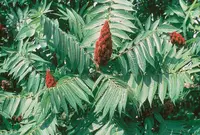
Staghorn sumac (Rhus typhina) is a deciduous shrub or small tree known for its velvety branches and upright clusters of fuzzy red fruit. It has a broad, spreading habit and forms colonies through suckers, often creating dense thickets over time.

This species is native to eastern North America, where it grows on slopes, roadsides, and open, rocky ground. Its fine-textured, fernlike leaves turn strong shades of orange and red in autumn, making it popular for naturalistic landscapes.

Rhus typhina is generally tough and adaptable, tolerating poor, dry soils once established and thriving in full sun. These traits make it relatively easy to care for staghorn sumac in suitable outdoor spaces, provided there is room for its spreading growth.

Main Plant Requirements

Care Difficulty

Easy Care

Light Preference

Full Sun

Water Requirements

Low Water

Temperature Preference

Cold Hardy

Hardiness Zone

3–8

Soil Texture

Sandy, Loamy, Rocky

Soil pH

Acidic (5.5–6.5), Slightly acidic (6.5–7.0)

Soil Drainage

Well-drained

Fertilization

Minimal (feed rarely)

Get Personalized Care Plan

Scan your plant to receive care tips personalized for your specific plant

Available on iOS and Android

How to Care for the staghorn sumac

This sun-loving shrub thrives in open, bright conditions outdoors.

  • Provide full sun for 6–8 hours daily; staghorn sumac colors best with unfiltered exposure, especially from late morning to afternoon.
  • It tolerates light partial shade (around 3–4 hours direct sun), but foliage may be thinner and fall color less intense.
  • Avoid dense shade, which causes weak, leggy shoots and poor autumn color; newly planted shrubs benefit from slight afternoon shade in very hot, dry summers.

This species is drought-tolerant once established and prefers soil that dries between deep waterings.

  • During the first growing season, water when the top 5–8 cm of soil feels dry, soaking the root zone deeply rather than giving light, frequent splashes.
  • In following years, rely mainly on rainfall; water only during extended dry spells when leaves start to lose turgor or curl slightly at the edges.
  • Plant in sharply drained soil or on a slope; persistent sogginess, leaf yellowing, and stem dieback indicate overwatering or poor drainage around Rhus typhina.

This hardy shrub tolerates a wide temperature range typical of many temperate climates.

  • Active growth is strongest around 65–80°F (18–27°C), with good shoot and leaf development during late spring and early summer.
  • Established plants usually survive winter lows near -20°F (-29°C), entering deep dormancy and leafless rest through the cold season.
  • In summer heat above 90°F (32°C), growth slows but plants cope well if soil is not waterlogged; winter frost is tolerated, but new spring shoots can be damaged by late, hard freezes.

Humidity is rarely limiting, as this species is adapted to dry, open sites.

  • Target 30–50% relative humidity, similar to typical outdoor air in many temperate regions.
  • Dry air is well tolerated, but prolonged hot wind exposure can cause marginal leaf scorch and early leaf drop.
  • Increase local humidity only in very arid climates by planting near other shrubs or using windbreaks to reduce desiccation.

Rhus typhina prefers lean, well-structured mineral soils with rapid drainage.

  • Use a sandy or gravelly loam with moderate organic matter, such as native soil mixed with 20–30% compost and 20–40% coarse sand or fine gravel.
  • Ensure very fast drainage; avoid compacted clay where water stands after rain, which promotes root rot and weak growth.
  • A slightly acidic to neutral pH around 6.0–7.2 supports nutrient availability without encouraging overly lush, weak shoots.
  • On dense or heavy sites, improve aeration by creating raised mounds or berms and incorporating coarse mineral material into the top 20–30 cm.

This species can be grown in large containers for short to medium terms if managed carefully.

  • Choose a wide, heavy container to counterbalance the spreading, top-heavy canopy and prevent tipping in wind.
  • Select a pot depth that allows a broad, fibrous root system, not just vertical depth, to stabilize the plant mechanically.
  • Use a mineral-based mix that drains very quickly to avoid waterlogging, since container walls limit lateral moisture escape compared with open ground.

This tough native shrub or small tree usually needs no fertilizer in garden soil.

Rhus typhina responds well to thoughtful pruning for structure and suckering control.

  • Do main pruning in late winter or very early spring before bud break for clear visibility of the framework.
  • Cut out dead, diseased, or storm-damaged wood back to healthy tissue using clean, sharp bypass pruners or a pruning saw.
  • Thin crowded interior branches to improve light and air flow, guiding the plant toward a balanced, open shape.
  • Remove unwanted suckers at ground level to limit spread and maintain a contained clump or tree form.

This species is usually grown in the ground, so care focuses on transplanting rather than container repotting.

  • Transplant young plants in early spring or fall when soil is moist and temperatures are mild to reduce stress.
  • Choose a sunny site with well-drained soil and enough space for suckering spread over time.
  • Move only if necessary; large, established plants resent disturbance and may suffer slow recovery.
  • Water deeply after transplanting, then keep soil evenly moist (not saturated) for the first season to support root establishment.

New plants are most often produced from suckers rather than complex techniques.

  • Lift and divide rooted suckers in early spring or fall, ensuring each division has several healthy roots.
  • For cuttings, take semi-hardwood pieces in midsummer and root in a fast-draining medium under high humidity.
  • Seeds need cold stratification, meaning a moist chill period of 60–90 days at about 35–40°F before spring sowing.
  • Plant divisions or rooted cuttings into full-sun, well-drained sites and water consistently until growth is established.

This cold-hardy shrub usually needs little winter care in most temperate climates.

  • Established plants tolerate typical winter lows across much of the US without extra covering.
  • Apply a 5–8 cm mulch layer around the root zone in late fall, keeping it a few cm away from stems.
  • Container-grown specimens benefit from moving to a sheltered, unheated but frost-free spot or wrapping the pot for root insulation.

Care Tips

Control Suckering Spread

Install a root barrier 45–60 cm deep or regularly cut off young suckers at soil level in late spring to keep the colony from overtaking nearby beds or lawn areas.

Stabilize Slopes

Use groups of 3–5 plants on banks or eroding slopes, spacing them 1.5–2.5 m apart, to create a dense root system that helps bind soil and reduce erosion over time.

Shape For Structure

Select 3–5 strong stems and remove weaker ones at the base in late winter every few years to form an open, small-tree shape with good air flow and reduced risk of branch breakage.

Enhance Fall Color

Plant in a site with full sun exposure and avoid high-nitrogen lawn fertilizers nearby, as leaner soil and strong light promote more intense red and orange autumn foliage when growing staghorn sumac.

Underplant Wisely

Use drought-tolerant, shallow-rooted groundcovers beneath the canopy instead of thirsty perennials or turf, which reduces competition for moisture and simplifies long-term management of the colony edge.

Common Pests and Diseases

Verticillium wilt

This disease blocks the plant’s water-conducting tissue, leading to sudden wilting, yellowing, and branch dieback, often on one side of the plant first. Symptoms include brown streaks in the sapwood when bark is peeled back.

Solution

Prune out and dispose of affected branches well below discolored wood, disinfecting tools between cuts, and avoid planting other Verticillium-susceptible species nearby. Keep the plant moderately watered during dry periods, mulch to reduce stress, and if decline is severe, remove the plant and avoid replanting staghorn sumac or other sensitive hosts in the same spot.

Powdery mildew

This disease produces a white, powdery coating on leaves, especially in shaded or crowded conditions, which can lead to distorted foliage and reduced vigor. Symptoms include premature leaf drop in severe cases.

Solution

Improve air circulation by selectively thinning crowded stems and avoid overhead watering, especially in the evening. Remove heavily infected leaves, dispose of them with yard waste (not compost), and if needed use a labeled sulfur or potassium bicarbonate spray applied according to directions, focusing on new growth early in the season as part of Rhus typhina care instructions.

Leaf spot

This disease causes small brown or purplish spots on leaves that may merge into larger blotches, sometimes with yellow halos. Symptoms include early leaf drop on heavily affected plants in wet seasons.

Solution

Rake and remove fallen leaves to reduce the fungal spore load and avoid wetting foliage when watering. Improve airflow around the plant, and in repeated severe cases apply a copper-based or chlorothalonil fungicide early in the season, following the label and treating new foliage as it emerges.

Scale insects

These insects appear as small, rounded or oval bumps on stems and sometimes leaves, often producing honeydew that can attract ants or lead to sooty mold. This pest feeds on plant sap and may weaken shoots over time if populations are high.

Solution

Prune out heavily infested twigs and dispose of them, then wipe remaining colonies with a cloth or soft brush dipped in soapy water. For larger shrubs, apply horticultural oil during the dormant season or early spring to smother overwintering scale, ensuring thorough coverage of stems.

Aphids

These insects cluster on young shoots and leaf undersides, sucking sap and causing curled or distorted leaves and sticky honeydew deposits. Symptoms include presence of ants tending the aphids and possible sooty mold on surfaces below the plant.

Solution

Spray infested shoots with a strong stream of water to dislodge aphids, repeating as needed, and encourage natural predators like lady beetles by avoiding broad-spectrum insecticides. For persistent infestations, use an insecticidal soap or light horticultural oil, coating leaf undersides and new growth thoroughly while treating in cooler parts of the day to reduce leaf stress.

Interesting Facts

Velvety antler branches

Young branches are densely covered in soft, rust-colored hairs that resemble the surface of deer antlers, which is the origin of the common name staghorn sumac.

Autumn color specialist

This species is known for reliably producing intense red to orange fall foliage across much of its range, making it one of the most striking native shrubs in eastern North America each autumn.

Architect of clonal groves

It spreads vigorously by underground rhizomes, forming dense clonal colonies in which many stems are genetically identical, allowing the plant to dominate disturbed slopes and open ground.

Botan icon

Did you know?

Staghorn sumac produces dense, upright clusters of small, fuzzy, bright red fruits that can remain on the plant through winter and are a critical cold-season food source for many birds such as chickadees, bluebirds, and wild turkeys.

FAQs about staghorn sumac

This species spreads strongly by underground rhizomes and root suckers, forming colonies over time. Regular removal of unwanted shoots and installing root barriers along property lines help keep it contained in smaller gardens or near boundaries.

Grow Healthy Plants with Botan Care

Keep your plants happy and healthy with plant identification, disease detection, and easy care guidance.

Botan plant care app — identify plants on mobile

Explore More Plants