BotaN logo

American beech Care (Fagus grandifolia)

American beech

About American beech

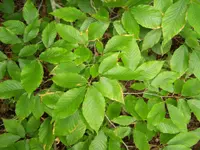
American beech, Fagus grandifolia, is a long-lived deciduous tree native to eastern North America. It forms a broad, dense crown with smooth gray bark and golden fall color. Leaves are oval with fine teeth and often persist as papery brown foliage through winter on younger branches. The tree produces small nuts that support wildlife and contribute to natural forest regeneration. It prefers cool to mild climates, evenly moist, well-drained soils, and does best in full sun to light shade. Deep roots, slow growth, and sensitivity to soil compaction make it better suited to large gardens, parks, and naturalized areas, which influences how to care for American beech.

Main Plant Requirements

Care Difficulty

Moderate Care

Light Preference

Partial Shade

Water Requirements

Moderate Water

Temperature Preference

Cold Hardy

Hardiness Zone

3–9

Soil Texture

Loamy, Clay, Organic-rich

Soil pH

Acidic (5.5–6.5), Slightly acidic (6.5–7.0)

Soil Drainage

Moist but well-drained

Fertilization

Minimal (feed rarely)

Get Personalized Care Plan

Scan your plant to receive care tips personalized for your specific plant

Available on iOS and Android

How to Care for the American beech

This deciduous tree prefers bright, consistent light that mimics an open woodland edge.

  • Provide 4–6 hours of direct morning sun with light afternoon shade; full sun suits established trees in cooler climates.
  • Tolerates partial shade, but dense shade reduces growth, fall color, and leaf density in American beech.
  • Young trees benefit from filtered light under taller trees; avoid sudden exposure to intense afternoon sun, which can scorch leaves in hot summers.

This species prefers evenly moist, cool soil and is sensitive to prolonged drought or saturation.

  • Allow the top 2–5 cm of soil to dry slightly before deep watering young trees; mature trees usually rely on natural rainfall if annual precipitation is moderate.
  • Increase monitoring in hot, dry periods; wilting, crisp edges, or premature leaf drop suggest drought stress in Fagus grandifolia.
  • Ensure soil drains well but retains moisture; standing water, sour smell, or yellowing leaves point to poor drainage and possible root decline.

This temperate-zone tree is adapted to cold winters and mild to warm summers.

  • Optimal growing temperatures are about 60–80°F (16–27°C) during the active season, with cooler nights benefiting overall vigor.
  • Dormant trees tolerate winter lows near -20°F (-29°C) once established, but young saplings need protection from severe frost and drying winter winds.
  • In hot regions, repeated exposure above 90°F (32°C) combined with dry soil can cause leaf scorch, so maintain soil moisture and provide some afternoon shade.

This species prefers moderately moist air but usually adapts to typical outdoor humidity.

  • Aim for 40–60% humidity when young or grown in sheltered sites, avoiding very dry, windy exposure.
  • Dry air can cause marginal leaf browning and early leaf drop, especially on recently planted trees.
  • Increase humidity locally by mulching the root zone 5–8 cm deep to stabilize soil moisture and reduce evaporative stress.

Fagus grandifolia performs best in deep, moist, well‑structured soils with steady drainage.

  • Use a loamy soil rich in organic matter, with a crumbly structure that holds moisture yet does not stay waterlogged.
  • Target slightly acidic soil, around pH 5.0–6.5, avoiding strongly alkaline or compacted sites that restrict root function.
  • Incorporate 20–40% compost plus leaf mold or fine bark into native soil to increase organic content and moisture retention.
  • Improve aeration and drainage on heavier soils by mixing in coarse sand or small grit and preventing traffic that causes surface compaction.

This tree is generally unsuited to long‑term container growing and is best planted in the ground.

Mature Fagus grandifolia in the ground usually needs little fertilizer if soil is deep and moderately fertile.

  • For young or stressed trees, apply a balanced slow-release fertilizer (for example 10-10-10) in early spring.
  • Use 1/2-strength rates compared with heavy-feeding landscape trees, based on label directions and trunk diameter.
  • On poor soils, top-dress the root zone with 2–5 cm of compost instead of frequent granular feeding.
  • Avoid fertilizing in late summer or fall to prevent tender growth that can be damaged in winter.

Pruning Fagus grandifolia is mainly structural and corrective rather than frequent shaping.

  • Schedule light pruning in late winter while the tree is dormant and branch structure is visible.
  • Remove dead, diseased, crossing, or storm-damaged branches with clean, sharp bypass pruners or a pruning saw.
  • Limit canopy reduction to small cuts that maintain the natural rounded form and long-term branch strength.
  • Avoid heavy thinning, topping, or large flush cuts, which increase decay risk and stress the tree.

American beech is rarely a long-term container plant and is usually transplanted from field or nursery stock.

  • Transplant in late fall or very early spring when the tree is dormant and soil is workable.
  • Choose young, small trees; large specimens resent root disturbance and establish slowly.
  • Look for circling or dense roots in nursery containers and gently tease them loose to reduce girdling.
  • Water deeply before and after planting, keep the root ball intact, and use mulch to reduce moisture stress.

Fagus grandifolia propagation is typically done from seed and is slow, so it is not common for casual gardeners.

This species is fully cold hardy in most of its native range and usually needs minimal winter care outdoors.

  • Apply 5–8 cm of mulch over the root zone in late fall, keeping it a few cm away from the trunk.
  • Young or marginal-climate trees benefit from windbreaks or burlap screens to limit desiccating winter winds.
  • Container-grown specimens in cold regions should be moved to an unheated but frost-sheltered space.

Care Tips

Plan rooting space

Before planting, allow at least a 6–9 m radius around the tree for its shallow, wide root system and avoid future conflicts with paving, foundations, or buried utilities.

Protect sensitive bark

Install a wide mulch ring and use physical guards or careful mowing practices to prevent trunk wounds, since the thin, smooth bark is highly vulnerable to mechanical damage and sunscald.

Manage soil compaction

Keep heavy foot traffic and vehicles away from the drip line, and if compaction develops, use core aeration outside the root flare instead of tilling to preserve fine roots.

Control competing vegetation

Maintain a vegetation-free mulch zone under the canopy instead of lawn to reduce root competition for moisture and nutrients, which is especially important when growing American beech in drier sites.

Monitor for beech scale

Inspect bark yearly for white, cottony beech scale insects and, if found early, consult a certified arborist for appropriate systemic or targeted treatments before beech bark disease complex develops.

Common Pests and Diseases

Beech bark disease

This disease results from combined attack by beech scale insects and a fungal pathogen, causing rough white patches, cankers, and eventual bark cracking and dieback. Symptoms include thinning crowns, dead branches, and bark that flakes or falls away.

Solution

Brush or wash small trees to remove scale where feasible, and promptly prune and destroy heavily cankered branches to reduce inoculum. Avoid wounding the bark, keep trees unstressed with proper watering during drought, and in landscape settings consider preventive systemic insecticide treatments against beech scale if the disease complex is present nearby, following local regulations and label directions.

Beech leaf disease

This disease, associated with a nematode, causes dark banding between veins, curling, thickened leaves, and progressive canopy thinning. Symptoms include reduced new growth, sparse foliage, and eventual branch dieback on severely affected trees.

Solution

Remove and destroy heavily affected leaves and small branches where practical to reduce local nematode sources, and avoid moving potentially infested plant material or soil. Maintain tree vigor through correct watering and mulching, and consult local extension services about any regionally recommended management trials, since effective chemical controls are still under active research.

Beech scale

This pest is a tiny sap-feeding insect that produces white, woolly coatings on the bark, weakening the tree and predisposing it to beech bark disease. Symptoms include roughened, white-speckled bark and gradual branch dieback on heavily infested trees.

Solution

On small trees, gently scrub or hose the bark in late summer to remove scales before they multiply, and prune out and destroy branches with dense, persistent infestations. For larger or high-value landscape trees, certified arborists may use targeted systemic insecticides timed to crawler stages, combined with ongoing health care such as proper mulching and drought protection.

Beech leaf-mining weevil

These insects feed within and on the surface of young leaves, creating brown blotches, distorted foliage, and premature leaf drop. Repeated heavy infestations can stress young or already weakened trees.

Solution

Rake and destroy fallen leaves in autumn to remove overwintering stages and reduce the population the following year. For ornamental or young trees with recurring damage, consult an arborist about timing of selective insecticide treatments at bud break, and support recovery with good cultural care such as adequate water and a 5–8 cm mulch layer kept away from the trunk.

Powdery mildew

This disease appears as a white, powdery coating on beech leaves, often late in the growing season, and may cause mild yellowing or early leaf drop. Symptoms include patchy white growth on the upper leaf surface and occasionally distorted new leaves on young trees.

Solution

Improve air movement around the canopy by avoiding overcrowding and by pruning crossing or interior branches, and avoid overhead irrigation that keeps foliage damp in the evening. For high-value ornamental trees with recurrent, heavy infections, apply labeled fungicides preventively at the start of the susceptible period, combined with consistent Fagus grandifolia care that keeps the tree vigorous and less susceptible to cosmetic damage.

Interesting Facts

Semi-evergreen winter hold

American beech often retains its dead leaves through winter, especially on younger trees, a trait called marcescence that may protect buds from cold and browsing animals.

Keystone wildlife resource

The oily nuts of American beech are a critical mast food for many forest animals, including black bears, wild turkeys, blue jays, and several rodent species.

Smooth bark vulnerability

The characteristically smooth, gray bark of American beech makes it visually distinctive but also more susceptible to damage and to diseases such as beech bark disease when wounded.

Botan icon

Did you know?

American beech forms extensive clonal stands by sending up genetically identical sprouts from its root system, which allows single genetic individuals to occupy large areas of forest over long periods.

FAQs about American beech

Growth is slow to moderate, usually about 30–60 cm per year once established. Young trees often grow slowly while roots develop. Crowding, compaction, drought, and poor soil fertility can reduce annual extension significantly.

Grow Healthy Plants with Botan Care

Keep your plants happy and healthy with plant identification, disease detection, and easy care guidance.

Botan plant care app — identify plants on mobile

Explore More Plants