Bud protection
In late winter, cover young branches with breathable frost cloth during hard freezes to protect flower buds, then remove it promptly once temperatures rise above freezing to avoid condensation damage.

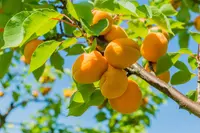
Japanese apricot, Prunus mume, is a small deciduous tree grown for its fragrant late-winter to early-spring blossoms. It typically has a rounded crown with fine, twiggy branches and flowers in shades of white to deep pink. Native to China and widely cultivated in Japan and Korea, it is valued in gardens for early color when few other trees are in bloom. This species prefers full sun, moderate moisture, and well-drained soil. It is not difficult to grow in suitable climates, but late frosts, poor drainage, and pruning at the wrong time can reduce flowering. Learning how to care for Japanese apricot helps maintain a healthy tree with reliable blooms.

Care Difficulty
Moderate Care

Light Preference
Full Sun

Water Requirements
Moderate Water

Temperature Preference
Cold Hardy

Hardiness Zone
6–9

Soil Texture
Sandy, Loamy, Clay

Soil pH
Acidic (5.5–6.5), Slightly acidic (6.5–7.0)

Soil Drainage
Moist but well-drained

Fertilization
Minimal (feed rarely)
Scan your plant to receive care tips personalized for your specific plant
Available on iOS and Android
This deciduous tree prefers bright, direct light to form strong flower buds and healthy wood.
This species prefers evenly moist, well-drained soil and reacts poorly to extremes of drought or saturation.
This hardy flowering tree thrives in cool to mild climates with a distinct winter chill period.
This species tolerates a wide humidity range and usually needs no special humidity management outdoors.
This species prefers moderately fertile, well-structured mineral soil that drains freely yet retains some moisture.
This species can grow in containers for several years, especially in climates with cold winters.
Prunus mume benefits from moderate, targeted feeding to support flowering and steady growth.
Prunus mume responds well to thoughtful pruning that maintains structure and encourages flowering wood.
Japanese apricot is usually grown in the ground, so focus on careful transplanting rather than frequent repotting.
Prunus mume is usually propagated by grafting or cuttings rather than division.
This species is cold-hardy in much of its range but young plants and containers benefit from simple winter care.

Plant Health Check
Not sure what's wrong with your plant? Check your plant's health inside the app.
This species opens its blossoms in late winter, often when temperatures are still low and branches are leafless, which helps its pale to deep pink flowers stand out to early-season pollinators.
The flowers produce a strong, spicy-sweet scent rich in aromatic compounds such as benzaldehyde, which is why the blossom is valued in perfumery, teas, and traditional foods in East Asia.
It has been cultivated in China for more than a thousand years, resulting in hundreds of ornamental cultivars that differ in flower color, petal number, and branching form.

In East Asian art and symbolism, this species is one of the classic "Four Gentlemen" or "Four Noble Ones" in traditional painting, where it represents winter and perseverance because its flowers appear on bare wood during the coldest part of the year.
Lack of flowers often comes from insufficient winter chill, heavy pruning at the wrong time, or too much shade. Avoid pruning after midsummer and ensure cool winter conditions so flower buds can form and mature properly.
Keep your plants happy and healthy with plant identification, disease detection, and easy care guidance.