giant granadilla Care (Passiflora quadrangularis)

Also known as: Badea
giant granadilla

About giant granadilla

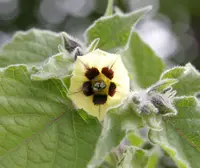
Giant granadilla, Passiflora quadrangularis, is a vigorous tropical vine grown for its large, showy flowers and very big, edible fruits. It climbs by tendrils and needs strong support to manage its heavy growth.

This species is native to tropical regions of Central and South America and thrives in warm, frost-free climates. It prefers bright light, consistent moisture, and fertile, well-drained soil.

The plant grows quickly under suitable conditions but can be demanding in cooler or dry environments. Understanding how to care for giant granadilla helps gardeners manage its size, flowering, and fruiting more reliably.

Main Plant Requirements

Care Difficulty

Moderate Care

Light Preference

Full Sun

Water Requirements

Regular Water

Temperature Preference

Tropical / Frost Sensitive

Hardiness Zone

10–12

Soil Texture

Sandy, Loamy, Organic-rich

Soil pH

Acidic (5.5–6.5), Slightly acidic (6.5–7.0)

Soil Drainage

Moist but well-drained

Fertilization

Moderate (every 2–4 weeks)

Get Personalized Care Plan

Scan your plant to receive care tips personalized for your specific plant

Available on iOS and Android

How to Care for the giant granadilla

Passiflora quadrangularis needs strong light to flower and fruit well outdoors in warm climates.

  • Provide 6–8 hours of direct sun daily, ideally with morning sun and light afternoon shade, especially in hot summers.
  • Allow light partial shade (3–4 hours direct sun) in very hot regions; flowering of giant granadilla may drop if shade is too dense.
  • Watch leaves for stress: pale, sparse growth and long vines indicate too little sun; crisped or bronzed leaves suggest intense, unfiltered afternoon sun.

This vigorous vine prefers consistently moist but not waterlogged soil.

  • Water when the top 3–5 cm of soil feels dry, soaking the root zone deeply, then let excess drain away to prevent root rot.
  • Increase watering during hot, active growth and fruiting; reduce frequency in cooler seasons while ensuring the soil never dries out completely.
  • Check for signs of stress: limp, curling leaves and dry soil indicate underwatering, while yellowing leaves and a sour smell suggest excess moisture around Passiflora quadrangularis roots.

This tropical vine grows best in warm, frost-free conditions throughout the year.

  • Aim for 70–85°F (21–29°C) for strong growth and flowering; vines slow noticeably below 65°F (18°C).
  • Protect from cold: damage begins around 40°F (4°C), and temperatures near 32°F (0°C) can kill stems and young plants.
  • In hot regions above 95°F (35°C), provide afternoon shade and mulch the root zone to keep soil cooler and reduce heat stress.

This species prefers moderately high humidity and reacts if air stays very dry.

  • Aim for 50–70% humidity; it tolerates brief dips lower but growth slows in very dry indoor air.
  • Crisping leaf edges, stalled new vines, and flower bud drop indicate humidity stress in giant granadilla.
  • Increase humidity by grouping plants, using a nearby humidifier, or placing pots above (not in) trays with damp pebbles.

This vigorous vine needs deep, well-aerated, free-draining soil to support rapid root growth.

  • Use a loose loamy structure with plenty of organic matter, such as 50–60% composted bark or compost blended with 40–50% coarse material like perlite or pumice.
  • Ensure fast drainage; water should drain from the pot or bed within a few seconds rather than pooling around the crown.
  • Target a slightly acidic to neutral pH around 6.0–7.0, which supports nutrient availability for Passiflora quadrangularis roots.
  • Avoid heavy clay, compacted zones, or mixes dominated by fine peat that stay wet, and periodically loosen the top layer to maintain aeration.

This species can be grown successfully in containers when given sufficient root volume and support.

  • Choose a tall, heavy container that resists tipping once the vine climbs and fruits, rather than a shallow, lightweight pot.
  • Select thick-walled terracotta or similar porous material if extra evaporation is needed to counter consistently wet conditions.
  • Position the container so any attached trellis or support is anchored outside the pot, reducing leverage on the root zone during strong winds.

Passiflora quadrangularis is a fast-growing vine that benefits from consistent, moderate feeding in warm months.

  • Use a balanced liquid fertilizer (around 10-10-10 or 20-20-20) at 1/2 strength every 2–4 weeks during active growth.
  • Supplement with a light top-dressing of mature compost in spring to support flowering and fruiting of giant granadilla.
  • Choose slow-release granules for containers, applied in early spring, following label rates to avoid salt buildup.
  • In fall and winter, when growth slows, reduce feeding to once every 6–8 weeks or pause entirely if the plant is cool and semi-dormant.

Pruning helps keep Passiflora quadrangularis manageable and supports flowering on healthy wood.

  • Carry out main pruning in late winter or very early spring before vigorous new growth starts.
  • Remove dead, damaged, or tangling stems first, then thin very crowded shoots to improve light and air movement.
  • Shorten long whips to maintain size and encourage side shoots, which bear more flowers and fruit.
  • Use clean, sharp bypass pruners, making cuts just above a leaf node and avoiding removal of more than 1/3 of growth at once.

This vigorous vine is usually grown in the ground, but young plants in containers or nursery stock still benefit from timely transplanting.

  • Plan major transplanting in spring after frost risk passes, when soil is warming and growth resumes strongly.
  • Look for roots circling the pot, slow growth, or quick drying soil as signals that a container plant needs a larger space.
  • Transplant every 1–2 years while young, stepping up only 1–2 pot sizes or moving into well-drained garden soil with a sturdy support.
  • Reduce root stress by watering thoroughly before and after planting, handling the root ball gently, and shading the vine for a few days if weather is hot.

New plants of this species are commonly produced from cuttings or seeds under warm, stable conditions.

  • Take semi-ripe stem cuttings in late spring or summer, 10–15 cm long, with 2–3 nodes and at least one leaf retained.
  • Dip the cut base in rooting hormone, then place in a sterile, moist, free-draining mix under high humidity and 70–80°F bottom warmth.
  • Sow fresh seeds in spring in a warm propagator, lightly covered, as germination can be slow and uneven.
  • Provide bright, indirect light, steady moisture, and good air movement, and pot on young plants once roots fill the starter cell or small pot.

This tropical vine is frost-sensitive and needs careful winter management in cool climates.

  • In regions below 30–32°F, grow Passiflora quadrangularis in containers or a protected site so it can be sheltered in winter.
  • Move potted plants indoors or into a heated greenhouse before the first frost, giving them bright light and reduced watering.
  • In mild climates, mulch the root zone with 5–8 cm of organic material to buffer soil temperature fluctuations.
  • Use frost cloth or similar covering during brief cold snaps to limit damage to stems and foliage on outdoor plants.

Care Tips

Sturdy trellis support

Install a strong, tall trellis or wire system before planting so the vine can be tied in loosely with soft ties as it grows, preventing stem damage and keeping the heavy fruit off the ground.

Selective shoot training

Train 2–3 main stems and remove weak, crowded side shoots near the base to improve airflow, simplify harvesting, and direct the plant’s energy into productive flowering wood.

Root-zone mulching

Apply a 5–8 cm layer of organic mulch around but not touching the stem to stabilize soil moisture, cool the shallow roots, and reduce weed competition without creating stem rot.

Pollination assistance

In areas with low pollinator activity, hand-pollinate flowers in the morning by gently brushing pollen from the anthers onto the stigmas of another flower to increase fruit set when growing giant granadilla.

Cold-season protection

In marginal climates, wrap the lower stems with breathable frost cloth and add extra mulch over the root zone before cold nights to reduce cold damage and help the plant regrow more quickly in spring.

Common Pests and Diseases

Passionvine hopper

This pest feeds on sap from young shoots, leaves, and flower stalks, causing distortion, yellowing, and sticky honeydew that favors sooty mold. Symptoms include reduced vigor and deformed new growth on vines and trellised plants.

Solution

Prune out heavily infested shoots and dispose of them. For remaining nymphs and adults, use a strong water spray to dislodge them, then apply insecticidal soap or a light horticultural oil thoroughly to stems and leaf undersides, repeating every 7–10 days until populations drop; reduce excess nitrogen fertilization that encourages soft, attractive growth.

Passionflower mite

These insects are microscopic eriophyid mites that attack tender leaves, buds, and flowers, leading to bronzing, curling, and distorted growth, especially at shoot tips. Symptoms include stunted vines, poor flowering, and sometimes russeted fruit skin in warm, dry conditions.

Solution

Remove and destroy distorted shoot tips and heavily damaged leaves to lower mite numbers. Improve humidity slightly around the plant, avoid water stress, and treat remaining foliage with sulfur-based miticide or horticultural oil labeled for mites, making sure to cover young shoots and repeating as directed to catch new generations.

Brown spot

This disease is a fungal leaf spot commonly reported on Passiflora species in humid climates, producing small brown lesions that can expand and merge, leading to premature leaf drop. Symptoms include thinning foliage, yellowing around spots, and reduced growth in wet, crowded plantings.

Solution

Prune to improve airflow, avoid wetting the foliage, and water at soil level in the morning so leaves dry quickly. Remove and discard affected leaves, then apply a copper-based or chlorothalonil fungicide labeled for ornamental vines at the first signs of spotting, repeating during prolonged wet periods according to label directions.

Cucumber mosaic virus

This disease causes mosaic patterns, mottling, ring spots, and distortion on leaves of giant granadilla, and can reduce fruit set and quality. Symptoms include irregular yellow and green patches, narrow or twisted leaves, and general decline despite adequate care.

Solution

Promptly rogue out and destroy infected vines, as viral infections cannot be cured. Control aphids and other sap-sucking vectors with insecticidal soap or horticultural oil, sanitize pruning tools between plants, and start new plants from certified clean stock to reduce the risk of reinfection.

Fruit fly infestation

This pest problem occurs when female fruit flies lay eggs in developing fruit, leading to internal larval feeding, soft spots, premature fruit drop, and rotting. Symptoms include small puncture marks on the rind, oozing spots, and fruit that collapses or becomes watery inside.

Solution

Collect and destroy infested or fallen fruit promptly to break the life cycle. Use fine mesh bagging on developing fruits, deploy species-appropriate bait traps around the planting, and avoid leaving ripe fruit on the vine for long periods to reduce attraction and successful egg laying.

Interesting Facts

Massive edible fruits

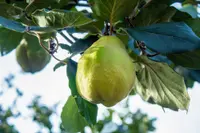
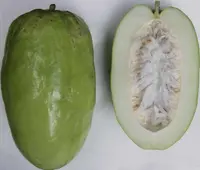
This species produces some of the largest fruits in the passionflower genus, with elongated, ribbed, green-to-yellow berries that can reach well over 20 cm in length and contain aromatic, sweet-tart pulp used fresh or in drinks and desserts in tropical regions.

Four-angled climbing stems

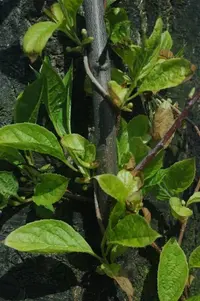
The main stems are distinctly four-sided and winged, a feature that inspired the species name quadrangularis and helps distinguish it from most other passion vines, which have more cylindrical or slightly angular stems.

Specialized ant associations

Leaf petioles often bear nectar-producing glands (extrafloral nectaries) that attract ants, which in turn can help reduce herbivore damage by patrolling and defending the vine from some insect pests.

Botan icon

Did you know?

In parts of the Neotropics, this species is sometimes used as a rootstock for other passionfruit species because its vigorous growth and robust root system can improve grafted plants’ tolerance to soil-borne stresses and enhance productivity in tropical orchards.

FAQs about giant granadilla

Lack of flowers is usually due to insufficient light, low temperatures, or heavy nitrogen fertilization that promotes leaves over buds. Ensure strong support, regular pruning of tangled stems, and balanced fertilizer to redirect energy into flowering rather than excess foliage.

Grow Healthy Plants with Botan Care

Keep your plants happy and healthy with plant identification, disease detection, and easy care guidance.

Botan plant care app — identify plants on mobile

Explore More Plants