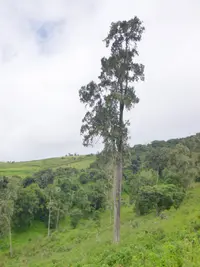
Shelter From Wind
Plant or place yerba maté where it is protected from strong, drying winds, or use a windbreak such as a shrub line or mesh screen, because constant wind stress slows growth and increases leaf scorch risk.

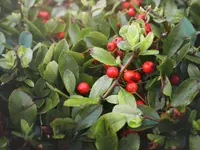
Yerba Maté, Ilex paraguariensis, is an evergreen tree native to subtropical regions of South America, especially Paraguay, Argentina, Brazil, and Uruguay. In cultivation it is often kept pruned as a large shrub or small tree.
Its leaves are leathery, glossy green, and used to prepare the traditional maté beverage. The plant grows slowly and prefers mild, frost-free conditions, which can make outdoor cultivation challenging in cooler climates.
It appreciates bright light with some protection from harsh sun, evenly moist but well-drained soil, and consistent humidity. Those conditions are the foundation of how to care for Yerba Maté in home gardens or controlled environments.

Care Difficulty
Moderate Care

Light Preference
Partial Shade

Water Requirements
Regular Water

Temperature Preference
Warm Climate

Hardiness Zone
9–11

Soil Texture
Loamy, Sandy, Organic-rich

Soil pH
Strongly acidic (4.5–5.5), Acidic (5.5–6.5)

Soil Drainage
Moist but well-drained

Fertilization
Minimal (feed rarely)
Scan your plant to receive care tips personalized for your specific plant
Available on iOS and Android
Ilex paraguariensis needs bright, gentle light to produce dense, healthy foliage.
Ilex paraguariensis prefers consistently moist but well-drained soil.
This species performs best in mild, frost-free climates with moderate humidity.
This species benefits from moderate, stable humidity to support steady leaf and shoot growth.
Ilex paraguariensis prefers deep, slightly acidic, moisture-retentive yet well-drained soil.
This species can be grown in containers if provided with a deep, stable pot and careful moisture management.
Ilex paraguariensis benefits from modest, balanced feeding in containers or nutrient-poor soils.
Ilex paraguariensis responds well to light structural pruning to maintain a healthy, compact canopy.
This species is more often field-grown, but young Ilex paraguariensis in containers or nursery beds benefit from thoughtful transplanting.
Ilex paraguariensis can be propagated by seed and semi-hardwood cuttings, but both methods are moderately slow.
Ilex paraguariensis tolerates only light frost, so winter protection is important in colder climates.

Plant Health Check
Not sure what's wrong with your plant? Check your plant's health inside the app.
This species produces caffeine in its leaves at levels comparable to tea and coffee plants, which helps defend the plant against herbivores and is the basis for the traditional maté beverage.
It is naturally distributed in the Atlantic Forest region of southern Brazil, Paraguay, and northeastern Argentina, where it grows as an understory or mid‑canopy tree in humid subtropical forests.
Leaves and young twigs have been harvested and traded for centuries by Indigenous peoples and later by colonial economies, making it one of the most historically important non-timber crops in the southern cone of South America.

The plant is dioecious, meaning individual trees are either male or female, so only female plants bear the small white flowers that develop into red berries, a key detail for anyone interested in growing Yerba Maté for both foliage harvest and ornamental fruit display.
Growth is moderate. In suitable outdoor conditions, young plants may add 20–40 cm per year, slowing as they mature. Container-grown specimens usually grow more slowly due to root restriction and limited resources.
Keep your plants happy and healthy with plant identification, disease detection, and easy care guidance.