Root zone insulation
In cooler climates, wrap the container or root zone with insulating material in winter to protect the sensitive roots from cold stress while still allowing water to drain freely.


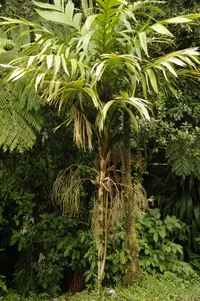
Coconut, Cocos nucifera, is a tropical palm tree typically grown for its fruit, oil, and fiber. It has a single slender trunk topped with a crown of large, arching fronds.
In nature it grows along warm coastal areas, especially on sandy shores where it tolerates salt and wind. As a cultivated plant it is long-lived and can become very tall, so it is rarely suitable as a permanent indoor specimen.
Its need for strong light, warmth, and consistent moisture makes it more demanding than many common houseplants. Understanding how to care for Coconut helps avoid stress, leaf browning, and decline in less-than-tropical homes.

Care Difficulty
Hard Care

Light Preference
Full Sun

Water Requirements
Regular Water

Temperature Preference
Tropical / Frost Sensitive

Hardiness Zone
10–12

Soil Texture
Sandy, Loamy, Organic-rich

Soil pH
Acidic (5.5–6.5), Slightly acidic (6.5–7.0)

Soil Drainage
Well-drained

Fertilization
Light (every 4–6 weeks)
Scan your plant to receive care tips personalized for your specific plant
Available on iOS and Android
This palm needs strong, consistent light to grow into a healthy Cocos nucifera.
Watering should keep the root zone evenly moist but never stagnant for this coastal palm.
Stable warmth is essential for strong growth and long-term Cocos nucifera care.
This species prefers consistently warm, humid air to maintain healthy fronds, especially indoors.
This palm needs a deep, well‑aerated, sandy mix that drains quickly yet holds some moisture.
This species can be grown in containers, though it remains better suited to warm outdoor or large-space settings.
Nutrient supply supports healthy Cocos nucifera growth, especially in containers or poor soils.
Pruning Cocos nucifera is mainly corrective, not shaping, and focuses on removing damaged tissue.
Moving Cocos nucifera is stressful, so repotting or transplanting should be infrequent and carefully planned.
Cocos nucifera is propagated almost exclusively from seed, and the process is slow but straightforward with proper warmth.
Cold conditions are a major limitation for growing Coconut, which is highly sensitive to frost.

Plant Health Check
Not sure what's wrong with your plant? Check your plant's health inside the app.
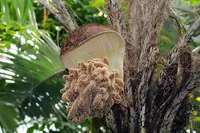
The coconut is botanically a fibrous one-seeded drupe, not a true nut, with a woody inner shell that protects the seed from physical damage and desiccation during long-distance sea dispersal.
Mature coconuts can float in seawater for long periods without losing seed viability, which has enabled natural colonization of tropical shorelines across much of the world.
Cocos nucifera can tolerate salty spray and sandy, nutrient-poor soils, which is why it naturally dominates many tropical coastal zones where other tree species struggle to establish.

Genetic studies show that most cultivated coconuts worldwide come from two main domestication centers, one in the Indo-Atlantic region and one in the Pacific, and many modern populations are hybrids of these two ancient lineages.
Leaf tips usually brown from low humidity, salt buildup, or irregular watering. Use non-salty water, flush the pot occasionally, and keep air moderately humid. Excess fertilizer and cold drafts also scorch foliage and slow recovery.
Keep your plants happy and healthy with plant identification, disease detection, and easy care guidance.