Willow Leaf Persimmon Care (Diospyros salicifolia)

Willow Leaf Persimmon

About Willow Leaf Persimmon

Willow leaf persimmon, Diospyros salicifolia, is a small to medium tree in the ebony family, valued for its fine, narrow foliage and ornamental fruit. It has a graceful, slightly weeping habit that suits informal gardens and naturalistic plantings.

This species is native to parts of Asia, where it grows in warm, seasonal climates. It is generally regarded as moderately easy to grow, provided it receives sun, well‑drained soil, and consistent moisture when young.

Mature plants are more tolerant of short dry spells but do not perform well in poorly drained or compacted ground. For most home gardeners, learning how to care for Willow Leaf Persimmon mainly involves providing suitable light and soil from the start.

Main Plant Requirements

Care Difficulty

Moderate Care

Light Preference

Full Sun

Water Requirements

Moderate Water

Temperature Preference

Warm Climate

Hardiness Zone

9–11

Soil Texture

Sandy, Loamy, Organic-rich

Soil pH

Acidic (5.5–6.5), Slightly acidic (6.5–7.0)

Soil Drainage

Well-drained

Fertilization

Minimal (feed rarely)

Get Personalized Care Plan

Scan your plant to receive care tips personalized for your specific plant

Available on iOS and Android

How to Care for the Willow Leaf Persimmon

This species prefers bright conditions with some protection from harsh midday sun for balanced growth.

  • Provide 6–8 hours of direct sun daily, ideally with morning sun and light afternoon shade, especially in hotter regions.
  • Tolerates partial shade (around 3–4 hours direct sun), but growth and fruiting of Willow Leaf Persimmon may be reduced and foliage can become sparse.
  • In very hot summers, use filtered light or dappled shade during 12–4 pm to reduce leaf scorch; in winter, avoid deep shade from buildings or evergreens.

This tree prefers evenly moist, well-drained soil and reacts poorly to both drought and waterlogging.

  • Before watering, allow the top 3–5 cm of soil to dry, then water deeply so moisture reaches the main root zone rather than just the surface.
  • In spring and summer, soil should stay slightly moist; in autumn reduce frequency, and in winter water only when the surface soil is dry and growth is slow.
  • Signs of overwatering include yellowing leaves and soft new growth, while dull, curling leaves and dry, cracked soil around Diospyros salicifolia indicate underwatering.

This species prefers warm, frost-free conditions and shows best growth in mild to subtropical climates.

  • Optimal growth occurs around 68–82°F (20–28°C), with consistent warmth supporting stronger vegetative growth and better flowering and fruit set.
  • Mature trees may tolerate brief drops to about 28–30°F (-2 to -1°C), but young plants are more sensitive and can be damaged by even light frost.
  • In hot periods above 90°F (32°C), provide soil mulching and adequate moisture to protect roots, as repeated extremes can stress Diospyros salicifolia and reduce vigor.

This species prefers moderate humidity and only needs adjustment in very dry indoor air.

  • Aim for 40–60% air humidity when keeping Willow Leaf Persimmon indoors for extended periods.
  • Expect leaf edge browning and slight curling if humidity stays below 30% for long periods.
  • Increase humidity with a pebble tray under the pot, grouped plants nearby, or a room humidifier rather than frequent misting.

This species grows best in moderately fertile, well-aerated, free-draining soil.

  • Use a loamy mix with roughly 50% commercial potting mix, 25% coarse sand, and 25% composted bark or similar chunky organic material.
  • Ensure fast drainage so water does not stand around the roots longer than 10–15 minutes after watering.
  • Keep pH slightly acidic to neutral, around 6.0–7.0, avoiding strongly alkaline, chalky substrates that can reduce nutrient availability.
  • Improve aeration by adding coarse perlite or pumice if the mix feels heavy, and avoid compacted clay that stays wet and airless.

This species can adapt well to container growing when root space and drainage are carefully managed.

  • Choose a deep, heavy pot that resists tipping, since the woody top growth becomes dense and can make the container top-heavy outdoors.
  • Select a container material that slightly breathes, such as unglazed clay, if overwatering is a concern, as it allows faster evaporation from the root zone.
  • Raise the container slightly on pot feet or bricks so drainage holes stay clear and excess water leaves quickly after rain or irrigation.

This species grows reasonably well in average soil but benefits from moderate feeding during active growth for better vigor and fruiting in Willow Leaf Persimmon.

  • Apply a balanced slow-release fertilizer (around 10-10-10 NPK) in early spring as new growth begins.
  • In midseason, supplement with light applications of compost or a mild liquid feed, diluted to 1/2 strength.
  • Avoid fertilizing in late fall and winter, as the plant is less active and excess nutrients may stress roots.
  • Water thoroughly after each application to move nutrients into the root zone and prevent salt buildup.

Pruning helps maintain structure, light penetration, and health in Diospyros salicifolia without heavy intervention.

  • Carry out main pruning in late winter to very early spring, before buds break.
  • Remove dead, diseased, or crossing branches first, using clean, sharp bypass pruners or a fine-tooth pruning saw.
  • Thin crowded interior shoots to improve airflow and light, which supports stronger growth and better fruiting.
  • Limit cuts to smaller branches and avoid drastic reductions in one season to reduce stress and decay risk.

This species is usually grown in the ground, so focus on careful transplanting rather than frequent repotting.

  • Transplant in late winter or early spring while the plant is dormant to reduce shock.
  • Look for roots circling the container, poor drainage, or slowed growth as signs a potted plant needs a larger container or planting out.
  • Choose a hole or container 1.5–2 times wider than the root ball, using well-drained, slightly acidic soil.
  • Handle roots gently, tease apart only tightly circling ones, water deeply after planting, and keep soil evenly moist until established.

Propagation of this species is possible but somewhat specialized, mainly through seed and semi-hardwood cuttings.

  • Collect ripe seeds, clean them, and sow in a well-drained seed mix; cool stratification for several weeks can improve germination.
  • Take semi-hardwood cuttings in late summer, 10–15 cm long, with 2–3 nodes each.
  • Remove lower leaves, dip the base in rooting hormone, and place in a moist, free-draining medium under high humidity and bright, indirect light.
  • Maintain steady warmth (70–75°F) and avoid waterlogging to reduce rot and encourage reliable rooting.

This species is moderately hardy but benefits from thoughtful winter management, especially when young or container-grown.

  • In climates with freezing winters, add a 5–8 cm mulch layer around the root zone, keeping it slightly away from the trunk.
  • Wrap young trunks with breathable tree wrap to reduce bark cracking from freeze–thaw cycles.
  • Move container plants into a cool, bright, frost-free location when temperatures drop below local hardiness limits.

Care Tips

Early framework training

In the first 3–4 years, select 3–5 well-spaced main branches and lightly tip-prune competing shoots to build a strong, open framework that supports future crops and reduces breakage under fruit load.

Fruit load thinning

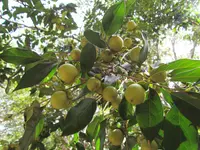
Once young fruits reach pea to marble size, remove excess clusters so that fruits are spaced 10–15 cm apart along the branch, which improves fruit size, reduces limb strain, and helps prevent biennial bearing.

Rootzone mulching strategy

Apply a 5–8 cm layer of coarse organic mulch in a wide ring that stops 5–10 cm short of the trunk flare to keep roots cool, stabilize soil moisture, and limit weed competition without increasing trunk rot risk.

Trunk and scaffold protection

In hot, exposed sites, use a breathable tree wrap or apply white latex paint diluted 1:1 with water on the southwest side of the trunk and main scaffolds to reduce sunscald and bark cracking in young trees.

Targeted pest monitoring

From late spring through summer, inspect the undersides of leaves and new shoots every 1–2 weeks for scale insects, leafminers, or mites, and spot-treat early with horticultural oil or insecticidal soap according to label directions as part of caring for Willow Leaf Persimmon.

Common Pests and Diseases

Persimmon psyllids

This pest feeds on young leaves and shoots, causing curling, distortion, and sticky honeydew that can attract sooty mold.

Solution

Prune and discard heavily infested shoot tips, then wash foliage with a strong but gentle stream of water to remove nymphs and honeydew; if needed, apply a light horticultural oil or insecticidal soap targeting the undersides of leaves, and encourage natural predators such as lacewings by avoiding broad-spectrum insecticides.

Scale insects

These insects attach to stems and leaf midribs, sucking sap and weakening the plant, often leaving sticky honeydew and dark sooty deposits.

Solution

Physically remove small numbers by gently scraping with a fingernail or soft brush, then follow with horticultural oil or insecticidal soap applications repeated every 7–10 days, and improve plant vigor with proper watering and light so it can better tolerate minor feeding.

Leaf spot

This disease causes small brown to dark purple spots on leaves that may merge into larger blotches, sometimes leading to premature leaf drop in humid, stagnant air.

Solution

Remove and discard affected leaves, increase airflow around the canopy by thinning dense growth, avoid wetting the foliage during irrigation, and if spotting progresses, apply a labeled copper or bio-fungicide during warm, wet periods.

Anthracnose

This disease produces irregular dark lesions along leaf veins and on young shoots, which can deform new growth and reduce photosynthesis.

Solution

Prune out and dispose of infected twigs and leaves, sterilizing pruning tools between cuts, avoid overhead watering, and in areas with a history of anthracnose on persimmons, use preventive fungicide sprays at leaf-out and during extended wet weather.

Fruit moth borers

This pest targets developing fruit, boring into the flesh and causing premature fruit drop, internal tunneling, and decay around the entry hole.

Solution

Collect and destroy any infested or dropped fruit, use fine mesh bags over individual fruits where practical, keep the area beneath the tree clean to reduce breeding sites, and consider pheromone traps or targeted timing of biological insecticides to disrupt the moth life cycle.

Interesting Facts

Narrow willow‑like foliage

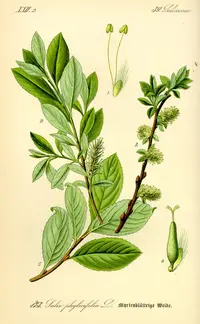
This species has unusually narrow, elongated leaves that closely resemble those of a willow, an uncommon leaf shape within the ebony family (Ebenaceae), which makes it easy to distinguish from many other persimmon relatives.

Specialized riparian habitat

It is naturally associated with moist, often riparian sites in parts of Mexico and Central America, where it tends to grow along watercourses or in seasonally wet soils rather than in dry upland habitats typical of some other persimmons.

Fruit for wildlife nutrition

Its small, berry‑like fruits are known to be eaten by local wildlife, providing carbohydrates and other nutrients for birds and small mammals, and in return these animals help disperse the seeds away from the parent tree.

FAQs about Willow Leaf Persimmon

This species is typically evergreen in frost-free or very mild climates, holding narrow leaves year-round. In cooler areas it can behave semi-evergreen, shedding part of its foliage during colder or drier periods before resuming growth.

Grow Healthy Plants with Botan Care

Keep your plants happy and healthy with plant identification, disease detection, and easy care guidance.


Botan plant care app — identify plants on mobile

Explore More Plants