Early root training
In the first 2–3 years, use deep, narrow containers or planting holes to encourage a strong taproot and avoid circling roots, which improves long-term stability and drought tolerance.

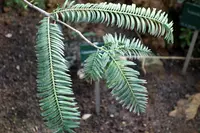
New Caledonia retrophyllum (Retrophyllum minus) is a slow-growing coniferous tree from the podocarp family. It often has a narrow, upright form with layered, flat sprays of foliage. Leaves are arranged in two ranks along the shoots, giving a fern-like or retrophyllum (back-leaf) look that stays attractive year-round.
This species is native to New Caledonia, where it grows in moist forests and along streams, often on poor or rocky soils. It is considered rare in cultivation and can be challenging outside mild, frost-free climates. Gardeners who want to learn how to care for New Caledonia retrophyllum should know it prefers steady moisture, free-draining acidic soil, and shelter from harsh sun and wind.

Care Difficulty
Hard Care

Light Preference
Partial Shade

Water Requirements
Aquatic

Temperature Preference
Tropical / Frost Sensitive

Hardiness Zone
11–12

Soil Texture
Sandy, Loamy, Organic-rich

Soil pH
Acidic (5.5–6.5)

Soil Drainage
Waterlogged tolerant

Fertilization
Minimal (feed rarely)
Scan your plant to receive care tips personalized for your specific plant
Available on iOS and Android
This conifer prefers bright, gentle light similar to open, humid river margins.
This species thrives in consistently moist, never stagnant, soil.
This plant favors warm, frost-free conditions with limited temperature swings.
This conifer prefers moderately humid air but usually adapts to typical indoor levels.
Retrophyllum minus needs a slightly acidic, moist but free-draining substrate that mimics a forested streambank.
This species can be grown in containers for juvenile stages if stability and drainage are carefully managed.
This slow-growing conifer from New Caledonia needs only modest feeding in cultivation.
Pruning Retrophyllum minus is mainly corrective, helping maintain structure and plant health.
This species is usually grown in the ground; focus on careful transplanting rather than frequent repotting.
Propagation of Retrophyllum minus is specialized and usually handled by experienced growers or conservation programs.
This warm-climate conifer is not fully frost hardy and benefits from targeted winter protection in cooler regions.

Plant Health Check
Not sure what's wrong with your plant? Check your plant's health inside the app.
This conifer is naturally restricted to a few short stretches of fast-flowing, cool rivers in southern New Caledonia, often growing directly in the water or on boulders beside it.
Its flattened foliage has the stomata and paler surface on the upper side of the leaf rather than the underside, a trait that inspired the genus name Retrophyllum, meaning backwards leaf.
Retrophyllum minus is listed as Critically Endangered on the IUCN Red List due to its tiny range, small and fragmented populations, and the vulnerability of its river habitats to mining and other disturbance.

Retrophyllum minus is one of very few conifers in the world that naturally grows as a rheophyte, a plant specialized for life in fast-running streams, where its flexible stems and narrow crown help it withstand strong water currents and occasional flooding.
This conifer is evergreen, keeping its foliage year-round rather than dropping needles seasonally. Older leaves are shed gradually, so the plant always carries a full set of flattened, scale-like leaves in suitable conditions.
Keep your plants happy and healthy with plant identification, disease detection, and easy care guidance.