


Shallow Water Trays
Use a wide, shallow tray or saucer filled with 1–3 cm of water to keep the root zone constantly moist without flooding the crown, and refresh the water at least weekly to prevent stagnation.

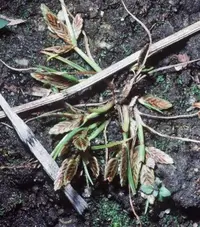
Slender flatsedge (Cyperus bipartitus) is a small, fine-textured sedge typically found along shorelines, stream banks, and in seasonally wet ground. It forms low, tufted clumps with narrow, grass-like leaves and delicate seed heads held on thin stems. This species is native to much of North America, where it often appears in open, disturbed wet habitats. It tends to be short-lived but can reseed readily when conditions stay moist. For those who want to care for slender flatsedge, it generally prefers full sun to light shade, consistently damp soil, and areas that do not stay completely dry for long periods.

Care Difficulty
Moderate Care

Light Preference
Full Sun

Water Requirements
Aquatic

Temperature Preference
Warm Climate

Hardiness Zone
6–10

Soil Texture
Sandy, Loamy, Silty

Soil pH
Acidic (5.5–6.5), Slightly acidic (6.5–7.0)

Soil Drainage
Waterlogged tolerant

Fertilization
Minimal (feed rarely)
Scan your plant to receive care tips personalized for your specific plant
Available on iOS and Android
This wetland species needs consistent light to fuel fast growth and dense clumps.
This species naturally grows in saturated soils, so moisture management is critical.
Stable, mild warmth supports vigorous growth and healthy foliage.
This wetland sedge prefers high humidity and does not thrive in dry indoor air.
Cyperus bipartitus naturally grows in saturated, fine-textured soils and adapts well to permanently moist potting media.
This species is suitable for container growing, especially in water gardens or as a controlled bog plant.
This wetland sedge grows in fairly poor soils, but light feeding improves container or garden performance when caring for slender flatsedge.
Cyperus bipartitus benefits from light, maintenance pruning to keep clumps healthy and tidy.
This small sedge is more often transplanted in the landscape or along pond margins than repotted as a houseplant.
Cyperus bipartitus is commonly propagated by division or seed in managed wetlands and garden settings.
This sedge is cold hardy in many temperate regions and usually needs only modest winter care in outdoor plantings.

Plant Health Check
Not sure what's wrong with your plant? Check your plant's health inside the app.
This species often colonizes fresh, unstable shorelines of ponds and streams, quickly establishing on recently exposed mud after water levels drop and helping stabilize the substrate for later plant species.
Unlike many sedges that are long-lived perennials, this plant typically completes its entire life cycle in a single growing season, depending on a soil seed bank to re-establish populations each year.
The plant produces very small, few-flowered spikelets that mature close to the ground, an adaptation that suits frequently disturbed, periodically flooded habitats where taller inflorescences might be damaged or washed away.
This species spreads quickly by seed in wet, disturbed soils, forming loose patches but usually not dense monocultures. In gardens, control spread by removing seed heads before they drop and by pulling unwanted seedlings while young.
Keep your plants happy and healthy with plant identification, disease detection, and easy care guidance.

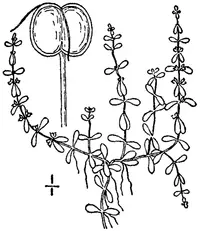
terrestrial water-starwort
Callitriche terrestris
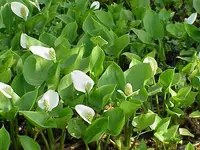
Bog Arum
Calla palustris
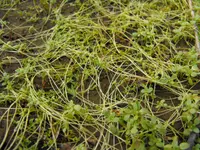
winged water-starwort
Callitriche marginata

pond water-starwort
Callitriche stagnalis

Intermediate Water-Starwort
Callitriche hamulata

Pedunculate Water-Starwort
Callitriche brutia
yellow velvetleaf
Limnocharis flava
Slender Club-rush
Isolepis cernua