Water Depth Management
Maintain a stable water depth of 10–20 cm above the crown and adjust slightly lower in cooler months to reduce stress and prevent soft, weak growth when growing yellow velvetleaf.

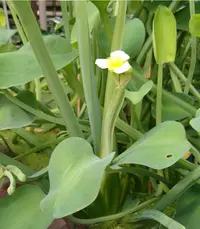
Yellow velvetleaf (Limnocharis flava) is a small, aquatic or semi-aquatic plant often grown in ponds, wet containers, or shallow water gardens. It forms clumps of soft, upright leaves with bright yellow, buttercup-like flowers held above the foliage.
This species is native to tropical wetlands in Southeast Asia and parts of Central and South America, where it thrives in still or slow-moving water. It grows quickly in warm, humid conditions, which makes it easy to manage if water and nutrients are consistent.
Because it prefers constant moisture and shallow water rather than regular potting soil, planning how to care for yellow velvetleaf focuses on stable water levels and warmth.

Care Difficulty
Moderate Care

Light Preference
Full Sun

Water Requirements
Aquatic

Temperature Preference
Tropical / Frost Sensitive

Hardiness Zone
10–12

Soil Texture
Clay, Silty, Organic-rich

Soil pH
Acidic (5.5–6.5), Slightly acidic (6.5–7.0)

Soil Drainage
Waterlogged tolerant

Fertilization
Moderate (every 2–4 weeks)
Scan your plant to receive care tips personalized for your specific plant
Available on iOS and Android
This aquatic plant prefers strong light in warm, open sites for reliable flowering.
This marsh species requires constant saturation rather than periodic drying.
This tropical aquatic plant thrives in warm, frost-free conditions.
This aquatic species needs very high humidity and constant moisture around foliage and roots.
Limnocharis flava grows best in saturated, organic-rich, mud-like substrates rather than typical potting soil.
This species is suitable for container growing in large, water-filled tubs or ponds.
Nutrient-rich, shallow water supports strong growth and flowering in Limnocharis flava.
Light pruning keeps Limnocharis flava tidy and maintains healthy, vigorous clumps.
Transplanting or dividing yellow velvetleaf manages spread and maintains healthy stands in ponds or tubs.
Limnocharis flava is commonly propagated by division or seeds to establish new colonies in managed water gardens.
This tropical aquatic species has low frost tolerance and needs specific winter care in cooler climates.

Plant Health Check
Not sure what's wrong with your plant? Check your plant's health inside the app.
In Southeast Asia, the young flower stalks and leaf petioles of this aquatic herb are widely eaten as a vegetable in soups, curries, and stir-fries, especially in Indonesia and Thailand.
This species thrives in shallow standing water such as rice paddies and ditches, using its spongy leaf stalks and air-filled tissues to keep foliage above the water surface.
In several tropical regions outside its native range, it is considered an invasive weed of irrigated rice, where dense stands compete with rice seedlings and complicate water management.

In parts of Java, this plant became so abundant in rice paddies that it gained the nickname "poor man’s vegetable," because its edible shoots were freely harvested from wild stands by rural communities as a readily available food source.
This species spreads quickly by seed and vegetative offsets in warm, shallow water. In favorable conditions it can form dense stands that outcompete other aquatic plants, so regular thinning and strict containment are important.
Keep your plants happy and healthy with plant identification, disease detection, and easy care guidance.