red pea Care (Lathyrus cicera)

Also known as: Red Vetchling
red pea

About red pea

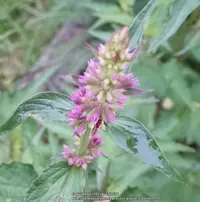
Red pea, Lathyrus cicera, is an annual climbing legume grown for its delicate foliage and small, colorful pea flowers. It typically has slender, winged stems, paired leaflets, and tendrils that help it scramble through surrounding vegetation or over supports.

In nature, it occurs across parts of the Mediterranean region and western Asia, often in open fields, roadsides, and light disturbed habitats. The plant is usually easy to manage from seed, provided it receives good light and is not overwatered.

It prefers sunny, open conditions with well-drained soil, making it adaptable to many garden settings. Understanding how to care for red pea starts with providing stable light, moderate moisture, and low-fertility, free-draining soil.

Main Plant Requirements

Care Difficulty

Moderate Care

Light Preference

Full Sun

Water Requirements

Moderate Water

Temperature Preference

Cool Climate

Hardiness Zone

6–9

Soil Texture

Sandy, Loamy, Silty

Soil pH

Acidic (5.5–6.5), Slightly acidic (6.5–7.0)

Soil Drainage

Well-drained

Fertilization

Minimal (feed rarely)

Get Personalized Care Plan

Scan your plant to receive care tips personalized for your specific plant

Available on iOS and Android

How to Care for the red pea

This annual pea prefers bright, open conditions to flower and set seed well.

  • Provide full sun for 6–8 hours per day; light afternoon shade is helpful in very hot inland summers.
  • Site Lathyrus cicera where morning sun and free air movement reduce leaf wetness and lower disease risk.
  • Plants in too much shade produce weak, floppy growth and few flowers, while extreme, reflected midday sun can scorch leaves, especially in dry, exposed sites.

This species prefers steady soil moisture without prolonged saturation.

  • Water when the top 3–5 cm of soil feels dry, aiming for evenly moist but never waterlogged ground.
  • Use well-drained, loamy soil so Lathyrus cicera roots receive both moisture and air; standing water promotes root rot and yellowing foliage.
  • In cool, rainy seasons reduce supplemental water, but in hot, windy weather watch for drooping leaves or dry, pale foliage as signs the plant needs a deep soak.

This cool-season annual grows best in mild conditions and struggles with temperature extremes.

  • Aim for 55–70°F (13–21°C) during active growth for strong stems and flowering.
  • Seeds can germinate from about 40°F (4°C), but young plants are damaged by hard frost below 28°F (-2°C), so outdoor sowing is safest after severe freezes pass.
  • Red pea tolerates short warm spells up to about 80–85°F (27–29°C), but prolonged heat reduces flowering, so in hot regions grow it in the cooler parts of spring or fall.

This species handles a wide humidity range and usually does not need special humidity management outdoors.

  • Aim for 40–60% humidity; typical outdoor air in most temperate regions is adequate for red pea.
  • Plants tolerate brief dry air but may show crisping leaf edges and faster wilting in hot, very dry wind.
  • Increase humidity slightly during extreme dryness by grouping plants or using a nearby water tray without waterlogging the soil.

Lathyrus cicera prefers moderately fertile, well‑structured mineral soil that drains freely yet holds some moisture.

  • Use a loamy or sandy‑loam soil with 20–30% compost to provide nutrients and moderate water retention.
  • Ensure fast drainage by avoiding heavy clay or adding coarse sand or fine gravel at 10–20% by volume.
  • Target a slightly acidic to neutral pH of 6.0–7.5 for best nutrient availability and root activity.
  • Break up compaction before planting to improve aeration, as stagnant, airless soil increases root rot risk.

This species can be grown in containers if the pot is deep and allows for secure support of its vining growth.

  • Choose a container at least 25–30 cm deep to accommodate the taproot and prevent restrictive root circling.
  • Use a heavier terracotta or ceramic pot outdoors to reduce tipping when the vines climb a support.
  • Provide a firmly anchored trellis or canes in the pot so wind movement does not rock and stress the root zone.

Lathyrus cicera benefits from modest feeding during active growth but does not need heavy fertilization for healthy performance.

  • Use a balanced, water-soluble fertilizer (for example 10-10-10) at half strength every 3–4 weeks in spring and early summer while shoots are elongating.
  • Alternatively, apply a light top-dressing of fine compost around the root zone instead of frequent liquid feeds when caring for red pea.
  • Avoid high-nitrogen products that encourage excessive foliage at the expense of flowers and may cause weak, floppy growth.
  • Stop feeding by late summer and do not fertilize in winter or dormancy to prevent soft, cold-sensitive growth.

Pruning Lathyrus cicera helps maintain a tidy habit and can extend the flowering period.

  • In late spring and through summer, snip off spent flowering stems with clean, sharp scissors or hand pruners to encourage further blooms.
  • Remove any dead, damaged, or diseased growth as soon as noticed to reduce disease pressure and improve air flow.
  • Thin out crowded, tangled stems at the base to reduce shading and help support light penetration into the plant.
  • At the end of the season, cut back dried vines close to ground level to reset growth for the next cycle.

This species is more often transplanted outdoors than kept long term in containers, as its root system dislikes repeated disturbance.

  • Transplant seedlings when they have 2–3 true leaves, before roots start circling the pot or growth slows from crowding.
  • Aim to transplant in early to mid spring, once soil is workable and frost risk is low, so roots establish before summer heat.
  • Plant into a well-drained, moderately fertile soil and keep the original root ball intact, handling roots gently to limit transplant shock.
  • Water thoroughly after planting, then shade lightly and keep soil evenly moist for 7–10 days while the plant settles.

Lathyrus cicera is most commonly propagated from seed, which gives reliable and uniform plants.

  • Sow seeds in late winter to early spring under cover, or directly outdoors once the soil has warmed in spring.
  • Scarify hard seed coats gently with sandpaper or soak seeds for 8–12 hours to improve and speed up germination.
  • Provide bright light, a free-draining seed mix, and temperatures around 60–68°F for steady emergence.
  • Keep the medium evenly moist but not waterlogged; thin or transplant seedlings once they develop several true leaves.

This annual or short-lived species usually completes its life cycle before winter, so ongoing winter care is minimal in mild regions.

  • In colder climates, collect mature seeds before hard frosts so the planting can be renewed next season.
  • Where light frosts occur, a thin mulch layer around the base can moderate soil temperature and protect remaining roots.
  • Container-grown plants in very cold areas can be moved to a cool, frost-free shelter to finish ripening seeds.

Care Tips

Low trellis support

Provide a 30–60 cm mesh or twiggy brushwood row so the short vines can latch on quickly, which keeps the stems off wet soil and reduces rot and slug damage.

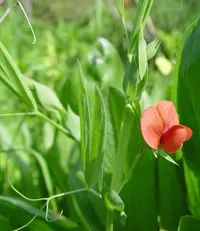
Targeted pinch-back

When plants reach 10–15 cm, pinch just the tip of the main stem once to encourage 2–3 side shoots, then stop pinching so flowering is not delayed too much.

Staggered sowing

Sow a small batch every 10–14 days over late winter and early spring so flowering is spread out, which gives a longer display and more chances to collect seed in variable weather.

Selective pod removal

For longer bloom on ornamental rows, remove the first forming pods regularly, but leave a few healthy pods on the strongest plants at the end of the season if you want seed for future growing red pea.

Drip-line irrigation

Use a simple drip line or soaker hose set beside, not over, the row so foliage stays dry, which lowers the risk of powdery mildew and keeps flowers cleaner for cutting.

Common Pests and Diseases

Downy mildew

This disease causes pale yellow spots on upper leaf surfaces with grey to purplish felt-like growth on the undersides, especially in cool, humid weather. Symptoms include leaf distortion and premature leaf drop that can weaken plants and reduce flowering.

Solution

Remove and destroy affected leaves and crop debris, avoid overhead watering, and space plants to improve airflow. In damp climates, use a copper-based or fosetyl-Al fungicide labeled for edible legumes, applying preventively when cool, wet conditions are forecast, and rotate away from legume beds for several years if infections are severe.

Powdery mildew

This disease appears as white, powdery coating on leaves, stems, and sometimes pods, typically in warm days and cool nights. Symptoms include yellowing, leaf curling, and reduced vigor late in the season.

Solution

Improve air circulation, avoid crowding, and water at soil level to keep foliage dry. Remove heavily infected foliage and, if needed, apply a sulfur or potassium bicarbonate fungicide labeled for peas at the first sign of white patches to slow spread.

Pea aphids

These insects are small green or pinkish, soft-bodied sap feeders that cluster on stems, undersides of leaves, and young shoots. This pest causes leaf curling, sticky honeydew, sooty mold growth, and may transmit plant viruses that stunt growth.

Solution

Dislodge colonies with a firm stream of water and pinch off heavily infested shoot tips. Encourage lady beetles and lacewings, use reflective mulch where practical, and if populations stay high, apply insecticidal soap or neem oil, coating undersides of leaves and repeating as needed according to label directions.

Pea weevil

This pest is a small beetle whose larvae develop inside seeds, leaving round exit holes and damaged, low-viability seed. Symptoms include poor germination from saved seed and small notches or feeding damage on pods and seeds.

Solution

Use clean, certified seed and avoid saving seed from infested crops, and promptly harvest pods to reduce egg laying. In areas with recurring problems, rotate crops away from peas and other Lathyrus species for 3–4 years and consider covering plants with fine mesh before flowering to block adult beetles from laying eggs.

Ascochyta blight

This disease causes dark brown to black leaf spots with pale centers, stem lesions, and pod spotting, especially in cool, wet conditions. Symptoms include dieback of shoots, poor flowering, and shriveled pods, which can be important for Lathyrus cicera plant care in field or garden settings.

Solution

Avoid overhead irrigation, remove and destroy infected plant material, and practice 3–4 year crop rotation away from legumes. Plant only healthy, disease-free seed, and in regions with a history of Ascochyta, use fungicide-treated seed or apply a registered protectant fungicide at early growth stages if conditions favor disease.

Interesting Facts

Mediterranean arable specialist

This annual pea is naturally associated with traditional Mediterranean cereal fields and disturbed soils, where it acts as a minor crop companion and wild weed in wheat and barley systems.

Nitrogen-fixing wild legume

Its root nodules host Rhizobium bacteria that convert atmospheric nitrogen into plant-available forms, helping to enrich low-fertility soils and support subsequent crops in rotation.

Toxic seed neurotoxin

The seeds can accumulate the neurotoxic amino acid ODAP, which is linked to neurolathyrism in humans and animals if consumed in large quantities over time, so the species is not considered a safe food legume.

Botan icon

Did you know?

Historical records from southern Europe describe this species being used as an emergency famine food, despite its toxicity, when safer grain and pulse crops failed during drought years.

FAQs about red pea

This species is a scrambling annual vine. It uses tendrils to hook onto nearby stems, fences, or supports, climbing 30–80 cm. Without support, it sprawls along the ground, forming loose, low mounds rather than dense mats.

Grow Healthy Plants with Botan Care

Keep your plants happy and healthy with plant identification, disease detection, and easy care guidance.

Botan plant care app — identify plants on mobile

Explore More Plants