Yarrow Care (Achillea millefolium 'Paprika')

Yarrow

About Yarrow

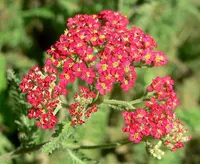
Achillea millefolium 'Paprika' is a hardy, herbaceous perennial grown mainly for its flat clusters of bright red flowers and finely divided, fern-like foliage. It forms a low, spreading clump with upright flowering stems, creating a soft, meadow-like effect in garden beds and borders.

This cultivar originates from the wild common yarrow, which is native to temperate regions of the Northern Hemisphere, including North America, Europe, and Asia. It is bred for ornamental use, with showier blooms and a compact habit.

The plant is valued for its toughness, drought tolerance, and long flowering season, which make it relatively easy to grow for most gardeners. It prefers full sun, well-drained soil, and moderate watering, and these traits guide how to care for Yarrow in typical home gardens.

Main Plant Requirements

Care Difficulty

Easy Care

Light Preference

Full Sun

Water Requirements

Low Water

Temperature Preference

Cold Hardy

Hardiness Zone

3–9

Soil Texture

Sandy, Loamy, Rocky

Soil pH

Slightly acidic (6.5–7.0), Slightly alkaline (7.0–7.5)

Soil Drainage

Well-drained

Fertilization

Minimal (feed rarely)

Get Personalized Care Plan

Scan your plant to receive care tips personalized for your specific plant

Available on iOS and Android

How to Care for the Yarrow

Achillea millefolium 'Paprika' thrives in strong, direct sun for best flowering and compact growth.

  • Provide 6–8 hours of full sun daily; in very hot inland areas, light afternoon shade can reduce stress and leaf scorch.
  • Plant in an open, unshaded spot rather than under trees or eaves, as persistent shade reduces blooms and makes stems floppy.
  • In summer, monitor for bleaching or crispy leaf edges from reflected heat; in cloudy seasons, flowering may slow but Yarrow generally adapts.

This hardy perennial prefers dry to moderately moist soil and is more tolerant of drought than excess water.

  • Let the top 3–5 cm of soil dry before watering in the ground; in most climates this means only when conditions are clearly dry.
  • Use well-drained, sandy or loamy soil so water does not pool; standing water or heavy clay promotes root rot and weak, lush growth.
  • Reduce watering in cool seasons and after flowering; drooping, crisp foliage signals underwatering, while yellowing, limp stems suggest overwatering in Achillea millefolium 'Paprika'.

This yarrow handles a wide temperature range, with strong cold tolerance once established outdoors.

  • Optimal growth occurs around 65–80°F (18–27°C), especially in spring and early summer when plants put on new foliage and buds.
  • Mature clumps tolerate winter lows near -20°F (-29°C) in the ground, dying back above the soil line and re-sprouting in spring.
  • In heat above 90°F (32°C), flowering may slow; provide mulch to keep roots cooler but avoid plastic coverings that trap heat.

Humidity is rarely a concern for Achillea millefolium 'Paprika' in typical outdoor conditions.

Achillea millefolium 'Paprika' prefers lean, well-drained soil that does not stay wet after rain or watering.

  • Use a sandy or sandy-loam mix with low to moderate organic matter to mimic its naturally dry habitats.
  • Ensure rapid drainage by blending mineral topsoil with coarse sand or fine gravel at about 30–40% of the mix.
  • Aim for slightly acidic to slightly alkaline conditions, around pH 6.0–7.5, as the plant is tolerant across this range.
  • Avoid heavy clay, waterlogged spots, or rich, constantly moist beds, which promote weak growth and root rot.

This plant grows reliably in containers outdoors when provided with a dry, stable root environment.

  • Choose a wide, relatively shallow pot to accommodate its spreading root system and prevent crowding the center.
  • Select a heavier material such as terracotta or ceramic to reduce tipping from tall, flowering stems in windy sites.
  • Fill the pot with a gritty, fast-draining mix and keep the surface slightly raised above the rim to shed excess rainwater quickly.

This yarrow prefers lean soil and only modest feeding to maintain flowering without excessive leafy growth.

  • Apply a light dressing of compost or well-rotted manure in early spring to boost soil organic matter.
  • If growth is weak, use a balanced slow-release fertilizer (around 10-10-10) at half label rate once in spring.
  • Avoid high-nitrogen products, which reduce bloom density and make stems floppy.
  • Do not fertilize in late fall or winter, when the plant is dormant.

Thoughtful pruning keeps Achillea millefolium 'Paprika' compact, floriferous, and tidy.

  • Deadhead spent flower stems in summer using clean hand pruners to encourage repeat blooming.
  • Cut back stems by about one-third after the main flush to promote bushier regrowth.
  • Remove dead, damaged, or crowded shoots at the base to improve air circulation and reduce disease risk.
  • In late fall or very early spring, shear old stems close to ground level to refresh new seasonal growth.

This plant is usually grown in garden beds, with transplanting or division every few years to maintain vigor.

  • Plan to lift and divide clumps every 3–4 years in early spring or early fall.
  • Look for signs such as thinning centers, slow growth, or woody, congested crowns as cues for transplanting.
  • Gently dig around the clump, lift it with a fork, and tease apart sections, keeping several shoots and healthy roots per division.
  • Replant divisions at the same depth in well-drained soil, water thoroughly, then keep evenly moist until re-established to limit root stress.

Achillea millefolium 'Paprika' is commonly propagated by division, cuttings, and seeds for consistent flowering patches.

  • Divide mature clumps in early spring or early fall, separating vigorous outer sections and discarding woody centers.
  • Take 7–10 cm softwood cuttings in late spring, root them in a free-draining, slightly moist mix, and maintain bright, indirect light.
  • Sow seeds in late winter to early spring on the surface of a sterile seed mix, as light helps germination.
  • Keep propagation environments at 65–75°F with good air movement to reduce damping-off and encourage strong root development.

This cold-hardy perennial usually needs minimal winter care in most temperate climates.

  • Established plants tolerate frost and freezing, with root systems hardy through typical US winters.
  • In colder regions, add a 5–7 cm layer of mulch after the ground cools to buffer freeze–thaw cycles around the crown.
  • Leave some stems standing over winter for crown insulation, then cut them back in late winter before new growth emerges.
  • For container plants in very cold zones, move pots to a sheltered, unheated but frost-moderated spot such as a garage or cold frame.

Care Tips

Shear After Flush

Shear spent flower stems back by about one-third immediately after the first main flush to trigger a dense second wave of blooms and keep the plant from lodging or flopping.

Staggered Division

Divide and replant the outer, more vigorous ring of the clump every 2–3 years, discarding the woody center, to maintain strong flowering and prevent overcrowding in mixed borders.

Support In Wind

In exposed sites, insert low, inconspicuous ring supports or short grid stakes in early spring so new shoots grow through them, providing hidden structure that keeps mature stems upright.

Drying For Monitoring

When cutting stems for drying, select the healthiest, pest-free flower heads and leave at least half the foliage intact so the remaining growth can be monitored for early signs of mildew or aphids.

Controlled Self-Seeding

Allow a limited number of seed heads to mature and drop where color and form are desirable, then deadhead the rest to reduce unwanted spread and keep color performance consistent when growing Yarrow.

Common Pests and Diseases

Powdery mildew

This disease causes a white, powdery film on foliage, often during warm days with cool, humid nights. Symptoms include distorted growth and reduced flowering if the infection is heavy.

Solution

Improve air circulation by thinning crowded stems and avoid overhead watering, especially late in the day. Remove and discard heavily infected leaves, then apply a sulfur or potassium bicarbonate fungicide labeled for ornamentals if conditions stay favorable for disease.

Botrytis blight

This disease leads to brown, water-soaked spots on flowers and leaves that develop gray, fuzzy mold in cool, damp weather. Symptoms include flower clusters failing to open or turning brown prematurely.

Solution

Remove and dispose of affected flower heads and foliage and avoid letting plant debris accumulate around the crown. Increase spacing and airflow, water at soil level in the morning, and use a labeled fungicide for gray mold if the problem persists in wet seasons.

Leaf spot

This disease causes small brown or purplish spots on lower leaves that can merge and lead to premature yellowing and drop, especially in humid or crowded plantings. Symptoms include thinning foliage starting from the bottom of the plant upward.

Solution

Prune and discard affected leaves to reduce inoculum, then water at the base to keep foliage as dry as possible. Improve spacing, remove old stems at the end of the season, and use a copper- or chlorothalonil-based fungicide if leaf spotting recurs each year as part of broader Achillea millefolium 'Paprika' plant care.

Aphids

These insects cluster on tender stems and flower stalks, sucking sap and causing curling or distorted growth. This pest also excretes sticky honeydew that can attract ants or lead to sooty mold on nearby surfaces.

Solution

Dislodge colonies with a strong stream of water and pinch off heavily infested tips if practical. Encourage beneficial insects, and if needed apply insecticidal soap or a horticultural oil thoroughly to stems and the undersides of leaves, repeating as the label directs.

Spittlebugs

These insects hide inside frothy white masses on stems and leaf axils, feeding on plant sap and causing minor distortion or reduced vigor when populations are high. This pest is most noticeable in late spring and early summer on actively growing shoots.

Solution

Physically remove the foam masses and insects by hand or with a firm spray of water, which is usually sufficient for control. In larger infestations, prune back heavily affected stems and maintain good garden sanitation to reduce overwintering sites.

Interesting Facts

Stable red coloration

Unlike many yarrow cultivars that fade quickly to buff or cream, the flower clusters of this cultivar typically open bright cherry-red and age through warm pink to soft salmon while still retaining visible color contrast for a longer period in the season.

Selected from classic yarrow

This cultivar was bred and selected specifically out of common yarrow (Achillea millefolium) for its compact habit and intense red ray florets, making it more suitable for mixed borders and smaller gardens than many taller, looser yarrows.

High ornamental wildlife value

The flat-topped flower heads provide easy landing platforms and abundant nectar for a wide range of pollinating insects, while the fine, fern-like foliage and sturdy stems give long-lasting structure and color in designed pollinator plantings.

FAQs about Yarrow

Poor flowering usually comes from too much shade, overly rich or wet soil, or plants that are overcrowded and not divided for several years. Deadheading spent clusters and avoiding high-nitrogen fertilizer help redirect energy into new flower production.

Grow Healthy Plants with Botan Care

Keep your plants happy and healthy with plant identification, disease detection, and easy care guidance.

Botan plant care app — identify plants on mobile

Explore More Plants