Protect Spring Buds
Place low hoops or stakes and drape frost cloth over emerging shoots during late frosts to protect swelling buds, then remove it in the morning to avoid overheating and fungal issues.

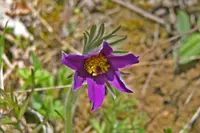
Pasqueflower, Pulsatilla vulgaris, is a small, long-lived perennial often grown in rock gardens and sunny borders. It forms low clumps with finely divided, silky foliage.
In early spring it produces bell-shaped flowers in purple, pink, or white, followed by decorative, feathery seed heads. Plants stay compact and slowly expand rather than spreading aggressively.
P. vulgaris is native to dry grasslands and open slopes in parts of Europe, which helps explain its preference for sun, good drainage, and moderately dry conditions. Once established, it is relatively undemanding, so learning how to care for Pasqueflower mainly involves providing enough light and avoiding heavy, waterlogged soil.

Care Difficulty
Moderate Care

Light Preference
Full Sun

Water Requirements
Moderate Water

Temperature Preference
Cold Hardy

Hardiness Zone
4–8

Soil Texture
Sandy, Loamy, Rocky

Soil pH
Slightly acidic (6.5–7.0), Neutral (7.0)

Soil Drainage
Well-drained

Fertilization
Minimal (feed rarely)
Scan your plant to receive care tips personalized for your specific plant
Available on iOS and Android
This cold-hardy perennial thrives in bright outdoor conditions with plenty of direct light in spring.
This plant prefers slightly dry, free-draining conditions rather than consistently moist soil.
This hardy perennial is adapted to cool to moderate climates with cold winters.
Humidity is not a major factor for Pulsatilla vulgaris, which thrives in typical outdoor air conditions.
This species prefers lean, well-drained soil that never stays waterlogged.
Pulsatilla vulgaris can be grown in containers, but it performs best when specific root and drainage needs are met.
This alpine perennial prefers lean soil, so Pasqueflower needs only light, occasional feeding in cultivation.
Pulsatilla vulgaris needs minimal pruning, focused on cleanliness rather than reshaping.
This species resents disturbance, so transplant Pulsatilla vulgaris only when clearly necessary.
Propagation of Pulsatilla vulgaris is most reliable from seed, with division used sparingly due to its taproot.
This perennial is cold hardy in much of the US and usually needs little special winter care.

Plant Health Check
Not sure what's wrong with your plant? Check your plant's health inside the app.
This species flowers very early in spring, often before surrounding grasses green up, using stored energy in its thick rootstock to complete most of its reproductive cycle before taller plants cast shade.
After flowering, it produces distinctive feathery seed heads made of long silky styles that aid in wind dispersal and give the plant an ornamental, smoky appearance for many weeks.
Pulsatilla vulgaris is naturally adapted to open, lime-rich calcareous grasslands in parts of Europe, where it thrives in full sun, thin soils, and low-competition habitats shaped by grazing or mowing.

In parts of central Europe and the UK, Pulsatilla vulgaris is considered a flagship species for ancient, undisturbed grassland, and many known populations are used by conservationists as reference sites to assess the ecological continuity and quality of these traditional landscapes.
Lack of flowers usually comes from too much shade, rich or wet soil, or plants that are still immature. This species often needs several seasons to settle, then regular spring flowering improves as clumps age and are left undisturbed.
Keep your plants happy and healthy with plant identification, disease detection, and easy care guidance.