


Encourage Self-Seeding
Leave a few spent flower stems to mature and drop seed in late spring so the colony can slowly expand and renew itself without replanting.

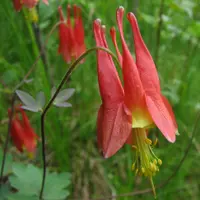
Wild columbine (Aquilegia canadensis) is a perennial woodland wildflower native to eastern and central North America. It typically grows in loose clumps with airy, branching stems. Its nodding red and yellow flowers have long spurs and attract hummingbirds and early pollinators. The blue-green, divided foliage gives a delicate, fernlike look through the growing season. In nature, wild columbine occurs on rocky slopes, open woods, and edges, which makes it adaptable to light shade and well-drained soils in gardens. Understanding how to care for wild columbine starts with providing conditions that mimic these natural habitats. The plant is generally considered easy to grow for beginners if the site is not waterlogged and receives moderate light and good drainage.

Care Difficulty
Easy Care

Light Preference
Partial Shade

Water Requirements
Moderate Water

Temperature Preference
Cold Hardy

Hardiness Zone
3–8

Soil Texture
Sandy, Loamy, Organic-rich

Soil pH
Acidic (5.5–6.5), Slightly acidic (6.5–7.0)

Soil Drainage
Moist but well-drained

Fertilization
Minimal (feed rarely)
Scan your plant to receive care tips personalized for your specific plant
Available on iOS and Android
Aquilegia canadensis prefers bright conditions that mimic open woodland edges.
Aquilegia canadensis prefers consistently moist but not saturated soil.
This species is naturally cold hardy and adapts well to typical outdoor temperature swings.
This species handles a wide humidity range and does not need special humidity management outdoors.
Aquilegia canadensis prefers loose, moist, well-drained soil with moderate organic matter.
This species can be grown in containers for a few years if the pot is set up to drain and stay cool.
Aquilegia canadensis grows well in moderately fertile soil and benefits from light feeding rather than heavy fertilization.
Pruning Aquilegia canadensis focuses on cleaning the plant and managing flowering and self-seeding.
Aquilegia canadensis is usually grown in garden beds, so transplanting young plants matters more than container repotting.
Aquilegia canadensis is most often propagated from seed, with some cautious use of division in mature clumps.
Aquilegia canadensis is cold hardy in much of North America and usually needs minimal winter care.

Plant Health Check
Not sure what's wrong with your plant? Check your plant's health inside the app.
The red, tubular flowers with backward-pointing nectar spurs are morphologically matched to the beaks and tongues of hummingbirds, which are the primary pollinators in its native range.
This species often flowers in early to mid spring before the forest canopy fully leafs out, taking advantage of high light levels in deciduous woodlands and rocky outcrops.
In gardens, it can cross with non-native Aquilegia species, producing hybrid offspring that show mixed flower colors and spur lengths, which can gradually dilute the appearance of wild-type plants.

Indigenous groups in North America documented this species in cultural practices, including using the distinctive red flowers as a seasonal marker signaling the spring return of hummingbirds to local landscapes.
Lack of blooms usually comes from too much shade, excess nitrogen fertilizer, or plants that are still immature. Overcrowding, drought stress, and old, declining clumps also reduce flowering. Divide or replant every few years to maintain vigor.
Keep your plants happy and healthy with plant identification, disease detection, and easy care guidance.

Tephroseris longifolia
Tephroseris longifolia
Erysimum linifolium
Erysimum linifolium
 POPULAR
Rock orchid
Dendrobium speciosum
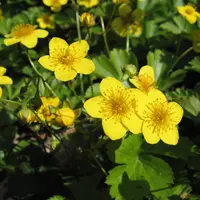
Siberian barren strawberry
Waldsteinia ternata
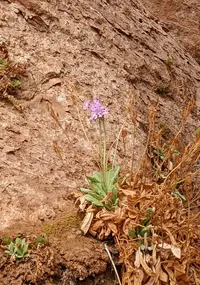
cavedwelling primrose
Primula specuicola
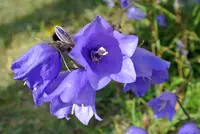
peach-leaved bellflower
Campanula persicifolia
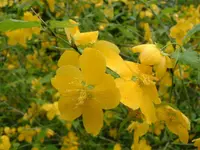
Japanese rose
Kerria japonica
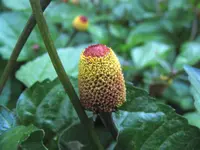
toothache plant
Acmella oleracea