Staggered division
Divide established clumps every 3–4 years in early spring, replanting only the most vigorous outer sections to maintain flowering performance and reduce congestion in the crown.


Achillea impatiens is a small, herbaceous perennial from the daisy family, typically forming loose clumps with finely divided, feathery foliage and modest, pale flower heads. It usually grows in temperate regions of Europe, often in open grassland, light woodland edges, and other moderately disturbed habitats.
This species tends to be relatively undemanding but is less commonly cultivated than other Achillea species, so information on garden performance can be limited. In general, it prefers sun to light shade, moderately moist but well-drained soil, and benefits from conditions similar to those used to care for Achillea impatiens in naturalistic plantings.

Care Difficulty
Moderate Care

Light Preference
Partial Shade

Water Requirements
Moderate Water

Temperature Preference
Cool Climate

Hardiness Zone
Unknown

Soil Texture
Loamy

Soil pH
Slightly acidic (6.5–7.0)

Soil Drainage
Well-drained

Fertilization
Minimal (feed rarely)
Scan your plant to receive care tips personalized for your specific plant
Available on iOS and Android
This species prefers open, bright sites typical of sunny meadow habitats.
This plant is adapted to relatively dry, free-draining soils.
This hardy perennial tolerates a broad outdoor temperature range in temperate climates.
This species is highly tolerant of dry air and humidity is rarely a limiting factor.
Achillea impatiens prefers lean, well-drained soil that does not stay wet for long.
This species can be grown in containers if the potting setup prevents prolonged wetness around the roots.
This perennial wild yarrow needs minimal feeding but benefits from light support in poor soils.
Pruning helps maintain compact growth and sustained flowering on Achillea impatiens.
This species is usually grown in the ground, so focus on careful transplanting rather than frequent repotting.
Propagation of Achillea impatiens is straightforward through division and seeds.
This hardy perennial usually needs little winter attention in most temperate climates.

Plant Health Check
Not sure what's wrong with your plant? Check your plant's health inside the app.
This species is naturally distributed in central and eastern Europe, often occurring in light woodlands, forest margins, and dry meadows rather than in the very open, sun-baked grasslands preferred by many other yarrow species.
Compared with the better-known Achillea millefolium, this species tolerates partial shade and fresher, less drought-prone soils, which shifts its ecological niche toward woodland edges and ravine slopes.
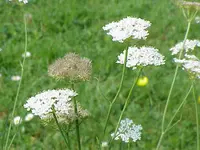
Its small, pale flower heads form relatively loose, delicate corymbs that attract short-tongued pollinators, but the overall inflorescences are less dense and showy than those of many ornamental yarrows, which is one reason it is rarely selected for garden breeding or hybridization in growing Achillea impatiens contexts.
This species is attractive to many pollinators, especially small native bees, hoverflies, and some butterflies. Flower clusters provide nectar and pollen, so it fits well into wildlife-friendly or low-input gardens focused on supporting beneficial insects.
Keep your plants happy and healthy with plant identification, disease detection, and easy care guidance.