Tall Buckwheat Care (Fagopyrum cymosum)

Also known as: Perennial Buckwheat
Tall Buckwheat

About Tall Buckwheat

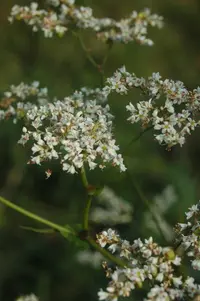
Tall buckwheat, Fagopyrum cymosum, is a vigorous herbaceous perennial in the buckwheat family, grown mainly as an ornamental and sometimes as a cover or forage crop. It forms tall upright clumps with broad, heart-shaped leaves and loose clusters of small white to pinkish flowers that attract many pollinators.

This species is native to parts of Asia but is now cultivated in temperate regions, including North America. It tends to be robust and fairly easy to establish where winters are cold and summers are not extremely dry.

Once rooted, it tolerates a range of soils and light levels, which simplifies how to care for Tall Buckwheat. It generally grows best in moderately moist, well-drained soil with at least partial sun exposure.

Main Plant Requirements

Care Difficulty

Moderate Care

Light Preference

Full Sun

Water Requirements

Moderate Water

Temperature Preference

Warm Climate

Hardiness Zone

6–9

Soil Texture

Loamy, Sandy, Organic-rich

Soil pH

Acidic (5.5–6.5), Slightly acidic (6.5–7.0)

Soil Drainage

Well-drained

Fertilization

Minimal (feed rarely)

Get Personalized Care Plan

Scan your plant to receive care tips personalized for your specific plant

Available on iOS and Android

How to Care for the Tall Buckwheat

This perennial prefers bright conditions with some protection from harsh afternoon sun.

  • Provide 4–6 hours of direct morning sun with light shade or filtered light after midday to reduce leaf scorch risk.
  • Plant Tall Buckwheat where it receives at least bright open shade in hot summers; dense shade leads to weak, floppy stems and fewer flowers.
  • In cooler climates, it tolerates full sun all day if soil stays evenly moist; in hotter regions, increase afternoon shade during June–August.

This species prefers consistently moist, well-drained soil without prolonged drying or standing water.

  • Water when the top 3–5 cm of soil feel dry, allowing moisture to reach the root zone but not waterlogging the site.
  • Choose soil or beds with good drainage; pooling water, sour smell, or limp, yellowing lower leaves signal overwatering and poor aeration.
  • In hot, dry periods, monitor every few days for dull, limp foliage and dry, crumbly soil; increase deep watering and add mulch to slow evaporation.

This hardy perennial tolerates a wide temperature range but responds best to moderate conditions.

  • Optimal growing temperatures are 60–77°F (16–25°C), with strongest vegetative growth in the cooler part of this range.
  • Plants survive down to about 5–10°F (-15 to -12°C) when established and mulched, but new shoots are sensitive to late spring frosts.
  • During hot spells above 86°F (30°C), growth may slow; provide soil moisture and light shade to limit heat stress and leaf scorch.

Humidity is not critical for Fagopyrum cymosum, which adapts well to typical outdoor air.

  • Prefers 40–60% humidity but usually tolerates drier conditions common in many regions.
  • Dry air may cause slight leaf edge browning or faster wilting during hot, windy weather.
  • Increase humidity only in very arid sites by grouping plants and using organic mulch to retain near-ground moisture around Tall Buckwheat.

Fagopyrum cymosum grows best in loose, well-drained, moderately fertile soil.

  • Use a loamy or sandy-loam soil with plenty of organic matter to hold moisture without staying wet.
  • Aim for slightly acidic to neutral pH, roughly 6.0–7.0, which supports nutrient availability and root activity.
  • In garden beds, mix in compost plus coarse sand or fine gravel to improve drainage and aeration.
  • Avoid compacted clay, waterlogged sites, or pure sand that dries too fast and limits root development.

This species can be grown in containers if the pot allows enough depth and fast drainage for its spreading roots.

  • Choose a wide, at least 25–30 cm deep container so roots can spread without circling tightly near the surface.
  • Use a heavier pot material or weight the base with stones if wind exposure is high, as tall stems can act like sails.
  • Select a potting mix that drains quickly yet does not shrink from the pot edges, which reduces even watering and root contact.

Fagopyrum cymosum grows in modest soils and benefits from light, targeted feeding during the active season.

  • Apply a balanced, slow-release fertilizer (around 10-10-10) in early spring at half the label rate to support new growth.
  • Use a thin layer of compost around the root zone once per year to improve soil structure and nutrient availability.
  • During the main growing season, avoid additional high-nitrogen feeds that cause weak, floppy stems in Tall Buckwheat.
  • Stop feeding in late summer and do not fertilize in winter, when growth slows or becomes dormant.

Pruning supports healthy structure and flowering in Fagopyrum cymosum without requiring intensive work.

  • Cut back dead, damaged, or diseased stems at the base whenever noticed, using clean, sharp hand pruners.
  • In late winter or very early spring, thin crowded shoots to improve air flow and light penetration.
  • Lightly shape the plant by shortening excessively tall or sprawling stems, which encourages bushier growth and more flowering shoots.
  • Remove spent flower stalks if self-seeding is not desired, cutting just above a healthy leaf node.

This species is usually grown in the ground, so care focuses on thoughtful transplanting rather than frequent repotting.

  • Transplant in early spring or early fall, when temperatures are mild and soil is workable.
  • Choose a sunny, well-drained site and move plants only when growth is slow, flowering declines, or clumps become crowded.
  • Lift the root mass gently, keeping as much soil as possible around the roots to limit stress and transplant shock.
  • Water thoroughly after transplanting, then keep soil evenly moist but not waterlogged for 1–2 weeks while roots reestablish.

Fagopyrum cymosum is commonly propagated by seed or by division of established clumps.

  • Sow fresh seeds in spring after frost in well-drained soil, covering them lightly and keeping the surface evenly moist until germination.
  • For division, lift mature clumps in early spring or early fall and separate them into sections with several shoots and healthy roots.
  • Replant divisions at the same depth, firm soil gently, and water well to settle roots and remove air pockets.
  • Provide full sun to light shade and moderate moisture for young plants to establish strong root systems.

This hardy perennial usually needs minimal winter care in temperate climates.

  • Plants tolerate typical frosts, but a 5–8 cm mulch layer of leaves or compost helps buffer freeze–thaw cycles at the root zone.
  • Allow stems to die back naturally in late fall, then cut them close to the ground once fully brown and dry.
  • In colder regions or for container plants, move pots to a sheltered, unheated spot and keep soil just slightly moist.

Care Tips

Provide sturdy staking

Install 60–90 cm stakes or a light wire grid early in the season so the tall, hollow stems can lean without snapping in wind or heavy rain.

Use living supports

Plant near sturdy grasses or low shrubs so the stems can weave through and use them as a natural support, reducing the need for additional tying materials.

Timed renewal cutting

After the first heavy flowering flush, cut back a portion of the stems by about one-third to stimulate fresh vegetative growth and extend the blooming period into late season.

Self‑seeding management

If you do not want it to spread, shear or deadhead spent flower clusters before seeds darken and harden, focusing on outer stems first where seed set begins.

Soil cover integration

Underplant with shallow‑rooted groundcovers or use a low living mulch to shade the soil surface, which helps maintain soil moisture and suppresses weed competition when growing Tall Buckwheat.

Common Pests and Diseases

Buckwheat leaf spot

This disease causes circular to irregular brown spots on leaves that may merge and lead to premature leaf drop, especially in warm, humid weather. Symptoms include thinning foliage and reduced vigor in flowering stems.

Solution

Remove and destroy heavily spotted leaves to reduce inoculum, and avoid overhead watering so foliage dries quickly. Improve spacing and airflow, keep surrounding weeds down, and if the problem recurs each season, use a copper or chlorothalonil foliar spray labeled for ornamental crops at the first sign of spotting, following label directions carefully.

Buckwheat rust

This disease produces small yellow to orange-brown pustules on the underside of leaves, sometimes with yellowing on the upper surface. Symptoms include reduced photosynthesis, early leaf drop, and weaker flowering stems.

Solution

Promptly remove and dispose of affected leaves to limit spore spread, and keep irrigation directed at the soil rather than foliage. Increase spacing and airflow around clumps, avoid high nitrogen fertilization, and in areas with recurring rust, apply a sulfur or other rust-labeled fungicide preventively when conditions turn warm and humid.

Aphids

These insects cluster on young stems, undersides of leaves, and flower stalks, sucking sap and excreting sticky honeydew that can attract sooty mold. Symptoms include curled or distorted new growth and reduced flowering.

Solution

Dislodge colonies with a strong stream of water in the morning, repeating every few days until populations drop. Encourage natural predators such as lady beetles, avoid excess nitrogen fertilizer, and if infestations persist, use an insecticidal soap or neem oil spray, coating stems and leaf undersides thoroughly.

Lygus bugs

These insects, also called tarnished plant bugs, feed on stems, buds, and developing seeds, causing distorted growth and aborted or deformed flowers and seed clusters. Symptoms include brown feeding spots, shriveled developing seed, and reduced ornamental and seed value.

Solution

Mow or manage surrounding weedy vegetation that can host lygus bugs and reduce their movement into plantings. Use fine mesh row covers over small clumps during peak bug activity if seed production is important, and in larger plantings consider targeted spot treatments with a pyrethrin-based spray in the evening, focusing on flower and seed clusters while protecting beneficial insects as much as possible.

Seedling damping-off

This disease affects young seedlings, causing water-soaked lesions at the soil line, sudden collapse, and death shortly after germination. Symptoms include patches of missing or toppled seedlings, often in overly wet or poorly drained seedbeds.

Solution

Use fresh, sterile seed-starting mix and clean containers, and avoid sowing too densely so air can circulate between seedlings. Water lightly from below or at soil level, let the surface dry slightly between waterings, and if damping-off has been a recurring issue, consider a biological seed treatment labeled for damping-off fungi and rotate sowing locations outdoors.

Interesting Facts

Perennial buckwheat relative

This species is a long-lived perennial in the buckwheat family, unlike common buckwheat (Fagopyrum esculentum), which is an annual grown mainly for grain.

Robust rhizome system

It forms thick, creeping rhizomes (underground stems) that store carbohydrates and allow the plant to resprout vigorously and spread in suitable habitats such as roadsides and field margins.

Extended flowering period

The plant can produce panicles of small white to pinkish flowers over a long season in warm climates, providing a sustained nectar source for bees and other pollinators.

Botan icon

Did you know?

This species has been investigated as a forage and cover crop in parts of Asia because its tall growth, dense foliage, and fibrous root system can help suppress weeds and protect soil from erosion in sloping fields.

FAQs about Tall Buckwheat

This species is very attractive to pollinators. Its many small flowers provide nectar and pollen for bees, hoverflies, butterflies, and other beneficial insects, making it a good choice for wildlife-friendly and productive garden plantings.

Grow Healthy Plants with Botan Care

Keep your plants happy and healthy with plant identification, disease detection, and easy care guidance.


Botan plant care app — identify plants on mobile

Explore More Plants