Spanish salsify Care (Pseudopodospermum hispanicum)

Also known as: viper's grass, garden scorzonera
Spanish salsify

About Spanish salsify

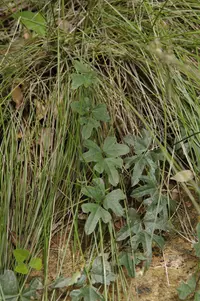
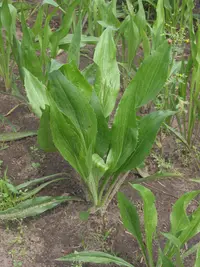
Spanish salsify, Pseudopodospermum hispanicum, is a cool-season root vegetable grown mainly for its long, pale, carrot-like taproot. It belongs to the daisy family and forms a rosette of narrow, grass-like leaves, then sends up taller flowering stems with purple, dandelion-like blooms if allowed to mature. The species is native to southern Europe and the Mediterranean region but is now cultivated in gardens and small farms in many temperate areas. It is generally easy to grow where winters are mild, as long as the soil is loose and well drained. Gardeners who want to learn how to care for Spanish salsify should focus on consistent moisture and low-fertility soil to avoid forked or overly leafy roots.

Main Plant Requirements

Care Difficulty

Easy Care

Light Preference

Full Sun

Water Requirements

Moderate Water

Temperature Preference

Cool Climate

Hardiness Zone

5–9

Soil Texture

Sandy, Loamy, Silty

Soil pH

Slightly acidic (6.5–7.0), Neutral (7.0)

Soil Drainage

Well-drained

Fertilization

Minimal (feed rarely)

Get Personalized Care Plan

Scan your plant to receive care tips personalized for your specific plant

Available on iOS and Android

How to Care for the Spanish salsify

This root crop prefers full sun but tolerates some light shade, especially in hotter regions.

  • Provide 6–8 hours of direct sun daily; morning sun with light afternoon shade helps prevent leaf scorch in hot summers.
  • In cooler climates, site Pseudopodospermum hispanicum in open, unobstructed sun to promote strong root development and reduce foliage disease.
  • Avoid dense shade, which leads to elongated, weak growth; in mid to late summer, use light row covers or nearby taller crops to soften intense afternoon sun if leaves pale.

This plant prefers evenly moist, well-drained soil to form straight, tender roots.

  • Before watering, check the top 3–5 cm of soil; water only when this layer feels dry but the soil beneath is slightly moist.
  • Use loose, free-draining soil so excess water can escape; soggy beds cause root rot and forking in Pseudopodospermum hispanicum, while cracked soil indicates prolonged dryness.
  • In cool spring, watering may be needed every few days, but in hot, windy weather, inspect daily; wilting at midday with dry soil signals thirst, yellowing lower leaves often indicate overwatering.

This cool-season crop grows best in mild, stable temperatures without extreme heat or hard frost.

  • Aim for an optimal range of 55–70°F (13–21°C) for steady root growth and good flavor during most of the growing period.
  • Plants tolerate brief dips to about 25°F (-4°C) once established, but repeated hard frosts can damage foliage, so use mulch or row covers in late fall.
  • Growth slows above 80°F (27°C); in hot spells, provide soil mulch and consistent moisture to limit stress and reduce the risk of woody, bitter roots.

Humidity is not a major factor for Spanish salsify, which adapts well to typical outdoor air levels in temperate climates.

Soil preparation strongly influences root and root-to-stem quality in Pseudopodospermum hispanicum.

  • Use a loose, sandy-loam texture that crumbles easily in the hand to allow straight, unobstructed root growth.
  • Ensure sharp drainage by blending garden soil with coarse sand and a modest amount of well-rotted compost.
  • Aim for slightly acidic to neutral pH around 6.5–7.0, as strongly acidic or alkaline ground restricts nutrient uptake.
  • Avoid compacted, stony, or heavy clay soils; improve aeration by double-digging and incorporating coarse sand before sowing.

This species can be grown in containers if the pot is deep enough for the long taproot.

  • Select a container at least 30–35 cm deep so the root can develop fully without forking or curling at the base.
  • Use a tall, narrow pot rather than a wide, shallow one to maintain an even moisture profile around the root zone.
  • Choose a rigid, stable container material and place it where wind will not topple it as the foliage elongates.

This root crop needs only light, targeted feeding for steady growth and quality roots when caring for Spanish salsify.

  • Use a balanced NPK fertilizer or well-rotted compost in early spring, working it into the topsoil before sowing or early growth.
  • Feed once more mid-season with a low-dose, balanced granular or slow-release fertilizer if soil is poor.
  • Apply fertilizers at half the package-recommended strength to avoid excessive foliage and forked roots.
  • Stop feeding in late summer as growth slows, and do not fertilize dormant plants in winter.

Pruning needs for Pseudopodospermum hispanicum are minimal and mainly relate to hygiene and access.

  • Trim off yellowing, diseased, or storm-damaged leaves throughout the growing season using clean, sharp scissors or hand pruners.
  • Remove badly crowded or sprawling flower stems after bloom to improve air flow and make harvesting roots easier.
  • Avoid heavy top cutting during active growth, which can reduce root size and storage quality.
  • Cut foliage down close to soil level only at final harvest or when plants have fully finished for the season.

This species is usually direct-sown outdoors, so transplanting is done cautiously to prevent root damage.

  • Sow where the plant will mature; transplant only if seedlings are crowded or in very unsuitable soil.
  • If grown in containers, consider transplanting when roots circle the pot, growth stalls, or soil dries out very quickly.
  • Move plants in early spring or very early in the growth cycle, disturbing the long taproot as little as possible.
  • Water well after transplanting, shade lightly for a few days, and keep soil evenly moist to reduce transplant shock.

Pseudopodospermum hispanicum is almost always propagated from seed rather than vegetative methods.

  • Sow fresh seed in early spring as soon as soil is workable, either in rows outdoors or in deep modules.
  • Provide loose, stone-free, well-drained soil and consistent moisture for even germination and straight root development.
  • Space seedlings promptly to reduce competition and allow each root enough room to size up.
  • Keep seedbed weed-free and avoid crusted soil so young seedlings emerge and establish reliably.

This cool-season root crop is fairly cold hardy and usually needs little specialized winter care.

  • Plants tolerate light frosts; in colder regions, harvest main roots before hard freezes below about 20°F.
  • Apply a 5–8 cm mulch layer over late plantings to buffer rapid freeze–thaw cycles around the root zone.
  • In containers, move pots into an unheated but frost-free area or sink pots into the ground and mulch well.

Care Tips

Staggered Succession Sowing

Sow small rows every 2–3 weeks over spring rather than one large sowing, so roots mature in stages and you avoid an unmanageable, single harvest window.

Deep, Unobstructed Beds

Before sowing, loosen soil to 25–30 cm and remove stones, woody debris, and hard clods so the long taproots develop straight, marketable roots instead of forking or stunting.

Precise Thinning Technique

Once seedlings reach 5–7 cm tall, snip excess plants at soil level with small scissors rather than pulling them, which protects the remaining taproots from disturbance and reduces misshapen roots.

Targeted Root Harvesting

Lift only mature-sized roots as needed using a narrow fork, leaving smaller roots in the ground to size up, which extends the useful harvest period and saves storage space.

Extended In-Ground Storage

In cold regions, mulch the bed with 5–10 cm of straw or leaves in late fall so roots can stay in the ground longer without freezing, providing a living store that simplifies caring for Spanish salsify over winter.

Common Pests and Diseases

Carrot fly

This pest lays eggs near the crown, and the larvae tunnel into the roots causing rust-brown tracks and stunting. Symptoms include foliage yellowing, reduced vigor, and misshapen or bitter roots.

Solution

Use fine insect mesh over beds from sowing to harvest, and avoid thinning during warm, still evenings that attract the fly. Rotate crops yearly, remove all root debris after harvest, and in small plantings consider sowing in higher raised beds (40–50 cm) to reduce egg-laying around Spanish salsify roots.

Powdery mildew

This disease causes a white, powdery coating on leaves, often starting on older foliage in warm, dry conditions. Symptoms include reduced photosynthesis, premature leaf yellowing, and weaker roots at harvest.

Solution

Improve airflow with correct spacing and prompt removal of heavily affected leaves. Water at soil level, avoid overhead irrigation late in the day, keep plants evenly watered, and apply a sulfur or potassium bicarbonate product labeled for edible crops at the first sign of infection if cultural measures are not enough.

Rust

This disease produces small, orange to brown pustules on the undersides of leaves, sometimes leading to yellowing and early leaf drop. Symptoms include reduced leaf area and smaller, lower-quality roots.

Solution

Remove and destroy affected leaves early and clear away plant residues after harvest to break the disease cycle. Rotate root crops on a 3–4 year cycle, avoid overhead watering, and if rust recurs regularly, use a labeled copper-based fungicide as a last resort, applied according to local regulations.

Aphids

These insects cluster on young shoots and leaf undersides, sucking sap and causing curling, distortion, and sticky honeydew that can support sooty mold. Symptoms include slowed growth and stressed foliage, which can reduce root development.

Solution

Dislodge colonies with a firm water spray and encourage natural predators such as lady beetles by maintaining plant diversity nearby. For persistent infestations, apply insecticidal soap or a horticultural oil labeled for edible crops, ensuring full coverage of leaf undersides and repeating as needed.

Downy mildew

This disease leads to pale, yellowish patches on upper leaf surfaces with a grayish to purplish downy growth underneath in cool, humid weather. Symptoms include distorted leaves, reduced growth, and overall loss of vigor that can impact root yield when growing Spanish salsify for harvest.

Solution

Increase spacing and ventilation, water in the morning at soil level, and avoid overhead irrigation that keeps foliage wet for long periods. Remove and dispose of affected leaves, practice strict crop rotation, and in regions with recurrent problems consider resistant or tolerant seed lines if available from specialized suppliers.

Interesting Facts

Edible taproot crop

This species is cultivated mainly for its long, pale taproot, which has a mild, oyster-like flavor and has been used as a root vegetable in Europe since at least the 16th century.

Striking purple flowers

It produces showy, purple to lilac flower heads on tall stems, which open in the morning and often close by midday, similar to many other members of the Asteraceae family.

Self-seeding biennial habit

The plant typically behaves as a biennial, forming a rosette and root in the first year, then flowering and setting abundant wind-dispersed seeds in the second year, allowing it to self-sow where conditions suit it.

Botan icon

Did you know?

Spanish salsify was a notable vegetable in historical European kitchen gardens and appears in several early modern herbals and cookbooks, where it was often recommended as a delicate alternative to true salsify (Tragopogon porrifolius) in soups and mixed vegetable dishes.

FAQs about Spanish salsify

Yes, this species is grown mainly for its edible taproot, which has a mild, slightly oyster-like flavor when cooked. Young shoots and flower buds are also edible when harvested tender, but roots are the primary crop.

Grow Healthy Plants with Botan Care

Keep your plants happy and healthy with plant identification, disease detection, and easy care guidance.

Botan plant care app — identify plants on mobile

Explore More Plants