


Cluster Division Timing
Lift and divide crowded clumps every 3–4 years in early spring or just after flowering to keep plants vigorous and maintain strong flowering and leaf production.

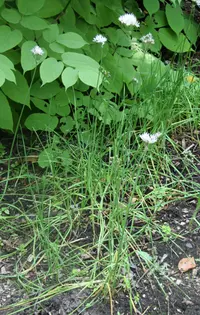
Fragrant-flowered garlic, Allium ramosum, is a perennial herb in the onion family grown for its white star-shaped blooms and mild garlic scent. It forms clumps of narrow, grass-like leaves topped with loose clusters of flowers on upright stems.
This species is native to parts of East and Central Asia and is sometimes used both as an ornamental and a mild culinary herb. It is generally undemanding if given sun, well-drained soil, and moderate moisture.
For home gardeners, it offers a good balance of decorative flowers and practical use, as long as spreading is monitored. Learning how to care for Fragrant-flowered Garlic is straightforward once its basic needs are understood.

Care Difficulty
Easy Care

Light Preference
Full Sun

Water Requirements
Moderate Water

Temperature Preference
Cold Hardy

Hardiness Zone
4–9

Soil Texture
Sandy, Loamy, Organic-rich

Soil pH
Slightly acidic (6.5–7.0), Neutral (7.0)

Soil Drainage
Well-drained

Fertilization
Minimal (feed rarely)
Scan your plant to receive care tips personalized for your specific plant
Available on iOS and Android
Allium ramosum performs best in bright, open conditions with consistent direct sun.
Allium ramosum prefers evenly moist, well-drained soil and does not tolerate standing water.
This species handles a wide temperature range but performs best in moderate conditions during active growth.
Allium ramosum handles a wide humidity range and rarely needs special adjustment indoors or outdoors.
Allium ramosum grows best in loose, fast-draining mineral soil that does not stay wet after watering or rain.
This species is well suited to container growing when the pot supports its clumping, bulb-forming habit.
Allium ramosum grows well with modest feeding during its active season, especially in poorer soils.
Pruning Allium ramosum is simple and mainly focuses on tidiness and flower management.
This species is more often transplanted in the garden than repotted, since it forms hardy clumps from bulbs.
Allium ramosum is commonly propagated by bulb division and by seed under simple conditions.
Allium ramosum is cold hardy in most temperate climates and usually needs little specific winter care.

Plant Health Check
Not sure what's wrong with your plant? Check your plant's health inside the app.
This species has narrow, flat, grass-like leaves, unlike the hollow tubular leaves seen in many other Allium species, which makes it easy to distinguish in the field and in cultivation.
When the leaves or bulbs are crushed, they release a pronounced garlic-like scent due to organosulfur compounds, the same chemical group responsible for the characteristic smell of culinary garlic and chives.
It typically flowers from late summer into early autumn, producing compact clusters of white, star-shaped flowers at a time when many other Allium species have already finished blooming.
Yes, this species is edible. Leaves, flower stalks, and flowers are used like chives or garlic chives, raw or cooked. Ensure identification is correct and avoid eating plants exposed to roadside pollution or pesticide drift.
Keep your plants happy and healthy with plant identification, disease detection, and easy care guidance.

-1-200x150.webp)