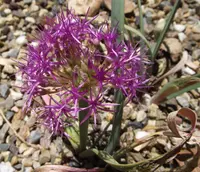
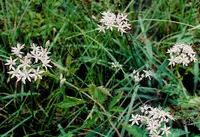
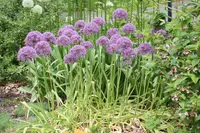
Staggered bulb spacing
Plant bulbs in small irregular clusters at varied spacing, rather than strict rows, to improve air movement around foliage and reduce the spread of fungal leaf spots between plants.

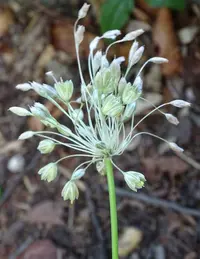
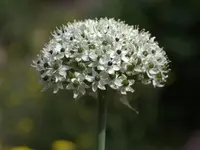
Allium oporinanthum is a bulb-forming ornamental onion, grown mainly for its rounded flower heads and neat clump-forming habit. It typically sends up slender, upright stems topped with clusters of small, star-like flowers.
This species is thought to occur in dry, rocky or open habitats, similar to many wild alliums from Eurasia, and tends to prefer well-drained soil. It usually suits sunny borders, rock gardens, and naturalistic plantings where the soil does not stay wet for long.
Gardeners who want to care for Allium oporinanthum should note its general toughness, but also its dislike of heavy, waterlogged ground, which can rot the bulbs and reduce flowering over time.

Care Difficulty
Easy Care

Light Preference
Full Sun

Water Requirements
Low Water

Temperature Preference
Cold Hardy

Hardiness Zone
5–8

Soil Texture
Sandy, Loamy, Rocky

Soil pH
Slightly acidic (6.5–7.0), Neutral (7.0)

Soil Drainage
Well-drained

Fertilization
Minimal (feed rarely)
Scan your plant to receive care tips personalized for your specific plant
Available on iOS and Android
This bulb prefers bright, open conditions similar to a sunny meadow.
This species prefers evenly drained, slightly dry-leaning soil rather than constant moisture.
This hardy bulb tolerates a wide temperature range typical of temperate outdoor gardens.
Humidity is rarely critical for Allium oporinanthum, which handles typical outdoor air in most climates.
Allium oporinanthum prefers a mineral-rich, well-aerated substrate that stays dry between waterings.
This species is suitable for container growing when the pot is set up to drain very quickly.
This bulb is light‑feeding, so Allium oporinanthum needs only modest nutrition in typical garden soil.
Pruning needs for Allium oporinanthum are minimal and focus on cleanliness and seed control.
This ornamental allium is usually grown in the ground, with transplanting done infrequently and timed to dormancy.
Allium oporinanthum is mainly propagated by bulb division and sometimes by seed in suitable conditions.
This hardy bulb usually needs little winter attention in the ground in most temperate climates.

Plant Health Check
Not sure what's wrong with your plant? Check your plant's health inside the app.
This species flowers notably late in the ornamental allium season, producing its blooms well into summer when many other bulbous alliums are already finished.
It forms airy, open flower heads with distinct star-shaped florets, giving a more delicate, see-through appearance compared with the dense, spherical heads of many related ornamental onions.
Genetically it belongs to the same genus as common onion and garlic, sharing the characteristic sulfur-containing compounds that create a mild onion-like scent when foliage or bulbs are crushed.
This species usually flowers in late spring to early summer, depending on climate. Individual blooms last around 2–3 weeks, while the overall display from a clump can remain attractive for about 3–4 weeks before fading.
Keep your plants happy and healthy with plant identification, disease detection, and easy care guidance.