Staking Tall Stems
Install discreet stakes and soft ties early in the season for taller flower stalks so the umbels stay upright and do not snap in wind or heavy rain.

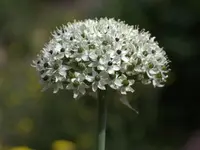
Black garlic, Allium nigrum, is a bulb-forming perennial in the onion family, grown mainly for its ornamental flower heads and culinary bulbs. It produces upright, strap-like leaves and tall stems topped with dense, rounded clusters of white to pale pink star-shaped flowers. Native to parts of the Mediterranean and Western Asia, it adapts well to temperate garden conditions in many regions. The plant is generally undemanding, as long as it receives good light, well-drained soil, and moderate moisture. Gardeners who understand how to care for black garlic usually find it reliable and long lived in borders or kitchen gardens.

Care Difficulty
Easy Care

Light Preference
Full Sun

Water Requirements
Moderate Water

Temperature Preference
Cold Hardy

Hardiness Zone
4–9

Soil Texture
Sandy, Loamy, Clay

Soil pH
Slightly acidic (6.5–7.0), Neutral (7.0)

Soil Drainage
Well-drained

Fertilization
Minimal (feed rarely)
Scan your plant to receive care tips personalized for your specific plant
Available on iOS and Android
Allium nigrum develops strongest stems and flowers with consistent, direct light outdoors.
Allium nigrum prefers evenly moist but not saturated soil, especially during active growth and flowering.
This bulb tolerates cool to warm conditions, with a strong preference for moderate seasonal changes.
Humidity is rarely critical for Allium nigrum, which thrives in typical outdoor air.
Allium nigrum performs best in moderately fertile, loose, well-drained mineral soil.
This species adapts well to container growing outdoors when drainage and depth are managed carefully.
Allium nigrum has modest nutrient needs but responds well to light, targeted feeding during active growth.
Allium nigrum needs minimal pruning, mainly to tidy plants and support bulb health.
This bulb is usually grown in beds or borders, so focus on lifting and transplanting clumps rather than frequent repotting.
Allium nigrum is commonly propagated by bulb division and, less often, by seed for larger numbers of plants.
Allium nigrum is generally cold hardy in temperate climates and needs only light winter attention in the ground.

Plant Health Check
Not sure what's wrong with your plant? Check your plant's health inside the app.
This species is naturally distributed from Italy and the Balkans through the eastern Mediterranean to western Asia, reflecting its adaptation to hot, dry summers and mild, wetter winters typical of that region.
Unlike many ornamental alliums that die back completely after flowering, this species often retains its strap-like leaves into early summer in mild climates, giving it a longer visible presence in borders.
The dome-shaped inflorescences are composed of many star-shaped florets with greenish mid-veins and a weak honey-like scent, which together help attract a range of pollinating insects such as bees and hoverflies.

Chromosome studies have shown that this species is polyploid, meaning it carries multiple sets of chromosomes, which is thought to contribute to its morphological variability in flower size, color intensity, and plant stature across its native range.
Lack of flowering often comes from bulbs being too young, overcrowded, or stressed by recent division. Poor nutrition or planting too deep also reduces bloom. Usually it flowers reliably once bulbs are mature and well established.
Keep your plants happy and healthy with plant identification, disease detection, and easy care guidance.