Amur adonis Care (Adonis amurensis)

Also known as: pheasant's eye
Amur adonis

About Amur adonis

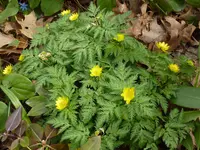
Amur adonis (Adonis amurensis) is a small, early-flowering perennial from woodland edges and open forests in northeastern Asia, including parts of China, Korea, and Japan. It forms low clumps from fleshy roots and emerging buds.

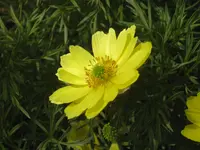
The plant is valued for its bright yellow, many-petaled flowers that open very early in spring, often as snow melts, followed by fine, fern-like foliage. Growth slows and the leaves die back by summer, leaving the plant dormant underground.

It prefers cool conditions, partial shade, and moist but well-drained, humus-rich soil. Once established in a suitable site, it is long-lived but somewhat slow to spread, so learning how to care for Amur adonis helps maintain healthy clumps over time.

Main Plant Requirements

Care Difficulty

Moderate Care

Light Preference

Partial Shade

Water Requirements

Keep Soil Moist

Temperature Preference

Cold Hardy

Hardiness Zone

3–7

Soil Texture

Loamy, Silty, Organic-rich

Soil pH

Acidic (5.5–6.5), Slightly acidic (6.5–7.0)

Soil Drainage

Moist but well-drained

Fertilization

Minimal (feed rarely)

Get Personalized Care Plan

Scan your plant to receive care tips personalized for your specific plant

Available on iOS and Android

How to Care for the Amur adonis

This early-spring perennial prefers cool, bright conditions with gentle sun exposure.

  • Provide 3–5 hours of soft morning sun with light or dappled shade for the rest of the day, especially in warmer regions.
  • Allow more direct sun in late winter and early spring, then protect from strong midday and afternoon sun once trees leaf out and temperatures rise.
  • Too much strong sun scorches petals and foliage, while deep shade reduces flowering and weakens Amur adonis over time.

This woodland-style plant needs steady moisture in the root zone without staying waterlogged.

  • Aim for moist, crumbly soil; allow the top 2–3 cm to dry slightly before watering again rather than keeping the surface constantly wet.
  • Use deep watering so moisture reaches the full root depth, and plant in well-drained, humus-rich soil to prevent water sitting around the crown.
  • In spring growth, soil should rarely dry out fully; in summer dormancy, reduce watering so the soil is just barely moist, avoiding both cracking-dry and soggy conditions.

This species is cold-hardy and adapted to cool spring conditions with moderate summers.

  • Active growth and flowering occur best around 40–60°F (4–16°C), typical of late winter to early spring in temperate climates.
  • Established clumps tolerate winter lows near 0°F (−18°C) under snow cover, but sudden freeze–thaw cycles with little snow can damage buds.
  • In summer, aim to keep the root zone cooler than 80°F (27°C) by using partial shade and organic mulch, since prolonged heat can stress and weaken plants.

This species handles typical outdoor humidity well and rarely needs special adjustment.

  • Target 40–60% humidity, which most temperate outdoor gardens naturally provide in spring.
  • Plants tolerate brief drier air, but prolonged hot, very dry wind can scorch leaves at flowering time.
  • If late-winter air is very dry, shelter clumps near other perennials or low shrubs to reduce moisture loss.

This spring ephemeral prefers cool, humus-rich, consistently moist but free-draining ground.

  • Use a loose, loamy mix with plenty of organic matter such as leaf mold or compost for moisture retention and nutrients.
  • Ensure sharp drainage by incorporating mineral grit or coarse sand so the soil never stays waterlogged in winter.
  • Aim for slightly acidic to neutral pH around 6.0–7.0, similar to many woodland garden conditions.
  • Avoid compacted clay, standing water, or very alkaline substrates, which increase root rot risk and limit nutrient uptake for Adonis amurensis.

This plant can be grown successfully in containers if moisture and temperature are carefully managed.

  • Choose a deep pot so the fleshy roots can grow downward without crowding and remain cool in summer.
  • Use a thick-walled or clay container to buffer temperature swings and prevent rapid drying around dormant roots.
  • Elevate the pot on feet or bricks so drainage holes stay clear and excess water escapes quickly after winter snow or rain.

This woodland perennial needs only light feeding, as Adonis amurensis naturally grows in nutrient-rich forest soils.

  • Use a balanced, slow-release granular fertilizer (for example 10-10-10) or a thin layer of fine compost in early spring as growth begins.
  • Apply once per year during active growth; avoid midsummer and autumn applications to prevent soft, frost-tender growth.
  • Use fertilizers at 1/2 strength for container plants and water well afterward to prevent root burn.
  • Do not feed during summer dormancy or winter, since the plant is resting and cannot use extra nutrients.

This species requires minimal pruning, mainly to keep Adonis amurensis tidy and healthy after flowering.

  • Cut back spent flower stems at ground level in late spring once petals fade, using clean, sharp scissors or pruners.
  • Remove dead, diseased, or damaged foliage whenever noticed to reduce fungal problems and improve airflow.
  • Avoid heavy cutting into healthy crowns; strong pruning can reduce flowering and weaken clumps.
  • Leave healthy foliage until it dies back naturally, as it feeds the roots for next year’s blooms.

This plant dislikes disturbance, so transplant Adonis amurensis only when clearly necessary.

  • Look for signs such as congested crowns, reduced flowering, or roots circling the container before considering transplanting or repotting.
  • Plan moves for early autumn or just after flowering in early spring, when soil is workable and temperatures are mild.
  • Transplant clumps only every several years, keeping as much original soil around the roots as possible to limit shock.
  • Water thoroughly after moving, shade from strong sun for 1–2 weeks, and keep soil evenly moist while roots re-establish.

This perennial can be propagated, but Adonis amurensis responds best to careful division and patient seed work.

  • Divide established clumps in early autumn or just after flowering, lifting gently and separating only a few healthy buds with roots attached.
  • Replant divisions immediately at the same depth in moist, humus-rich soil, then water well and shade lightly.
  • Sow fresh seed as soon as ripe in a cold frame or sheltered outdoor tray, as many seeds need winter chilling to germinate.
  • Keep seed pots and divisions evenly moist, not waterlogged, and protect from disturbance while new growth establishes.

This cold-hardy perennial needs little winter care, as Adonis amurensis is adapted to freezing conditions.

  • In the ground, foliage dies back and underground buds tolerate frost and snow in typical temperate climates.
  • Apply a 3–5 cm layer of leaf mold or compost mulch in late autumn to buffer soil temperature and moisture.
  • For containers in very cold regions, move pots into a cold but sheltered spot to avoid repeated freeze–thaw of the root ball.

Care Tips

Mark Dormant Clumps

Flag the planting area with discreet markers after foliage dies back so you do not accidentally dig up or damage the crowns during summer and fall bed work.

Provide Winter Drainage

In late fall, top-dress around the clumps with a thin layer of sharp sand or fine grit under the mulch line to keep the crown from sitting in saturated soil during freeze–thaw cycles.

Use Protective Mulch

Apply a loose mulch of shredded leaves or pine needles after the ground cools to buffer temperature swings, then gradually pull it back in late winter so emerging buds are not trapped or etiolated.

Companion Shade Planning

Plant near later-emerging, shallow-rooted perennials such as hostas or ferns so these companions provide summer shade for the roots without competing heavily when the flowers are active.

Gentle Division Timing

If clumps become crowded, divide only during late summer dormancy by lifting large sections with a wide fork, keeping soil attached to the roots, and replanting immediately at the original depth to support long-term success when growing Amur adonis.

Common Pests and Diseases

Botrytis blight

This disease causes soft, water-soaked lesions on emerging shoots and flower buds, which soon become covered with gray, fuzzy mold. Symptoms include bud failure, collapse of new growth, and rapid decay in cool, damp conditions.

Solution

Remove and discard all affected buds, flowers, and foliage, and avoid overhead watering so surfaces dry quickly. Improve air circulation, thin crowded clumps, and apply a targeted fungicide labeled for ornamental perennials if wet, cool weather persists and infection repeats.

Powdery mildew

This disease produces white, talc-like patches on leaves and stems, often appearing after flowering when days are warm and nights are cool. Symptoms include distorted foliage and reduced vigor in dense or shaded plantings.

Solution

Increase light and airflow around the clump by removing nearby competing plants or debris, and water at soil level only. Remove heavily covered leaves and, if needed, use a sulfur or potassium bicarbonate fungicide labeled for powdery mildew on perennials, following all label directions.

Leaf spot complex

This disease group causes brown to purplish spots on leaves, sometimes with pale centers and yellow halos that can lead to early leaf drop. Symptoms include patchy foliage and a general decline in plant appearance late in the season.

Solution

Clear away and dispose of spotted leaves during the season and at fall cleanup to reduce overwintering spores. Avoid wetting the foliage, increase spacing between clumps, and in recurring cases consider a protective fungicide spray early in the growing season.

Aphids

These insects cluster on tender stems and flower stalks, sucking sap and excreting sticky honeydew that can attract sooty mold. This pest can cause curling or distortion of young growth and weakened flowering.

Solution

Wash colonies off gently with a strong stream of water, repeating every few days as needed, and encourage natural predators such as lady beetles by avoiding broad-spectrum insecticides. For persistent infestations, apply insecticidal soap or a light horticultural oil, ensuring thorough coverage of stems and bud clusters.

Slugs and snails

These pests feed on tender spring shoots and flower buds, leaving irregular holes and ragged edges on young foliage, often before the plant fully opens. Symptoms include slimy trails on soil or mulch and chewed, misshapen early leaves.

Solution

Hand-pick slugs and snails in the evening or early morning, and use barriers such as copper tape or rough mineral grit around clumps. Reduce hiding places by removing dense mulch and debris, and if damage is severe, use iron phosphate bait products placed away from children and pets.

Interesting Facts

Snowmelt specialist

This species often flowers while snow is still on the ground, with buds able to push through thawing leaf litter in very early spring in its native habitats of northeastern Asia.

Thermal flower heating

Individual flowers can be several degrees warmer than the surrounding air because the cup-shaped yellow petals absorb sunlight efficiently, which helps early pollinators stay active in cold conditions.

Deciduous forest strategy

The plant completes much of its growth and flowering before the forest canopy closes, using the high early-spring light in mixed and deciduous woodlands, then going largely dormant by summer.

Botan icon

Did you know?

In parts of Japan, carefully selected garden forms of this species, including double-flowered and bicolored cultivars, are traditionally prized as fukujuso, or good-fortune plants, and are displayed around the New Year as symbols of prosperity and auspicious beginnings.

FAQs about Amur adonis

This species usually flowers very early in spring, often before trees leaf out, providing color for several weeks. Individual blooms last about 7–14 days, but overlapping buds can extend the overall display through late winter into early spring.

Grow Healthy Plants with Botan Care

Keep your plants happy and healthy with plant identification, disease detection, and easy care guidance.

Botan plant care app — identify plants on mobile

Explore More Plants