Water tray hygiene
Rinse and refill the water tray completely every 3–5 days to prevent mineral buildup and anaerobic bacteria that can damage the fine roots.

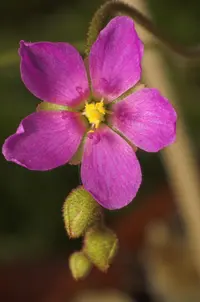
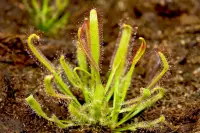
Collins sundew, Drosera collinsiae, is a small carnivorous plant that naturally grows in nutrient-poor, wet habitats in South Africa and neighboring regions. It forms low rosettes of narrow leaves covered in sticky, glistening glands that trap small insects.
The plant relies on captured prey for nutrients, which makes soil choice and watering important factors in how to care for Collins Sundew. It prefers bright, indirect light, evenly moist conditions, and low-mineral, acidic substrates that mimic its boggy native environment.

Care Difficulty
Hard Care

Light Preference
Partial Sun

Water Requirements
Keep Soil Moist

Temperature Preference
Tropical / Frost Sensitive

Hardiness Zone
10–11

Soil Texture
Sandy, Peaty, Organic-rich

Soil pH
Strongly acidic (4.5–5.5)

Soil Drainage
Waterlogged tolerant

Fertilization
Minimal (feed rarely)
Scan your plant to receive care tips personalized for your specific plant
Available on iOS and Android
This small sundew thrives in bright, gentle light that mimics open, boggy habitats.
This species prefers constantly moist, low-mineral conditions similar to a natural bog.
This sundew grows best in mild, frost-free conditions with modest seasonal variation.
This species benefits from consistently high humidity to maintain active dew production.
This carnivorous species needs a nutrient-poor, airy, and consistently wet medium rather than conventional potting soil.
This species is well suited to container culture when the pot supports constant moisture without waterlogging.
This species gains most nutrients from insects and is very sensitive to fertilizer in the root zone.
Drosera collinsiae needs only light, hygiene-focused pruning to keep rosettes healthy.
This plant prefers stable conditions and only occasional repotting into fresh carnivorous mix.
Drosera collinsiae responds well to vegetative propagation under stable, warm, bright conditions.
This species is not frost hardy and needs mild, protected conditions in winter.

Plant Health Check
Not sure what's wrong with your plant? Check your plant's health inside the app.
This carnivorous sundew is naturally restricted to specific regions of South Africa, where it grows in nutrient-poor, seasonally wet, sandy or peaty soils among low grass and fynbos vegetation.
Plants begin as flat ground-hugging rosettes, but older individuals can develop short upright stems topped by a cluster of leaves, giving a slightly elevated trapping surface above surrounding vegetation.
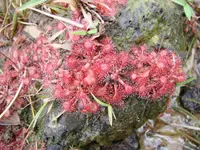
The leaves bear dense stalked glands that exude sticky mucilage to trap mainly small flying insects, and the leaf surface slowly curls around prey to increase digestive contact and nutrient absorption.
Lack of flowers often comes from insufficient light, using fertilized soil, or very poor plant vigor. Provide strong light, low-nutrient substrate, and consistent moisture. Once conditions improve, it usually resumes normal flowering in the growing season.
Keep your plants happy and healthy with plant identification, disease detection, and easy care guidance.