Shape Compact Mounds
Pinch back soft shoot tips in early spring and again after the first flush of flowers to encourage a dense, domed habit and heavier blooming rather than long, straggly stems.

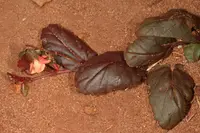
Purpleleaf dollsrose (Hermannia depressa) is a compact, low-growing shrublet valued for its neat mound shape and small, rounded, often purple-tinged leaves. It produces many bell-shaped yellow flowers that hang beneath the foliage, giving a fine-textured, detailed look at close range.
This species is native to dry, open habitats in southern Africa, where it experiences strong light, lean soils, and good air movement. Those origins make it drought-tolerant once established but less suited to very wet or heavy soils.
Gardeners who care for Purpleleaf Dollsrose usually find it manageable if given bright light, fast-draining soil, and protection from prolonged freezing conditions.

Care Difficulty
Moderate Care

Light Preference
Full Sun

Water Requirements
Low Water

Temperature Preference
Warm Climate

Hardiness Zone
9–11

Soil Texture
Sandy, Loamy, Rocky

Soil pH
Acidic (5.5–6.5), Slightly acidic (6.5–7.0)

Soil Drainage
Well-drained

Fertilization
Minimal (feed rarely)
Scan your plant to receive care tips personalized for your specific plant
Available on iOS and Android
Hermannia depressa prefers bright, open conditions similar to its native rocky habitats.
Hermannia depressa prefers infrequent, thorough watering and fast-draining soil.
This species favors mild, dry conditions and does best without strong temperature extremes.
This drought-tolerant shrub handles typical indoor humidity but benefits from moderately dry air.
Hermannia depressa prefers a lean, sharply drained, sandy mix that mimics rocky, semi-arid habitats.
This compact, shrubby species is well suited to container growing for patios and bright outdoor spots.
Hermannia depressa is a light feeder that benefits from modest nutrition during active growth.
Hermannia depressa responds well to light pruning that maintains a compact, flowering mound.
This low shrub is more often transplanted in the garden than repotted, but container plants still need occasional attention.
Hermannia depressa can be propagated by seeds or semi-ripe cuttings under suitable conditions.
Hermannia depressa prefers mild winters and benefits from basic protection in colder climates.

Plant Health Check
Not sure what's wrong with your plant? Check your plant's health inside the app.
This species is naturally restricted to arid parts of South Africa, especially Namaqualand, where it forms low, compact shrubs adapted to shallow, rocky soils.
It produces small, nodding, bell-shaped yellow flowers with a delicate texture that attract local pollinators during the late winter and spring rainfall period in its native range.
Its small, often slightly hairy leaves help reduce water loss, an adaptation that allows it to survive long dry periods in winter-rainfall desert and semi-desert habitats.
Lack of flowers often comes from insufficient light, heavy or waterlogged soil, or overfertilizing with high-nitrogen products. Light pruning after flowering and avoiding constant repotting helps redirect energy into bud formation next season.
Keep your plants happy and healthy with plant identification, disease detection, and easy care guidance.