Cool root zone
Stand the pot in a shallow tray with a thin layer of coarse sand or gravel and keep this just damp so the roots stay slightly cooler than the air, which supports this montane species in warm indoor conditions.

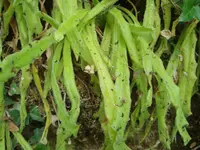
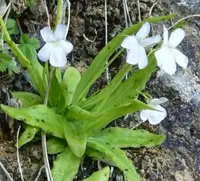
Long-leaved butterwort, Pinguicula longifolia, is a temperate carnivorous plant that forms narrow, elongated rosettes of sticky leaves. These leaves trap small insects, which supply extra nutrients. In nature, it usually grows on moist, lime-rich cliffs, rock faces, and wet slopes in parts of western and southern Europe. The plant often experiences cool, damp conditions with good air movement. It can be challenging to grow because it needs constant moisture, low-nutrient, alkaline substrates, and careful protection from heat stress. For anyone learning how to care for long-leaved butterwort, stable cool conditions and steady humidity are the main priorities.

Care Difficulty
Hard Care

Light Preference
Partial Shade

Water Requirements
Keep Soil Moist

Temperature Preference
Cool Climate

Hardiness Zone
6–8

Soil Texture
Sandy, Peaty, Organic-rich

Soil pH
Strongly acidic (4.5–5.5), Acidic (5.5–6.5)

Soil Drainage
Waterlogged tolerant

Fertilization
Minimal (feed rarely)
Scan your plant to receive care tips personalized for your specific plant
Available on iOS and Android
This carnivorous species needs bright, gentle light that mimics open but not fully exposed mountain habitats.
This species prefers constantly moist conditions but is sensitive to stagnant water and prolonged dryness.
This plant prefers cool to mild conditions with protection from both hard frost and intense heat.
This species benefits from consistently moist air but does not need extreme humidity.
This carnivorous species needs nutrient-poor, open, and constantly moist substrate rather than conventional potting soil.
This species is suitable for container growing when the pot supports constant moisture without waterlogging the crown.
This carnivorous species gains most nutrients from prey, so long-leaved butterwort needs only minimal supplementary feeding in cultivation.
Pinguicula longifolia needs only light, hygiene-focused pruning to keep rosettes healthy and reduce rot.
This species prefers stable conditions, so repotting Pinguicula longifolia is infrequent and should be done carefully to limit root disturbance.
Pinguicula longifolia is most often propagated vegetatively rather than from seed for faster, predictable results.
This temperate carnivorous plant benefits from a cool dormant period but has limited tolerance to deep or prolonged freezing.

Plant Health Check
Not sure what's wrong with your plant? Check your plant's health inside the app.
This species naturally grows in narrow crevices and on wet limestone cliffs in the Pyrenees and nearby mountains, where constant seepage supplies mineral-poor but calcium-rich water.
Its long summer leaves are strongly carnivorous and covered with sticky glands, but in winter it forms a tight, non-carnivorous hibernaculum, a resting bud that helps it survive cold, drying conditions.
The leaves can reach more than 10 cm in length while remaining only a few millimeters wide, which increases surface area for insect capture and water shedding on steep rock faces.

Some populations of this species live on almost vertical rock walls where the roots mainly serve as anchors, and the plant relies heavily on captured insects and dissolved minerals in seepage water rather than nutrients from the rock substrate.
Poor flowering often results from insufficient winter rest, overly warm conditions, or nutrient-rich substrate. This alpine species forms better buds when kept cool and bright in winter and grown in low-mineral media with consistent moisture.
Keep your plants happy and healthy with plant identification, disease detection, and easy care guidance.