tropical rose mallow Care (Hibiscus vitifolius)

Also known as: Wineleaf Hibiscus
tropical rose mallow

About tropical rose mallow

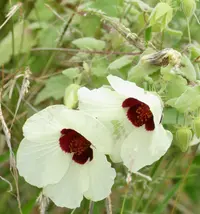
Tropical rose mallow, Hibiscus vitifolius, is a shrubby hibiscus species valued for its large, soft yellow flowers with dark centers and attractive, vine-like foliage. It often grows as a short-lived shrub or subshrub, developing a bushy shape with multiple stems and a somewhat wild, natural look.

In nature it occurs in warm regions of Africa and Asia, often in open, sunny sites with well-drained soils. It tends to be fast-growing but can be short-lived, which makes regular replanting or propagation useful.

This species is generally considered moderate in difficulty, as it likes consistent warmth, sun, and moisture but dislikes waterlogged or very cold conditions. Gardeners who learn how to care for tropical rose mallow usually find it rewarding for seasonal color and pollinator interest.

Main Plant Requirements

Care Difficulty

Moderate Care

Light Preference

Full Sun

Water Requirements

Regular Water

Temperature Preference

Tropical / Frost Sensitive

Hardiness Zone

10–11

Soil Texture

Sandy, Loamy, Organic-rich

Soil pH

Acidic (5.5–6.5), Slightly acidic (6.5–7.0)

Soil Drainage

Moist but well-drained

Fertilization

Light (every 4–6 weeks)

Get Personalized Care Plan

Scan your plant to receive care tips personalized for your specific plant

Available on iOS and Android

How to Care for the tropical rose mallow

Hibiscus vitifolius grows best with bright, direct light in warm, open sites.

  • Provide 6–8 hours of direct sun daily, ideally with morning sun and light afternoon shade, especially in hotter regions.
  • Plant in a position that receives some high, filtered shade during the harshest afternoon sun to reduce leaf scorch and moisture loss.
  • In cooler seasons, maximize exposure by avoiding heavy shade; plants in too much shade develop weak stems, fewer flowers, and sparse foliage, which signals insufficient light.

This species prefers evenly moist, well-drained soil that never stays waterlogged.

  • Water when the top 3–5 cm of soil feels dry, soaking the root zone deeply so moisture reaches at least 15–20 cm.
  • Use soil rich in organic matter with good drainage; persistent puddling, yellowing leaves, and soft stems indicate overwatering and poor aeration.
  • During hot, dry periods, expect more frequent watering, while in cooler or rainy seasons, extend intervals and watch for wilting, dull leaves, or crispy edges as signs of underwatering.

This warm-climate shrub performs best in stable, frost-free conditions.

  • Aim for 70–85°F (21–29°C) during active growth for strong stems and flowering, similar to conditions for growing tropical rose mallow outdoors.
  • Protect plants when forecasts drop near 40°F (4°C); foliage damage often begins just above freezing, and hard frost can kill young growth or entire plants.
  • In hot regions, brief peaks to 95°F (35°C) are tolerated if soil moisture is maintained, but extended extreme heat with dry soil leads to leaf scorch and bud drop.

This species prefers moderately humid air but adapts to many home conditions with minimal stress.

  • Aim for 50–60% humidity to support steady leaf growth and prolonged flowering in tropical rose mallow.
  • It tolerates short periods at 35–40%, but very dry heated rooms can cause leaf edge browning and bud drop.
  • Increase humidity with a nearby pebble tray or grouped plants rather than misting, which adds only brief surface moisture.

Hibiscus vitifolius grows best in loose, fertile, and slightly acidic to neutral soil that drains quickly yet retains some moisture.

  • Use a loamy mix of roughly 50% peat-free compost, 30% coarse sand, and 20% perlite to combine moisture retention with rapid drainage.
  • Keep pH around 6.0–7.0; mildly acidic soil supports nutrient availability and reduces micronutrient deficiencies such as chlorosis (yellowing leaves).
  • Improve aeration by blending in chunky materials like pine bark fines or horticultural grit, avoiding heavy clay or compacted garden soil.
  • Avoid waterlogged or sticky substrates, which promote root rot and limit oxygen to roots, especially in cool weather.

This species is suitable for container growing when provided with stable, well-drained conditions.

  • Choose a deep, heavy pot that resists tipping, as tall top growth and flower load can make the plant top-heavy in wind.
  • Select a slightly wider pot diameter than the root ball to provide horizontal root run without leaving large unused, soggy soil pockets.
  • Use a coarse drainage layer only if potting mix is very free-draining, and always empty outer cachepots so roots do not sit in trapped water.

Hibiscus vitifolius responds well to modest, consistent feeding during warm months, especially in containers.

  • Apply a balanced liquid fertilizer (around 10-10-10) at 1/2 strength every 2–4 weeks during active growth.
  • Use a slow-release granular fertilizer or thin layer of compost in spring to support flowering tropical rose mallow.
  • Rinse pots occasionally with plain water to prevent salt buildup from repeated feeding.
  • Reduce or stop fertilizing in late fall and winter when growth slows or plants are dormant.

Pruning Hibiscus vitifolius keeps plants healthy, encourages bushy growth, and supports good flowering.

  • Carry out main pruning in late winter or early spring before strong new growth starts.
  • Remove dead, damaged, crossing, or inward-facing branches to improve air flow and light penetration.
  • Shorten overly long shoots by up to 1/3 to maintain a balanced, compact shape.
  • Use clean, sharp bypass pruners and make angled cuts just above outward-facing buds.

Transplanting or occasional repotting helps Hibiscus vitifolius maintain vigorous root growth and stable top growth.

  • Look for roots circling the pot, emerging from drainage holes, or slow, weak growth as signs it needs more space.
  • Plan to step up container plants every 2–3 years in spring, using a free-draining, slightly fertile mix.
  • When transplanting into the ground, move plants in spring or early summer, choosing a sunny, sheltered site.
  • Water thoroughly before and after moving, disturb roots as little as possible, and shade plants for a few days to limit stress.

New Hibiscus vitifolius plants are most often raised from seeds or softwood cuttings under warm conditions.

  • Sow fresh seed in spring in a light, sterile mix at 70–80°F; lightly cover and keep evenly moist.
  • Take 8–12 cm softwood or semi-ripe cuttings in late spring to summer from non-flowering shoots.
  • Remove lower leaves, dip the cut end in rooting hormone, and place in a humid, bright, indirect light environment.
  • Provide bottom heat if possible and avoid waterlogging to reduce rot and improve rooting success.

In mild climates Hibiscus vitifolius needs only light winter care, but in colder regions it benefits from extra protection.

  • The plant is sensitive to hard frost; growth and stems may be damaged below about 30°F.
  • Apply a 5–8 cm layer of organic mulch around the root zone in late fall, keeping it away from the main stem.
  • In areas with freezing winters, grow in containers and move plants indoors to a bright, cool, frost-free space.

Care Tips

Early staking support

Install a sturdy stake or low trellis when the plant is still young so tall, soft stems are kept upright and less likely to snap in wind or heavy rain.

Mulch for root cooling

Apply a 5–8 cm layer of organic mulch around the root zone, keeping it a few cm away from the stem, to keep roots cooler, reduce soil moisture swings, and limit weed competition.

Pinch for bushiness

Lightly pinch out the soft tips of young shoots once or twice early in the season to encourage branching, which produces more flowering wood and a fuller outline.

Targeted aphid control

Inspect new growth weekly and wash off early aphid colonies with a firm stream of water, following up with a labeled insecticidal soap spray if needed to avoid distorted buds and reduced flowering.

Seasonal container shift

If grown in a pot, shift the container slightly every 1–2 weeks during the growing season so all sides receive similar light, which promotes even growth and simplifies caring for tropical rose mallow in small spaces.

Common Pests and Diseases

Hibiscus whitefly

This pest is a small sap-sucking insect that often forms dense clouds when foliage is disturbed. Symptoms include sticky honeydew, sooty mold on leaves, and gradual yellowing or leaf drop.

Solution

Reduce populations by regularly hosing down the undersides of leaves and removing heavily infested foliage. For ongoing Hibiscus vitifolius plant care, introduce or protect natural predators such as lady beetles and lacewings, and use insecticidal soap or a light horticultural oil spray on the undersides of leaves every 7–10 days until numbers drop.

Hibiscus aphids

These insects cluster on young shoots, buds, and leaf undersides, sucking sap and distorting tender growth. Symptoms include curled leaves, sticky honeydew, and reduced flowering.

Solution

Prune off heavily infested shoot tips and wash remaining aphids from the plant with a firm stream of water. If needed, apply insecticidal soap or neem oil in the early morning or evening, ensuring thorough coverage of new growth and leaf undersides, and repeat at 5–7 day intervals until controlled.

Hibiscus mealybugs

This pest appears as white, cottony clusters in leaf axils, along stems, and on roots in container-grown plants. Symptoms include stunted growth, leaf yellowing, and sticky honeydew that can lead to sooty mold.

Solution

Isolate affected plants, dab visible mealybugs with cotton swabs dipped in isopropyl alcohol, and remove heavily infested parts. Follow up with repeated applications of insecticidal soap or horticultural oil, making sure to reach hidden areas in leaf joints and around the stem base.

Hibiscus leaf spot

This disease causes small water-soaked spots that expand into brown or dark lesions on leaves, often with yellow halos. Symptoms include premature leaf drop and thinning of the canopy in warm, humid conditions.

Solution

Remove and discard affected leaves, including those on the ground, and avoid overhead watering to keep foliage dry. Improve spacing and airflow around plants, water early in the day, and, if spots spread quickly, use a labeled copper or chlorothalonil fungicide according to directions until new growth appears clean.

Botrytis blight

This disease produces gray, fuzzy mold on fading flowers, buds, and sometimes young leaves, especially in cool, damp conditions. Symptoms include bud drop, rotting petals that stick to leaves, and a general decline in flowering.

Solution

Promptly deadhead spent flowers and remove affected buds or leaves to reduce sources of spores. Improve air movement, avoid wetting flowers when watering, and in persistent wet weather consider a preventive fungicide labeled for Botrytis, applying to buds and surrounding foliage as directed.

Interesting Facts

Grape-like foliage

The species name vitifolius refers to its leaves, which closely resemble those of grapevines, with shallow lobes and a similar overall outline.

Color-changing flowers

Its pale yellow flowers typically develop a dark maroon to purple center and often turn pinkish or orange as they age, so a single plant can display multiple flower colors in one day.

Self-seeding pioneer

In warm regions it often behaves as a short-lived perennial or annual that readily self-seeds, allowing it to colonize disturbed soils and field margins as a natural pioneer plant.

Botan icon

Did you know?

In parts of South Asia and East Africa, this species has been traditionally used as a fiber plant, with its tough, bast-rich stems processed in a similar way to jute for making ropes and coarse cordage, reflecting its historical value beyond ornamental use.

FAQs about tropical rose mallow

This species is typically perennial in frost‑free or very mild climates, regrowing from the same root system each year. In colder regions it may be damaged or killed by frost and is often treated as a tender perennial or annual.

Grow Healthy Plants with Botan Care

Keep your plants happy and healthy with plant identification, disease detection, and easy care guidance.

Botan plant care app — identify plants on mobile

Explore More Plants