Syrian Rock-rose Care (Helianthemum syriacum)

Syrian Rock-rose

About Syrian Rock-rose

Syrian rock-rose, Helianthemum syriacum, is a small evergreen shrub that forms low, mounding clumps with narrow gray-green leaves. It typically bears many short-lived, papery flowers that open in sun and drop by evening.

This species is native to dry, rocky areas of the Mediterranean region, where it is adapted to high light and lean, fast-draining soils. Its drought tolerance and modest nutrient needs make it relatively easy to grow in well-drained sites, especially in rock gardens or dry borders. A basic understanding of how to care for Syrian Rock-rose helps keep it compact and floriferous over many seasons.

Main Plant Requirements

Care Difficulty

Easy Care

Light Preference

Full Sun

Water Requirements

Low Water

Temperature Preference

Warm Climate

Hardiness Zone

8–11

Soil Texture

Sandy, Loamy, Rocky

Soil pH

Slightly alkaline (7.0–7.5), Alkaline (7.5–8.5)

Soil Drainage

Well-drained

Fertilization

Minimal (feed rarely)

Get Personalized Care Plan

Scan your plant to receive care tips personalized for your specific plant

Available on iOS and Android

How to Care for the Syrian Rock-rose

This sun-loving shrub thrives in bright, open positions with strong light exposure.

  • Provide 6–8 hours of direct sun daily; full sun promotes compact growth and heavy flowering in Syrian Rock-rose.
  • It tolerates light afternoon shade in very hot climates, but dense shade leads to weak, leggy stems and few blooms.
  • Ensure nearby plants or structures do not cast long shadows in winter when the sun is low, as reduced light can limit next season’s flower buds.

This drought-tolerant subshrub prefers infrequent, deep watering and very well-drained soil.

  • Allow the top 3–5 cm of soil to dry before watering; in the ground, water only when foliage starts to lose firmness during dry spells.
  • Use sharply drained, gritty soil or a sloped site to prevent standing water, which increases root rot risk for Helianthemum syriacum.
  • Reduce watering in cool seasons, and watch for yellowing, soft stems as a sign of overwatering, or crisp, curling leaves as a sign of underwatering.

This Mediterranean species prefers warm, dry conditions and tolerates moderate cold once established.

  • Optimal growth occurs around 65–80°F (18–27°C), with best flowering in warm springs and mild, dry summers.
  • Mature plants often tolerate brief drops to about 10–15°F (-12–-9°C) in well-drained soil, but young plants are less cold-hardy.
  • In very hot periods above 95°F (35°C), light afternoon shade and mulch help protect roots, while avoiding humid, stagnant air reduces stress and disease.

Humidity is not a major factor for this drought-adapted species and typical indoor levels are acceptable.

  • Ideal humidity is around 30–50%, similar to average heated or air-conditioned homes.
  • Syrian Rock-rose tolerates very dry air; issues usually relate more to overwatering than humidity.
  • If air is extremely dry and leaves brown at the tips, reduce heat stress and avoid hot drafts rather than adding moisture.

This species prefers lean, very free-draining soil that mimics rocky or sandy slopes.

  • Use a gritty mix such as 50–70% coarse sand or fine gravel blended with the remaining portion as loam-based compost.
  • Ensure rapid drainage; water should run through quickly and the surface should dry within 1–2 days after watering.
  • Aim for slightly alkaline to neutral pH, roughly 7.0–8.0, and avoid strongly acidic potting mixes.
  • Improve aeration by mixing in horticultural grit or perlite and avoid dense, peat-heavy or water-retentive soils that stay wet.

This shrub is suitable for container growing if the pot is kept sharply drained and not oversized.

  • Choose a wide, shallow container to match its spreading root system and reduce waterlogged pockets at depth.
  • Use a heavy or stable pot if exposed to wind so the low, spreading top growth does not tip the container.
  • Raise the pot on feet or bricks so drainage holes stay clear and runoff water does not pool under the base.

This Mediterranean shrub thrives in lean soil, so keep fertilizing light and targeted.

  • Use a low-rate, balanced slow-release fertilizer (around 10-10-10 or similar) once in early spring to support new growth.
  • Alternatively, top-dress with a thin layer of mature compost, keeping it away from the woody stem base.
  • Dilute liquid feeds to 1/2–1/4 strength and apply only during active growth, every 4–6 weeks if growth is weak.
  • Stop feeding Syrian Rock-rose in late summer to allow tissues to harden before cooler weather.

Helianthemum syriacum benefits from light, timely pruning to keep it compact and floriferous.

  • Shear back lightly after main flowering in late spring or early summer to maintain a low, mounded shape.
  • Use clean, sharp hand pruners to remove dead, diseased, or winter-damaged shoots at their base.
  • Thin crowded, lanky stems to improve air movement and encourage denser new growth from lower buds.
  • Avoid cutting into very old, woody stems with no green shoots, as these rarely resprout well.

This species is more often transplanted in the landscape than kept long term in containers.

  • Transplant in early spring or early fall, when temperatures are mild and soil is workable.
  • Look for roots circling the pot, slow growth, or quick drying soil as signs a container plant needs a larger pot.
  • Move up only 1 pot size, using very free-draining, sandy soil to limit waterlogging and root stress.
  • Handle the root ball gently, tease circling roots slightly, water in well, then shade lightly for a few days.

Helianthemum syriacum is commonly propagated from semi-ripe cuttings and sometimes from seed.

  • Take 5–8 cm semi-ripe stem cuttings in late summer, removing flowers and soft tips.
  • Insert cuttings into a gritty, well-drained mix, keep slightly moist, and maintain bright light without direct midday sun.
  • Apply a light rooting hormone and keep humidity moderate to encourage rooting within several weeks.
  • Sow fresh seeds in fall or early spring in a sandy mix, barely covering them, and provide cool, bright conditions.

This shrub is fairly cold hardy in mild climates but benefits from some winter attention, especially in containers.

  • Tolerates light frosts once established, but young plants prefer sheltered, well-drained sites.
  • Apply a 3–5 cm layer of gravel or coarse mulch around the root zone, avoiding direct contact with stems.
  • Keep soil on the dry side in winter, since wet, cold conditions increase root rot risk.
  • Move containers to a cold, airy, frost-sheltered spot such as an unheated porch or bright garage.

Care Tips

Encourage Compact Mounding

Pinch or lightly shear young shoots after the main spring bloom flush to keep the plant low, dense, and better able to resist wind and sporadic snow load in open, dry sites.

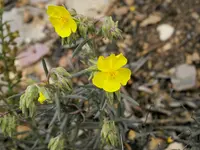
Use Gravel Mulch

Apply a 1–2 in layer of mineral mulch such as grit or small gravel around the root zone to keep the crown dry, suppress winter rot, and maintain the sharp drainage this species needs on heavier garden soils.

Renew Aging Plants

Plan to replace older clumps every 4–5 years by taking semi-ripe cuttings in late summer, which keeps plantings vigorous and flowering well even though individual plants are relatively short-lived.

Site for Winter Drainage

On sloped or rocky sites, plant slightly above soil grade or on a low berm so winter rain or snowmelt drains quickly away from the crown, which is critical for long-term survival when growing Syrian Rock-rose in cold, wet climates.

Companion Ground Layer

Combine it with other drought-adapted, low groundcovers that tolerate lean soil to create a tightly knit planting that shades the soil surface, reduces weed pressure, and stabilizes shallow, sandy banks where this shrub tends to thrive.

Common Pests and Diseases

Leaf spot

This disease causes small brown, purple, or gray spots on leaves that may merge and lead to premature leaf drop, especially in humid or wet conditions.

Solution

Remove and dispose of affected leaves, avoid overhead watering, and improve air movement around the plant; for persistent infections on valuable clumps, apply a light copper-based or chlorothalonil fungicide during prolonged wet periods, following label directions.

Downy mildew

This disease produces yellow or pale patches on the upper leaf surface with a grayish downy growth underneath, often appearing after cool, damp weather.

Solution

Cut away and discard infected foliage, water at soil level in the morning, and space plants to dry quickly; in recurrent cases, protect new growth with a suitable downy mildew fungicide labeled for ornamental groundcovers, rotating products to reduce resistance.

Aphids

These insects cluster on shoot tips and flower stalks, sucking sap and causing curling leaves, sticky honeydew, and sooty mold growth on foliage.

Solution

Spray colonies off with a firm stream of water, then treat remaining insects with insecticidal soap or a light horticultural oil, ensuring full coverage of stems and leaf undersides and repeating weekly until populations decline.

Red spider mites

This pest thrives in hot, dry conditions, causing fine stippling, dull foliage, and eventual bronzing or leaf drop, sometimes with thin webbing on stems and leaves.

Solution

Increase humidity around plants slightly with occasional overhead rinsing during dry spells, hose down foliage to dislodge mites, and if needed use a horticultural oil or specific miticide, making 2–3 treatments at 5–7 day intervals to break the life cycle.

Powdery mildew

This disease appears as white, powdery patches on leaves and stems, which can distort young growth and reduce flowering in crowded or shaded plantings.

Solution

Prune to open the plant to light and airflow, remove heavily affected shoots, avoid overhead watering late in the day, and when necessary use a sulfur or potassium bicarbonate fungicide applied at the first sign of symptoms as part of broader Helianthemum syriacum care.

Interesting Facts

Eastern Mediterranean native

This species is naturally distributed in the eastern Mediterranean region, especially in rocky, calcareous habitats where it grows in shallow, alkaline soils and full sun exposure.

Flowering after disturbance

Populations often appear and flower more abundantly in open, disturbed sites such as roadsides or recently cleared scrub, taking advantage of increased light and reduced competition.

Adapted to summer drought

The plant shows typical Mediterranean shrubland adaptations, including small, somewhat leathery leaves and a low, bushy growth form that help it tolerate hot, dry summers on exposed slopes.

FAQs about Syrian Rock-rose

This species stays low and forms a spreading mat, but it is not usually aggressive. It spreads slowly by short stems, filling gaps between rocks or along borders without smothering healthy, established neighboring plants.

Grow Healthy Plants with Botan Care

Keep your plants happy and healthy with plant identification, disease detection, and easy care guidance.

Botan plant care app — identify plants on mobile

Explore More Plants