yellowish miltonia Care (Miltonia flavescens)

yellowish miltonia

About yellowish miltonia

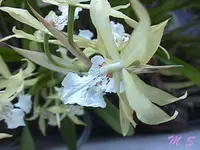
Miltonia flavescens, often called yellowish miltonia, is an epiphytic orchid that typically grows on trees in warm, humid forests of Brazil and neighboring regions. It forms clumps of narrow pseudobulbs with slender, grass-like leaves and arching stems that carry many soft yellow, lightly fragrant flowers.

In cultivation, it is valued for its elegant, airy look and reliable blooming when conditions are stable. Its needs are moderate rather than beginner-easy, mainly due to its dislike of drying out or overheating.

Those who care for yellowish miltonia should provide bright, filtered light, steady moisture around the roots, and a loose, bark-based orchid mix that drains quickly but does not stay bone dry.

Main Plant Requirements

Care Difficulty

Moderate Care

Light Preference

Bright Indirect Light

Water Requirements

Keep Soil Moist

Temperature Preference

Tropical / Frost Sensitive

Hardiness Zone

Unknown

Soil Texture

Peaty, Organic-rich

Soil pH

Acidic (5.5–6.5)

Soil Drainage

Moist but well-drained

Fertilization

Moderate (every 2–4 weeks)

Get Personalized Care Plan

Scan your plant to receive care tips personalized for your specific plant

Available on iOS and Android

How to Care for the yellowish miltonia

Miltonia flavescens thrives in bright, filtered light that mimics lightly shaded forest canopies.

  • Provide 4–6 hours of bright, indirect light daily, such as dappled shade under a tree or 30–50% shade cloth in outdoor orchid areas.
  • Allow gentle early morning sun but protect from strong midday and afternoon sun to avoid leaf scorch, bleaching, and dry, crinkled foliage in yellowish miltonia.
  • If new growth is dark green and floppy, light is too low; aim for medium green leaves and increase light gradually, especially in winter.

This orchid prefers evenly moist conditions with brief drying at the surface between waterings.

  • Water when the top 2–3 cm of the medium feels just barely dry, using thorough soakings that fully wet the root zone, then let excess drain completely.
  • In active growth and warmer months, expect more frequent watering; in cooler seasons or lower light, extend intervals to prevent soggy roots and rot.
  • Watch for wrinkled pseudobulbs and limp leaves as signs of underwatering, and yellowing, soft roots or a sour smell as signs of overwatering in Miltonia flavescens.

This species grows best in intermediate temperatures with mild nights and moderate daytime warmth.

  • Aim for 65–75°F (18–24°C) by day and 55–60°F (13–16°C) at night, which supports steady growth and flowering.
  • Protect the plant from temperatures below 45°F (7°C); it does not tolerate frost and should be sheltered or moved before cold snaps.
  • In hot spells above 85°F (29°C), increase shade, air movement, and humidity to reduce heat stress, leaf tip burn, and bud blast.

This orchid prefers relatively high, stable humidity to maintain healthy foliage and roots.

  • Aim for 50–70% humidity; prolonged levels below 40% lead to wrinkled pseudobulbs and dull, folded leaves.
  • Yellowish miltonia tolerates short dry spells but reacts to very dry air with brown leaf tips and reduced flowering.
  • Increase humidity with a pebble tray under the pot, grouping plants, or a small room humidifier placed nearby.

Miltonia flavescens grows best in a loose, airy orchid substrate that dries slightly but never compacts.

  • Use a mix of medium orchid bark, perlite, and a small amount of sphagnum moss to balance moisture and airflow.
  • Choose a structure that is chunky and fibrous, so water drains quickly while roots remain surrounded by moist air pockets.
  • Keep pH slightly acidic to neutral, roughly 5.5–7.0, by avoiding heavy garden soil or lime-rich additives.
  • Avoid dense, peat-heavy or clay-based mixes that stay wet, as they suffocate roots and encourage rot.

This species is very suitable for container growing due to its compact, clumping root system.

  • Select a relatively shallow but broad pot so roots can spread laterally without a deep, wet zone forming at the base.
  • Use a container material like terracotta if extra evaporation is needed to offset a naturally humid or cool environment.
  • Elevate the pot slightly above the saucer so drainage holes remain clear and runoff does not wick back into the medium.

Miltonia flavescens benefits from light, consistent feeding during active growth to support healthy foliage and flowering.

  • Use a balanced NPK orchid fertilizer at 1/4–1/2 strength every 2–3 weeks in spring and summer.
  • Water with plain, low-mineral water between feedings to prevent salt buildup in the potting mix.
  • In fall and winter, reduce feeding to 1x month or pause if growth is very slow.
  • For caring for yellowish miltonia, avoid heavy compost or slow-release pellets that can burn roots in fine orchid media.

Miltonia flavescens needs only light pruning to keep the plant clean and focused on new growth.

  • Best time for pruning is after flowering, when spent spikes have fully faded.
  • Cut flower spikes at the base with clean, sharp scissors or pruning shears to encourage new growth.
  • Remove dead, damaged, or shriveled pseudobulbs and leaves to improve air flow and reduce disease risk.
  • Avoid cutting healthy green pseudobulbs, as they store water and nutrients essential for future blooms.

This orchid prefers slightly tight conditions but benefits from periodic repotting to refresh its airy medium.

  • Repot every 2–3 years or when roots circle the pot, the mix breaks down, or growth slows.
  • Best timing is in late winter to early spring, just as new roots and shoots start to appear.
  • Gently remove old mix, trim dead roots, and place Miltonia flavescens in fresh, fine to medium orchid bark.
  • Keep the plant slightly shaded and water lightly for 1–2 weeks after repotting to limit root stress.

Propagation of Miltonia flavescens is usually done by division rather than from seed in home settings.

  • Divide mature clumps in late winter or early spring when repotting and new growth begins.
  • Use a sterile knife or shears to split the plant into sections with at least 3–4 healthy pseudobulbs each.
  • Plant divisions in fresh orchid bark, firming gently so roots make contact without being compressed.
  • Maintain warm temperatures, high humidity, and bright, filtered light to support rooting and recovery.

This orchid is not frost tolerant and needs mild conditions through winter, especially in container culture.

  • Move plants indoors before temperatures drop below 50°F, keeping them in bright, indirect light.
  • Maintain indoor temperatures around 60–70°F with good air circulation but away from cold drafts.
  • Water slightly less in winter, allowing the mix to approach dryness, yet never remain dry for long.
  • Avoid placing pots directly on cold windowsills; use a tray or stand to insulate roots from cold surfaces.

Care Tips

Cool-night boost

Provide a 10–15°F drop at night for several weeks in late summer or early fall by moving the plant to a cooler, bright room to encourage reliable spike initiation and heavier flowering.

Airy mount option

If your home humidity is consistently above 50%, mount the plant on cork or tree fern with a thin pad of sphagnum to mimic its epiphytic habit, improve root aeration, and reduce the risk of root rot from overpotting.

Spike positioning

As new spikes emerge, gently rotate the pot 1–2 times per week so buds receive even light, which helps prevent lopsided flowering and twisting inflorescences.

Targeted root checks

Inspect roots at least twice a year by sliding the root ball partly out of the pot, trimming only dead, brown, mushy roots, and repotting more frequently if the medium stays wet for longer than 3–4 days.

Clean air circulation

Use a small, quiet fan on a low setting to move air across foliage and around the pot, which helps prevent fungal spotting and bacterial rot when caring for yellowish miltonia in warm, still rooms.

Common Pests and Diseases

Spider mites

This pest thrives on Miltonia leaves in warm, dry air and causes fine stippling, dulling, and eventual yellowing or bronzing of foliage. Symptoms include fine webbing on leaf undersides and along pseudobulbs.

Solution

Increase humidity to 50–70%, rinse foliage thoroughly under lukewarm running water, and wipe leaf undersides with a soft cloth. If populations persist, treat with insecticidal soap or a neem oil spray directed mainly at leaf undersides every 7–10 days until new growth appears clean.

Scale insects

These insects attach to pseudobulbs, leaf bases, and flower spikes as small, hard bumps and feed on plant sap, leading to yellowing, shriveling, and sticky honeydew that can promote sooty mold. Infestations are common in crowded, warm growing areas with limited air movement.

Solution

Isolate the plant, then physically remove scales using a cotton swab dipped in isopropyl alcohol, focusing on leaf bases and pseudobulbs. Follow with several applications of horticultural oil or neem oil at 7–10 day intervals, and improve air movement to reduce reinfestation risk.

Brown leaf spot

This disease appears as small, water-soaked or yellowish spots on thin Miltonia leaves that enlarge into brown lesions, often with a yellow halo. High humidity with poor air circulation favors its development, especially after water sits on foliage.

Solution

Remove and discard affected leaves or leaf sections, then improve spacing and airflow around the plant so leaves dry quickly after watering or misting. Avoid overhead watering, keep water off the foliage at night, and, if spotting spreads, apply a copper-based or other orchid-safe fungicide according to label directions as part of overall Miltonia flavescens care.

Flower blight

This disease causes translucent, water-soaked spots on flowers that rapidly turn brown and collapse, often beginning on older blooms in cool, damp conditions. Symptoms include premature wilting and spotting on petals and sepals.

Solution

Remove and discard all blighted flowers and spent spikes promptly, and avoid getting water on the blooms. Increase air movement around the inflorescences, reduce nighttime humidity, and if conditions stay very cool and wet, use an orchid-safe fungicide labeled for Botrytis or similar blossom blights as a preventive spray before buds open.

Slugs and snails

These pests feed at night on tender roots, new pseudobulbs, and flower spikes, leaving irregular holes and silvery slime trails. Damage is common when Miltonia is grown in humid, bench or outdoor conditions with damp media and hiding spots.

Solution

Inspect at night and hand-pick any slugs or snails from pots, benches, and trays, and remove hiding places such as overturned pots and debris. Use physical barriers, shallow beer traps, or iron phosphate bait placed away from direct contact with the orchid roots, and keep the growing area cleaner and slightly drier at the surface of the medium.

Interesting Facts

Color-shifting flowers

The flowers open in pale greenish to cream tones and gradually shift toward more yellow or ivory as they age, which can make a single inflorescence look multicolored over time.

Cool to intermediate native

This species is native to cooler to intermediate-elevation forests in Brazil, where it experiences distinct seasonal temperature changes and relatively bright but filtered light compared with many lowland orchids.

Scent varies by clone

Some wild and cultivated clones are notably fragrant with a light, sweet scent, while others are nearly scentless, so growers report quite different sensory experiences with the same species.

Botan icon

Did you know?

Botanists recognize several natural varieties within this species that differ subtly in flower shape, color intensity, and growth habit, which reflects its wide distribution and ecological variation across regions of southeastern Brazil.

FAQs about yellowish miltonia

Lack of flowers usually comes from insufficient light, too-warm nights, or irregular fertilizer. Provide bright but indirect light, a slight night temperature drop, and balanced orchid feed during active growth to support consistent blooming cycles.

Grow Healthy Plants with Botan Care

Keep your plants happy and healthy with plant identification, disease detection, and easy care guidance.

Botan plant care app — identify plants on mobile

Explore More Plants