Deep root training
During the first 3–4 years, irrigate less frequently but with larger volumes to encourage deep rooting, which improves drought tolerance and anchorage for this large canopy tree.

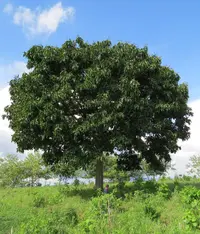
Lecythis ampla, often called coco, is a large evergreen tree from Central and South American rainforests. It belongs to the Brazil nut family and forms a tall, dense crown. The tree produces thick, woody capsules containing large seeds that resemble small nuts, valued locally as a food source. Its slow to moderate growth and eventual large size make it better suited to spacious outdoor sites than to small gardens. Coco prefers warm, humid, frost-free conditions and deep, well-drained soil. In cultivation, it can be challenging outside the tropics, so it is important to learn how to care for coco before planting it long term.

Care Difficulty
Hard Care

Light Preference
Full Sun

Water Requirements
Regular Water

Temperature Preference
Tropical / Frost Sensitive

Hardiness Zone
11–12

Soil Texture
Loamy, Sandy, Organic-rich

Soil pH
Acidic (5.5–6.5), Slightly acidic (6.5–7.0)

Soil Drainage
Moist but well-drained

Fertilization
Minimal (feed rarely)
Scan your plant to receive care tips personalized for your specific plant
Available on iOS and Android
Lecythis ampla prefers bright, stable sunlight similar to lowland tropical forests.
Lecythis ampla needs consistently moist but not waterlogged soil to establish well.
This tropical tree requires warm, frost-free conditions for healthy growth.
This species prefers moderately humid air but adapts if extremes are avoided.
Lecythis ampla needs deep, moist, well-aerated soil that drains freely yet holds consistent moisture.
This species can be grown in containers only while young, and needs careful attention to root space and stability.
Lecythis ampla benefits from light, balanced feeding when grown in cultivation, including when caring for coco as a young tree.
Pruning Lecythis ampla is mainly structural and sanitary, aimed at maintaining a strong, balanced canopy.
Transplanting young Lecythis ampla is more common than long-term container culture, which suits only early stages.
Propagation of Lecythis ampla is typically done by seed and is considered slow and specialized.
Lecythis ampla is a tropical tree with low frost tolerance, so winter care matters in cooler climates.

Plant Health Check
Not sure what's wrong with your plant? Check your plant's health inside the app.
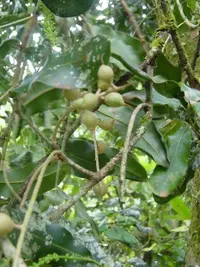
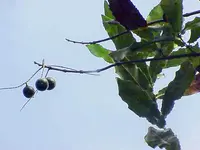
This species produces large, nearly spherical woody fruits with a thick shell that can take many months to mature and often persist on the tree, reminiscent of a smaller version of the Brazil nut’s cannonball fruits.
The heavy fruits open by a lid at the top, and large rodents such as agoutis and pacas are thought to act as key dispersers by gnawing open and transporting the sizable seeds.
It is native to humid lowland evergreen forests of Central America, where it typically occurs as an emergent or canopy tree in undisturbed primary forest.

Lecythis ampla is considered ecologically significant in parts of its range because its large, nutrient-rich seeds provide an important seasonal food resource for medium and large mammals, which in turn helps maintain forest animal populations and dynamics.
Growth is slow to moderate. Young trees may add 20–40 cm per year under warm, moist, frost‑free conditions. Establishment often takes several years before height increases become noticeable and trunk thickening is significant.
Keep your plants happy and healthy with plant identification, disease detection, and easy care guidance.