Queensland Macadamia Care (Macadamia ternifolia)

Also known as: Gympie Nut, Maroochy Nut, Smallfruit Bushnut, Queensland Nut
Queensland Macadamia

About Queensland Macadamia

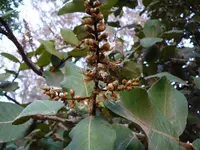
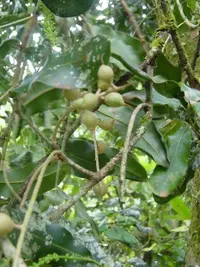
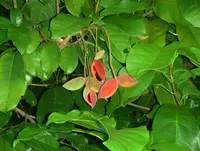
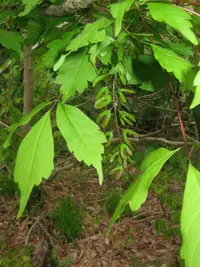
Queensland Macadamia (Macadamia ternifolia) is an evergreen tree from the rainforests of eastern Australia. It is grown mainly for its glossy foliage and attractive form rather than for nuts. Young plants have dense, upright growth with narrow, serrated leaves that often appear in whorls of three along the stems. Mature trees develop a rounded crown and can produce pendent clusters of pale flowers followed by hard-shelled nuts. This species prefers mild, frost-free climates, well-drained soil, and consistent moisture, and it needs good light to stay compact. Understanding how to care for Queensland Macadamia helps gardeners decide if their climate and space are suitable for this tree.

Main Plant Requirements

Care Difficulty

Moderate Care

Light Preference

Full Sun

Water Requirements

Moderate Water

Temperature Preference

Tropical / Frost Sensitive

Hardiness Zone

10–11

Soil Texture

Sandy, Loamy, Organic-rich

Soil pH

Strongly acidic (4.5–5.5), Acidic (5.5–6.5)

Soil Drainage

Well-drained

Fertilization

Minimal (feed rarely)

Get Personalized Care Plan

Scan your plant to receive care tips personalized for your specific plant

Available on iOS and Android

How to Care for the Queensland Macadamia

This species needs abundant sun for strong growth and flowering.

  • Provide 6–8 hours of direct sun daily; full sun is ideal, especially in cooler coastal or upland areas.
  • In hotter inland climates, give Queensland Macadamia morning sun with light afternoon shade to prevent leaf scorch and nut loss.
  • Avoid deep shade, which leads to sparse growth and few nuts; young trees benefit from some filtered light in their first 1–2 years.

This tree prefers evenly moist, well-drained soil rather than constant saturation.

  • Water when the top 3–5 cm of soil feels dry, applying a slow, deep soak so moisture reaches the root zone without pooling.
  • Use free-draining, slightly sandy soil; standing water or heavy clay increases root rot risk and can cause yellowing leaves.
  • Reduce watering in cooler months, but do not let the soil bake hard and dry; wilting, leaf drop, and shriveled new growth suggest underwatering.

This warm-climate tree thrives in mild, frost-free conditions.

  • Best growth occurs around 68–86°F (20–30°C), with consistent warmth supporting flowering and nut development.
  • It tolerates brief drops to about 28–30°F (-2 to -1°C) once established, but young trees are more vulnerable to cold damage.
  • Avoid hard frost and hot, dry winds above 95°F (35°C); protect with windbreaks and mulch, and expect slower growth in cooler seasons.

This species prefers moderately humid air but usually adapts to typical indoor levels if not excessively dry.

  • Aim for 40–60% humidity, as very dry heated rooms can slow new leaf and shoot development.
  • Dry, curling leaf edges or repeated flower drop indicate humidity stress in Queensland Macadamia.
  • Increase humidity with a nearby humidifier or grouped plants, rather than misting, to avoid leaf spotting.

This tree needs well-aerated, free-draining soil that still holds moderate moisture.

  • Use a sandy loam mix: roughly 40% coarse sand, 40% loam or potting mix, 20% fine bark or compost for structure and nutrients.
  • Ensure very sharp drainage; add extra coarse sand or fine gravel if water lingers on the surface after watering.
  • Aim for slightly acidic to neutral pH around 5.5–7.0, avoiding highly alkaline mixes that can lock up micronutrients.
  • Avoid heavy clay, compacted, or waterlogged conditions; loosen dense substrates with perlite and bark chips to improve aeration around roots.

This species can be grown in containers when young or kept dwarf, but requires careful pot selection for root health and stability.

  • Choose a deep, heavy pot to balance the developing woody canopy and reduce tipping in wind-exposed spots.
  • Select a container material that matches your climate, such as thicker ceramic in hot areas to slow rapid drying of the root zone.
  • Leave a 3–5 cm gap from soil surface to rim so water can soak in without spilling, helping uniform moisture distribution in the root ball.

Macadamia ternifolia responds well to moderate, consistent feeding during the warm growing season.

  • Apply a balanced slow-release fertilizer (around 10-10-10 or similar NPK) at the start of spring and midsummer.
  • Supplement with a thin layer of well-rotted compost over the root zone to support soil structure and microbes.
  • Use label rates or a slightly reduced dose for young trees to avoid salt build-up and root burn.
  • Reduce or stop feeding in late fall and winter when growth slows.

Pruning Macadamia ternifolia focuses on structural strength, light penetration, and safe height control.

  • Carry out main pruning in late winter to early spring before strong new growth starts.
  • Remove dead, diseased, crossing, or inward-growing branches to open the canopy and improve airflow.
  • Shorten overly vigorous upright shoots to maintain a strong central framework and manageable size.
  • Use clean, sharp bypass pruners or a pruning saw, making smooth cuts just outside the branch collar.

Macadamia ternifolia is usually grown in the ground, so transplanting young trees correctly is more important than frequent repotting.

  • Transplant in late winter or early spring when the tree is dormant or just starting growth for lower stress.
  • Look for circling roots, roots emerging from drainage holes, or stunted growth as signs a container tree needs a larger pot.
  • Move up only 1–2 pot sizes, gently tease apart circling roots, and keep the root ball intact as much as possible.
  • Water thoroughly after planting, mulch 5–8 cm deep away from the trunk, and shade briefly in hot, windy weather to aid establishment.

Propagation of Macadamia ternifolia is usually done from seed for home growers, with grafting used commercially for uniform crops.

  • Sow fresh seeds in late winter to spring in a free-draining mix, just covered, at 70–80°F for best germination.
  • Scarify the shell lightly or crack it carefully to speed water uptake while avoiding damage to the embryo.
  • Keep the medium evenly moist, not waterlogged, and provide bright light once seedlings emerge.
  • Semi-hardwood cuttings can root with bottom heat and hormone, but success is variable and slower.

Macadamia ternifolia is frost-sensitive and needs protection in regions with freezing winters.

  • In areas below about 28–30°F, grow in a large container and move indoors to a bright, cool, frost-free spot for winter.
  • Mulch the root zone 5–8 cm deep with bark or straw, keeping mulch slightly away from the trunk base.
  • Wrap young trunks and lower branches with breathable frost cloth during cold nights to limit tissue damage.
  • Reduce watering in winter, keeping soil barely moist, especially for indoor or container plants.

Care Tips

Wind-strong training

In the first 2–3 years, lightly stake young trees and gradually loosen ties each season so the trunk flexes in wind and develops a strong taper that supports heavy nut crops later.

Structured branch selection

When the tree is 60–90 cm tall, select 3–5 well-spaced scaffold branches spiraling around the trunk and remove steep, narrow crotch shoots to reduce future limb breakage under nut load.

Mulch for root protection

Maintain a 5–8 cm layer of coarse organic mulch in a wide ring, kept 5–8 cm away from the trunk, to keep feeder roots cool, reduce competition from grass, and stabilize soil moisture for growing Queensland Macadamia.

Shell-borer monitoring

From late summer, collect and crack a small sample of fallen nuts weekly to check for insect damage inside the shell, and if found, promptly remove and destroy all affected nuts on the ground to reduce pest buildup.

Post-harvest clean up

After the main nut drop, rake up all fallen husks and debris and remove low dead twigs from inside the canopy to limit fungal spore carryover and improve air movement before the next flowering season.

Common Pests and Diseases

macadamia nut borer

This pest is a caterpillar that tunnels into developing nuts, causing premature nut drop and poor kernel quality. Symptoms include small entry holes in the shell and frass inside the nut.

Solution

Monitor trees during flowering and nut development, remove and destroy infested dropped nuts, and encourage beneficial predators by maintaining plant diversity around the tree. Where pressure is high, use targeted Bacillus thuringiensis (Bt) sprays timed to early nut set, following local label directions.

macadamia lace bug

These insects feed on the underside of leaves, causing stippling, yellowing, and eventual bronzing or leaf drop in severe infestations. This pest can reduce tree vigor and nut yield over time.

Solution

Inspect leaf undersides regularly, especially on inner canopy foliage, and prune lightly to improve light and airflow. Hose foliage with a strong stream of water to dislodge bugs and use horticultural oil or insecticidal soap directed to leaf undersides, repeating as needed while avoiding application in high heat.

macadamia felted coccid

This pest is a sap-sucking scale insect that forms dense, felt-like white or cream patches on twigs, branches, and sometimes leaves. Heavy infestations lead to twig dieback, reduced flowering, and general decline.

Solution

Prune out and destroy heavily infested twigs and maintain good canopy airflow through regular structural pruning. For lighter infestations, scrub affected bark gently with a soft brush and water, then apply horticultural oil thoroughly to bark and twig surfaces to smother remaining scales.

huskspot disease

This disease, caused mainly by the fungus Pseudocercospora macadamiae, produces dark, sunken lesions on the green nut husk that may expand and cause premature nut drop. Symptoms include circular to irregular brown spots that may coalesce and reduce marketable yield.

Solution

Collect and destroy fallen nuts and husks to reduce fungal inoculum and avoid overhead irrigation that wets the canopy for long periods. Improve airflow by pruning, and in areas with a history of huskspot, apply appropriate copper or other registered fungicides preventively during wet periods, following local Macadamia ternifolia care guidelines.

phytophthora trunk canker

This disease is caused by Phytophthora species and leads to dark, water-soaked lesions at or near the soil line, with gum exudation and progressive girdling of the trunk. Symptoms include canopy thinning, dieback, and eventual tree collapse if untreated.

Solution

Improve drainage, avoid trunk injuries, and keep mulch and soil away from direct contact with the lower trunk. Carefully remove loose diseased bark from lesions to expose the margin, allow it to dry, and in severe cases use registered phosphite (phosphonate) trunk sprays or injections according to local guidelines to suppress the pathogen.

Interesting Facts

Ternate leaf pattern

This species has its leaves arranged in characteristic whorls of three along the stems, which is the origin of the name ternifolia, meaning three-leaved.

Naturally small nuts

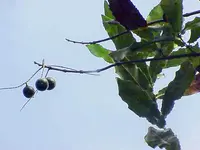
Compared with commercial macadamia species, this tree produces smaller nuts with a relatively thick, hard shell, so it is grown more often as an ornamental or genetic resource than as a high-yield nut crop.

Australian rainforest origin

The species is naturally restricted to warm, subtropical rainforests of eastern Australia, where it grows as an understorey to mid-canopy tree on well-drained volcanic or basalt-derived soils.

Botan icon

Did you know?

Macadamia ternifolia contributed important genetic material to modern macadamia breeding programs, where it has been crossed with Macadamia integrifolia and other species to improve nut characteristics, disease resistance, and adaptability in commercial orchards.

FAQs about Queensland Macadamia

Yes. The nuts are edible and commercially important, but only when fully mature and properly processed. Immature nuts and the raw kernel skin can cause digestive upset. Always discard any moldy or poorly stored nuts.

Grow Healthy Plants with Botan Care

Keep your plants happy and healthy with plant identification, disease detection, and easy care guidance.

Botan plant care app — identify plants on mobile

Explore More Plants