Structured canopy training
Begin shaping a single strong leader and 3–5 evenly spaced scaffold branches in the first 2–3 years, removing weak, crossing, or steeply upright shoots to create a stable, open canopy that supports heavy fruit clusters.

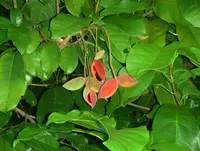
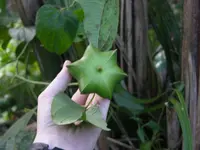
Seven Sisters' Fruit, Sterculia monosperma, is a tropical evergreen tree grown for its unusual star-shaped pods and glossy foliage. It is typically cultivated as a small ornamental tree or large shrub in warm climates, and sometimes as a container specimen in cooler regions.
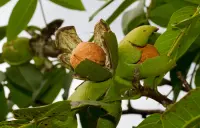
The leathery red pods split open to reveal shiny black seeds, giving the plant strong ornamental value when in season. In the wild, it occurs in southern China and parts of Southeast Asia, usually in warm, humid forests.
Its preference for stable warmth, good light, and evenly moist but well-drained soil means it can be moderately demanding, especially outside the tropics. Understanding how to care for Seven Sisters' Fruit helps prevent stress from cold, drought, or poor drainage.

Care Difficulty
Moderate Care

Light Preference
Partial Sun

Water Requirements
Moderate Water

Temperature Preference
Tropical / Frost Sensitive

Hardiness Zone
10–11

Soil Texture
Loamy, Sandy, Organic-rich

Soil pH
Acidic (5.5–6.5), Slightly acidic (6.5–7.0)

Soil Drainage
Moist but well-drained

Fertilization
Minimal (feed rarely)
Scan your plant to receive care tips personalized for your specific plant
Available on iOS and Android
This subtropical tree prefers bright, gentle light rather than harsh, all-day sun.
This species prefers evenly moist, well-drained soil and does not tolerate prolonged waterlogging.
This warm-climate tree grows best in stable, frost-free conditions.
This species benefits from moderately humid air but adapts to most home conditions.
Sterculia monosperma prefers deep, well-structured soil that drains freely yet retains some moisture.
This tree can be grown in large containers when space or climate limits in-ground planting.
Sterculia monosperma benefits from light, measured feeding rather than heavy fertilization.
Pruning Sterculia monosperma is mainly about safety and structure rather than frequent shaping.
This species is usually grown as a landscape tree, so management focuses on careful transplanting rather than frequent repotting.
Propagation of Sterculia monosperma is usually done from seed and is moderately slow but straightforward with warmth and patience.
Sterculia monosperma is frost-sensitive and needs protection in regions with cold winters.

Plant Health Check
Not sure what's wrong with your plant? Check your plant's health inside the app.
When the woody follicles split open, they reveal 3–5 shiny black seeds against a bright red interior, creating a strong visual contrast that attracts birds in its native subtropical forests.
The seeds are traditionally roasted and eaten as a snack in parts of southern China and Southeast Asia, where they are sometimes compared in flavor and use to chestnuts.
This species is widely planted as an ornamental shade and street tree in southern China, Hong Kong, Macau, and parts of Vietnam, valued for its distinctive fruit display and manageable medium tree size.

In Hong Kong, this tree is locally known as Chinese chestnut or seven sisters' fruit, and its showy scarlet pods with exposed black seeds are considered a seasonal visual marker of late summer to autumn in many urban parks and campuses.
Growth is moderate. Young trees usually add 20–40 cm per year in suitable outdoor conditions, slowing as they mature. Container-grown specimens grow more slowly due to root restriction and limited resources, even with good Sterculia monosperma care.
Keep your plants happy and healthy with plant identification, disease detection, and easy care guidance.