Deep field preparation
Before sowing, loosen the soil 20–30 cm deep and remove compacted layers so the taproot can penetrate fully, which improves drought resilience and overall stand stability when growing safflower.

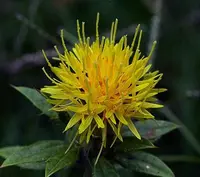
Safflower, Carthamus tinctorius, is an annual, thistle-like plant grown mainly for its seeds and oil. It forms upright, branched stems with spiny, narrow leaves and bright yellow to orange flower heads.
This species likely originated in parts of the Middle East and South Asia and is now cultivated in many dry, sunny regions worldwide. It tolerates heat and drought, which generally makes it easier to manage outdoors in suitable climates.
To care for safflower, provide full sun, well-drained soil, and avoid consistently wet conditions, since the roots are sensitive to prolonged moisture.

Care Difficulty
Easy Care

Light Preference
Full Sun

Water Requirements
Low Water

Temperature Preference
Warm Climate

Hardiness Zone
4–10

Soil Texture
Sandy, Loamy

Soil pH
Slightly acidic (6.5–7.0), Slightly alkaline (7.0–7.5)

Soil Drainage
Well-drained

Fertilization
Minimal (feed rarely)
Scan your plant to receive care tips personalized for your specific plant
Available on iOS and Android
Carthamus tinctorius thrives in strong, direct sun for compact growth and high flowering.
This deep-rooted annual prefers infrequent, deep watering and periods of surface drying.
This species suits warm, dry climates and copes better with heat than with cold.
Humidity is not a significant factor for Carthamus tinctorius, which thrives in dry air.
Carthamus tinctorius prefers lean, well-drained soil that does not stay wet.
This species can be grown in containers if the pot is deep and drainage-focused.
Carthamus tinctorius benefits from modest, balanced nutrition during its active growth period.
Pruning Carthamus tinctorius is mainly used to manage plant shape and extend flowering.
Carthamus tinctorius is usually grown as an annual field or garden plant, so transplanting focuses on young seedlings rather than long-term containers.
Propagation of Carthamus tinctorius is almost always done from seed rather than from cuttings or division.
In most climates Carthamus tinctorius is grown as a warm-season annual and needs little true winter care.

Plant Health Check
Not sure what's wrong with your plant? Check your plant's health inside the app.
This species was cultivated for its flower heads, which yield yellow and red dyes historically used to color textiles and food long before synthetic dyes existed.
Its seeds are unusually high in unsaturated oils, especially linoleic or oleic acid depending on cultivar, making them important for edible oil production and as an industrial drying oil.
The plant has deep taproots and often spiny leaves and bracts, adaptations that help it withstand arid, high-sun environments with low rainfall.

Archaeological findings show safflower remains in ancient Egyptian tombs, indicating that it was valued at least 3,500 years ago for dye and ceremonial use, and it is thought to have been one of the earliest oilseed crops domesticated in the Old World.
This is generally a fast-establishing annual, often reaching near full size within 12–16 weeks from sowing under warm, bright, open-field conditions. Cooler temperatures, compacted soil, or intense competition from weeds slow development and reduce final plant size.
Keep your plants happy and healthy with plant identification, disease detection, and easy care guidance.


_(49532732922)-2-200x133.webp)