sweetberry honeysuckle Care (Lonicera caerulea)

Also known as: deepblue honeysuckle, Honeyberry
sweetberry honeysuckle

About sweetberry honeysuckle

Sweetberry honeysuckle, Lonicera caerulea, is a cold-hardy deciduous shrub grown mainly for its early, edible blue berries. It forms a compact to medium-sized bush with opposite leaves and small, pale yellow flowers in spring.

This species is native to cool regions of northern Asia, Europe, and North America, where it grows in forest edges and open, well-drained sites. Plants are generally robust and long-lived, which makes it relatively straightforward to care for sweetberry honeysuckle in suitable climates.

It tolerates low temperatures very well, prefers full sun to light shade, and grows best in moist, well-drained, slightly acidic to neutral soil.

Main Plant Requirements

Care Difficulty

Easy Care

Light Preference

Full Sun

Water Requirements

Moderate Water

Temperature Preference

Cold Hardy

Hardiness Zone

2–7

Soil Texture

Sandy, Loamy, Clay

Soil pH

Acidic (5.5–6.5), Slightly acidic (6.5–7.0)

Soil Drainage

Moist but well-drained

Fertilization

Minimal (feed rarely)

Get Personalized Care Plan

Scan your plant to receive care tips personalized for your specific plant

Available on iOS and Android

How to Care for the sweetberry honeysuckle

This shrub fruits best with strong light but tolerates some shade, especially in cooler climates.

  • Aim for 6–8 hours of direct sun daily, with morning sun and some light afternoon shade ideal in hot summer regions.
  • Plant sweetberry honeysuckle where it receives at least 4 hours of sun; in heavier shade flowering and berry production drop noticeably.
  • In cooler or northern areas it can handle full sun all day, but in very hot zones protect it from harsh late-afternoon sun to prevent leaf scorch.

This species prefers consistently moist, cool soil but not waterlogged conditions.

  • Water when the top 3–5 cm of soil feels dry, soaking the root zone deeply rather than giving light, frequent splashes.
  • During the first 1–2 growing seasons, monitor closely in dry spells; drooping new shoots suggest thirst, while yellowing leaves and soft stems can indicate overwatering.
  • Grow Lonicera caerulea in well-drained soil; improve heavy clay with organic matter so water drains within a few hours and roots are not sitting in puddles.

This hardy shrub is adapted to cool climates and tolerates substantial winter cold.

  • Active growth and flowering are strongest around 55–70°F (13–21°C), with good performance in cool springs and mild summers.
  • Established plants usually tolerate winter lows down to about -40°F (-40°C), making them suitable for very cold regions with reliable snow cover.
  • Summer heat above 86°F (30°C) can slow growth and stress plants, so in hot climates combine cooler microclimates with mulch to keep roots cooler.

Humidity is rarely a concern for this cold-climate shrub.

This shrub prefers deep, moisture-retentive but free-draining ground for steady growth and fruiting.

  • Use a loamy or sandy-loam structure enriched with 20–30% compost to support root development.
  • Aim for slightly acidic to neutral pH, around 6.0–7.0, as Lonicera caerulea dislikes highly alkaline sites.
  • Improve drainage and aeration in heavy clay by working in coarse sand or fine gravel plus organic matter.
  • Avoid compacted, boggy, or very shallow soils, which restrict roots and increase root-rot risk.

This species can be grown in containers if the pot is large and stable enough for its shrub habit.

  • Choose a container at least 40–50 cm deep to allow the naturally spreading root system to anchor well.
  • Select a heavy or weighted pot so the top growth and fruit load do not tip the container in wind.
  • Raise the container slightly on pot feet or bricks so drainage holes stay clear and water exits quickly.

This shrub fruits best with light, balanced feeding but tolerates lean soil.

  • Apply a balanced slow-release granular fertilizer (around 10-10-10) once in early spring as new growth begins.
  • In rich garden soil, use a thin layer of compost around the root zone instead of repeated synthetic feeding.
  • Use half-strength liquid balanced fertilizer for container-grown sweetberry honeysuckle every 4–6 weeks during active growth.
  • Stop feeding in late summer so shoots harden before winter and avoid applying any fertilizer during dormancy.

Pruning supports productive, well-shaped Lonicera caerulea shrubs and maintains good light penetration.

  • Carry out main pruning in late winter to very early spring while the plant is still dormant.
  • Remove dead, diseased, or crossing stems first, then thin crowded interior shoots to improve airflow.
  • Shorten or remove the oldest, weakest stems at the base to encourage strong new fruiting wood.
  • Use clean, sharp bypass pruners and make cuts just above outward-facing buds to shape the canopy.

This species is usually grown in the ground, so focus on correct transplanting rather than frequent repotting.

  • Transplant in early spring or fall when temperatures are mild and soil is workable, avoiding hot, dry periods.
  • Move shrubs that show poor vigor, are shaded out, or have outgrown their space, keeping as much root ball intact as possible.
  • Water deeply before and after transplanting, then maintain even moisture for several weeks to reduce root stress.
  • For container plants with circling roots or slow growth, shift to a pot 1–2 in wider, loosen roots gently, and use well-drained soil.

New Lonicera caerulea plants are commonly produced from cuttings, layering, or seeds for breeding work.

  • Take 10–15 cm softwood cuttings in late spring to early summer and root them in a moist, free-draining medium under high humidity.
  • Use hardwood cuttings in late fall, inserting pencil-thick pieces in sandy soil outdoors or in cold frames.
  • Pin low, flexible stems to the ground for simple layering in spring, then sever and transplant once roots form.
  • Sow stratified seeds in trays after 60–90 days of cold, moist treatment to improve germination.

This shrub is very cold hardy and generally needs minimal winter care in most temperate climates.

  • Tolerates deep frost, so in-ground plants rarely need stem wrapping or covers in USDA zones suited to the species.
  • Apply a 5–8 cm mulch layer over the root zone in late fall to moderate soil temperature and reduce heaving.
  • Reduce watering for container plants in winter, but prevent the root ball from drying out completely during freezes.
  • In very cold or exposed sites, place containers against a sheltered wall or sink pots into the ground for extra insulation.

Care Tips

Optimize Pollination

Plant at least 2 different compatible cultivars within 1–3 m and avoid solid hedges or walls directly between them to ensure strong cross‑pollination and heavier berry set when growing sweetberry honeysuckle.

Mulch For Cool Roots

Apply a 5–8 cm layer of organic mulch over the root zone each spring, keeping it a few cm away from stems, to keep the shallow roots cool, conserve moisture, and reduce weed competition.

Simple Wind Protection

Site plants where they receive some shelter from strong prevailing winds, such as a fence or shrub line a few meters away, to reduce flower loss and fruit drop during stormy spring weather.

Support Heavy Branches

Install low, unobtrusive stakes or a simple ring support around young bushes in windy or exposed sites so that fruit‑laden branches do not bend or snap as the crop gets heavier.

Timed Bird Exclusion

Drape bird netting over plants only after fruit starts turning blue and secure it away from the foliage to protect the crop while still allowing pollinators normal access earlier in the season.

Common Pests and Diseases

Aphids

These insects cluster on young shoots and leaf undersides, sucking sap and causing curling, distortion, and sticky honeydew that can lead to sooty mold.

Solution

Spray shoots and leaves with a strong stream of water to dislodge colonies, then treat remaining insects with insecticidal soap or a ready-to-use neem oil spray, repeating every 5–7 days until populations drop. Encourage natural predators such as lady beetles and avoid high-nitrogen overfertilization, which promotes soft, aphid-prone growth.

Honeysuckle leafroller

This pest is the larval stage of a moth that rolls and ties leaves together with silk while feeding inside, leading to browned, skeletonized foliage and reduced vigor on young bushes.

Solution

Prune out and destroy rolled or webbed leaves as soon as they are noticed to physically remove larvae. In heavier infestations, use a Bacillus thuringiensis (Bt) product targeting caterpillars, applying it to young foliage in early spring when new leaves are expanding.

Powdery mildew

This disease causes a white to gray powdery coating on leaves, often first visible on shaded inner foliage, leading to premature yellowing and leaf drop in humid, stagnant conditions.

Solution

Thin crowded stems and nearby vegetation to improve air movement and avoid overhead watering late in the day so leaves dry quickly. If symptoms are recurring, apply a labeled fungicidal spray such as potassium bicarbonate or sulfur at the first sign of infection and remove heavily affected leaves to limit spread.

Leaf spot

Symptoms include small brown or purple spots on leaves that may enlarge and sometimes develop pale centers, causing premature leaf shed in wet seasons.

Solution

Collect and dispose of fallen leaves and prune out heavily spotted foliage to reduce the source of infection. During prolonged wet weather, a copper-based fungicide or other labeled foliar fungicide can be applied according to label directions, focusing on coverage of new growth.

Spider mites

These pests are tiny sap-feeding arachnids that cause fine stippling, dull foliage, and delicate webbing, most often during hot, dry weather on stressed plants.

Solution

Increase humidity around plants with regular hose rinses and wash foliage thoroughly, especially undersides, to physically remove mites. For persistent problems, use insecticidal soap or horticultural oil sprays at 7–10 day intervals, applying in the early morning or evening to avoid leaf scorch and supporting overall Lonicera caerulea care by reducing drought stress.

Interesting Facts

Naturally frost-hardy flowers

The flowers can be pollinated and set fruit at near-freezing spring temperatures, which allows reliable cropping in regions where late frosts damage most other fruit blossoms.

Very early fruiting season

Berries ripen in late spring to early summer, often weeks before strawberries and blueberries, making this one of the earliest temperate fruit shrubs to harvest outdoors.

High anthocyanin content

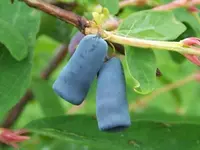
The dark blue berries are rich in anthocyanins, the pigments also responsible for the color of blueberries and blackcurrants, and these compounds give the fruit its intense blue to purple skin and juice.

Botan icon

Did you know?

This species has a naturally wide native range across cold regions of the Northern Hemisphere, from Eastern Europe through Siberia to northern Japan, which is why plant breeders in Russia and Japan have developed many different cultivated forms adapted to very low winter temperatures.

FAQs about sweetberry honeysuckle

Yes, the berries of this species are edible and often compared to blueberries in flavor. They are rich in vitamin C and antioxidants. Only consume ripe, blue fruits and avoid eating leaves, stems, or unripe berries.

Grow Healthy Plants with Botan Care

Keep your plants happy and healthy with plant identification, disease detection, and easy care guidance.

Botan plant care app — identify plants on mobile

Explore More Plants