Mulch With Pine
Apply a 5–8 cm layer of pine needles or shredded pine bark around the root zone to conserve moisture, suppress weeds, and help maintain the acidic conditions this shrub prefers.

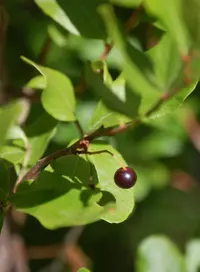
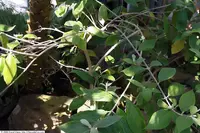
Black huckleberry, Gaylussacia baccata, is a low, bushy shrub in the heath family, related to blueberries. It forms dense clumps with small, oval leaves and produces bell-shaped flowers followed by dark, edible berries.
This species is native to eastern North America, where it grows in open woodlands, sandy barrens, and rocky slopes. It is adapted to acidic, well-drained soils and often thrives in nutrient-poor sites.
Black huckleberry is generally slow-growing but long-lived, and it spreads gradually by underground stems. Once established, it tolerates drought fairly well, which makes it relatively low-maintenance if sited correctly.
For gardeners learning how to care for black huckleberry, the key is to provide sun to light shade, consistent but not waterlogged moisture, and mildly to strongly acidic soil.

Care Difficulty
Moderate Care

Light Preference
Partial Sun

Water Requirements
Moderate Water

Temperature Preference
Cold Hardy

Hardiness Zone
3–6

Soil Texture
Sandy, Loamy, Peaty

Soil pH
Strongly acidic (4.5–5.5), Acidic (5.5–6.5)

Soil Drainage
Moist but well-drained

Fertilization
Minimal (feed rarely)
Scan your plant to receive care tips personalized for your specific plant
Available on iOS and Android
Gaylussacia baccata grows best in bright outdoor conditions that mimic open woodland edges.
Gaylussacia baccata prefers steadily moist, acidic soil that never stays waterlogged.
This shrub is naturally cold hardy and handles a wide range of outdoor temperatures.
This species tolerates a wide humidity range and usually does not need special humidity management outdoors.
Gaylussacia baccata prefers acidic, well-drained yet moisture-retentive soil similar to its native woodland and heath habitats.
This shrub can be grown in containers, but it performs best when the pot closely replicates its cool, acidic woodland soil conditions.
Gaylussacia baccata is a low-input native shrub that benefits from modest feeding on poor soils.
Gaylussacia baccata needs minimal pruning, mainly to maintain a healthy, open shrub.
This shrub is usually grown in the ground; transplanting matters more than container repotting.
Gaylussacia baccata is commonly propagated for restoration and edible landscapes using several methods.
This shrub is cold hardy in much of its native range and usually needs little winter care once established.

Plant Health Check
Not sure what's wrong with your plant? Check your plant's health inside the app.
The leaves of this species often show tiny black resin dots when held up to the light, a trait that helps distinguish it from true blueberries (Vaccinium species).
This shrub strongly depends on mycorrhizal fungi in its roots, which help it obtain nutrients from the naturally acidic, nutrient-poor soils of pine barrens and heathlands.
Its dark berries are a key summer food for many birds, black bears, foxes, and small mammals, making it an important component of eastern North American forest and barrens food webs.

Black huckleberry often forms extensive clonal colonies through underground rhizomes, so what looks like a dense thicket can be a single genetic individual spreading across many meters of forest floor.
The berries are edible and commonly used fresh, dried, or in jams and baked goods. Flavor is mildly sweet to tart. Only harvest ripe, dark fruits from unsprayed plants and avoid eating foliage or woody parts.
Keep your plants happy and healthy with plant identification, disease detection, and easy care guidance.