Install branch support
Place low, sturdy stakes or a simple wire ring around young shrubs in late winter so developing fruiting branches stay off the ground, reducing fruit rot and making harvest easier.

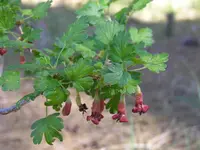
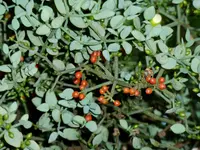
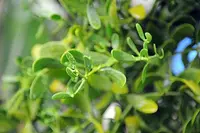
Sierra gooseberry, Ribes roezlii, is a deciduous shrub native to the mountains of California and neighboring regions of the western United States. It typically forms a low, spreading mound with stiff, spiny branches and lobed leaves that drop in winter.
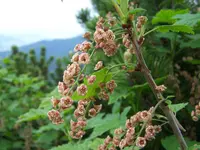
In spring it produces small, hanging reddish flowers, followed by bristly, round berries that often attract wildlife. The plant is adapted to dry, rocky slopes and open woodlands, so it tends to be drought-tolerant once established.
Because it is hardy and long-lived but has thorns and a somewhat open, rugged form, it suits naturalistic or habitat-style plantings better than formal beds. Gardeners who care for Sierra gooseberry usually focus on providing sun, good drainage, and minimal summer water.

Care Difficulty
Moderate Care

Light Preference
Full Sun

Water Requirements
Moderate Water

Temperature Preference
Cold Hardy

Hardiness Zone
5–8

Soil Texture
Sandy, Loamy, Rocky

Soil pH
Acidic (5.5–6.5), Slightly acidic (6.5–7.0)

Soil Drainage
Well-drained

Fertilization
Minimal (feed rarely)
Scan your plant to receive care tips personalized for your specific plant
Available on iOS and Android
This shrub prefers bright sites with some protection from intense afternoon sun.
This species prefers evenly moist but not saturated soil, especially during establishment.
This shrub is naturally adapted to cool to warm temperate climates with cold winters.
Ribes roezlii handles relatively dry air but grows best with moderate outdoor humidity.
Ribes roezlii prefers well-structured, slightly acidic to neutral mineral soil that drains freely but does not dry out too fast.
This species can be grown in containers outdoors if the pot provides enough root volume and stable moisture.
This native shrub, including Sierra gooseberry, usually grows well in lean soils and needs only light fertilization in cultivation.
Ribes roezlii responds well to light, targeted pruning that maintains an open, productive framework.
This shrub is typically grown in the ground, so focus on careful transplanting rather than frequent repotting.
Ribes roezlii is commonly propagated by semi-hardwood cuttings or seed under the right seasonal conditions.
This species is cold hardy in much of its native range and generally needs minimal winter care in the ground.

Plant Health Check
Not sure what's wrong with your plant? Check your plant's health inside the app.
This gooseberry is native almost entirely to the mountains of California and adjacent Oregon and Nevada, where it is especially common in dry, open conifer forests and rocky slopes between roughly 1,000–3,000 m elevation.
The branches and fruiting calyces carry stiff spines that help protect the shrub from browsing animals, a trait that makes it one of the more heavily armed wild gooseberries in western North America.
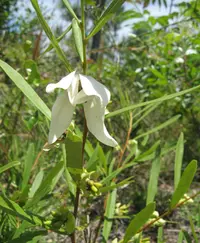
Its pendant, tubular red to purple flowers have reflexed (bent-back) petals and protruding stamens, an arrangement that makes nectar and pollen accessible to hummingbirds and certain long-tongued insects in early spring.

This species can naturally hybridize with some closely related western gooseberries, and such hybrids have been used by plant breeders as a genetic bridge to transfer disease resistance and drought tolerance into cultivated gooseberry and currant lines.
The berries are edible when fully ripe and are often tart to slightly sweet, suitable for fresh eating, jams, or jelly. Avoid unripe fruits, which can be very sour and may cause mild stomach discomfort in some people.
Keep your plants happy and healthy with plant identification, disease detection, and easy care guidance.