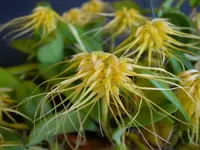
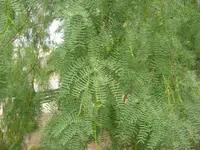
Ming Fern Care (Asparagus retrofractus)

Also known as: Pom Pom Asparagus Fern, Zigzag Shrub, Zigzag Asparagus, Ming asparagus, Pom pom asparagus
Ming Fern

About Ming Fern

Ming fern, Asparagus retrofractus, is an evergreen ornamental plant in the asparagus family, not a true fern. It forms airy, fountain-like clumps of fine, needle-like cladodes that give a soft, clouded look from a distance. Woody, sometimes thorny stems create a shrubby, slightly arching habit.

This species is native to South Africa and adapts well to containers and indoor settings in many climates. It is generally considered sturdy and forgiving, which makes it easier to care for Ming Fern than many delicate foliage plants.

It tolerates a range of household conditions but does best with bright, indirect light, evenly moist but not soggy soil, and good drainage.

Main Plant Requirements

Care Difficulty

Easy Care

Light Preference

Partial Shade

Water Requirements

Moderate Water

Temperature Preference

Warm Climate

Hardiness Zone

9–11

Soil Texture

Sandy, Loamy, Organic-rich

Soil pH

Acidic (5.5–6.5), Slightly acidic (6.5–7.0)

Soil Drainage

Well-drained

Fertilization

Light (every 4–6 weeks)

Get Personalized Care Plan

Scan your plant to receive care tips personalized for your specific plant

Available on iOS and Android

How to Care for the Ming Fern

Asparagus retrofractus grows best in bright, indirect light that mimics lightly dappled sun.

  • Provide 4–6 hours of bright, filtered light each day, such as under a shade tree or on an east-facing patio with gentle morning sun.
  • Allow light partial shade, especially in hot regions; Ming Fern foliage may yellow or scorch in harsh midday or afternoon sun without protection.
  • In summer, protect from reflected heat and intense sun; in winter, ensure it still receives several hours of bright light to avoid sparse, stretched growth.

This species prefers consistent but moderate moisture with brief drying between waterings.

  • Water when the top 2–4 cm of soil feels dry, soaking the root zone thoroughly, then allow excess to drain away fully.
  • Use well-drained soil or a raised bed; soggy conditions cause yellowing, soft stems, and possible root rot, while very dry soil leads to needle-like cladodes browning and drop.
  • Reduce watering in cooler seasons when growth slows, but do not let the soil stay bone dry for long periods around established root systems.

This plant grows best in warm, mild conditions without frost or extreme heat stress.

  • Aim for daytime temperatures around 65–80°F (18–27°C) for steady growth, with slightly cooler nights tolerated.
  • Protect from frost; growth is damaged around 30–32°F (-1–0°C), so cover plants or move containers if a freeze is forecast.
  • In hot summers above 90°F (32°C), provide partial shade and mulch the root area to keep soil cooler and reduce heat stress.

This species prefers moderate humidity and copes fairly well with typical indoor air.

  • Aim for 40–60% humidity to keep Ming Fern foliage fuller and reduce browning at the tips.
  • Watch for crispy cladodes, yellowing, and premature needle drop as signs of air that is too dry.
  • Increase humidity by grouping plants, placing the pot on a pebble tray with water below the base, or running a nearby humidifier.

This species prefers a loose, fast-draining, slightly sandy mix that does not stay wet for long.

  • Use a mix of roughly 50% all-purpose potting mix, 25% coarse sand, and 25% perlite or fine bark to balance moisture retention and drainage.
  • Aim for slightly acidic to neutral pH around 6.0–7.0, which supports nutrient availability for Asparagus retrofractus.
  • Improve aeration by adding chunky materials like pine bark or pumice so roots receive enough oxygen and resist rot.
  • Avoid heavy clay-based mixes, compacted soil, or pots without drainage, since waterlogging quickly damages the fine root system.

This species is well suited to container growing due to its fibrous root system and arching stems.

  • Choose a wide, stable pot to counterbalance the arching, sometimes top-heavy foliage and prevent tipping in wind or when moved.
  • Select a container material that matches your climate, such as terracotta to help dry the mix faster in humid or cool conditions.
  • Provide a deep enough pot to accommodate vigorous root growth, leaving room for an airy, chunky mix that maintains structure over time.

Asparagus retrofractus benefits from moderate, consistent feeding during its active growing season for dense, healthy foliage.

  • Use a balanced NPK liquid fertilizer at 1/2 strength every 4–6 weeks in spring and summer.
  • Alternatively, apply a slow-release fertilizer or a thin layer of finished compost at the start of spring.
  • Pause feeding or reduce to 1 light application in late fall and winter, when growth slows.
  • Water before and after feeding Ming Fern to reduce the risk of root burn and salt buildup.

Pruning Asparagus retrofractus helps manage size, encourage bushier growth, and maintain a tidy, safe plant.

  • Best time is late winter to early spring, before strong new growth starts.
  • Remove dead, yellowing, or damaged stems at the base with clean, sharp pruners.
  • Thin out crowded, crossing, or very long stems to open the plant and improve light penetration.
  • Wear gloves when cutting to avoid skin irritation from the fine, stiff cladodes and thorns.

Container-grown Asparagus retrofractus prefers slightly tight quarters but benefits from occasional repotting or transplanting.

  • Check for roots circling the pot, pushing through drainage holes, or noticeably slowed growth as signs it needs more space.
  • Plan to repot every 2–3 years in spring, moving to a pot 2–5 cm wider with free-draining, quality potting mix.
  • Gently loosen the root ball and trim only heavily tangled or dead roots to limit stress.
  • Water thoroughly after repotting, then keep in bright, indirect light for 7–10 days while the plant recovers.

Asparagus retrofractus is most reliably propagated by division, with seeds used when division material is limited.

  • Divide mature clumps in spring, lifting the root mass and separating sections with several stems and healthy roots.
  • Replant divisions into moist, well-drained mix, keeping crowns at the same depth, and maintain steady, mild temperatures around 65–75°F.
  • For seeds, clean ripe berries, then sow fresh seed in a light, sterile medium and keep lightly moist.
  • Provide bright, indirect light and stable warmth to support rooting or germination, avoiding waterlogged conditions.

Asparagus retrofractus tolerates mild winters but needs protection from hard frost and prolonged freezing.

  • In-ground plants in cooler zones benefit from 5–8 cm of mulch over the root zone in late fall.
  • In areas below about 25°F, grow in containers so plants can be moved indoors or to a sheltered porch.
  • Indoors, keep above 50°F with bright, indirect light and slightly reduced watering through winter.

Care Tips

Use wide containers

Choose a low, wide pot rather than a deep, narrow one so the plant’s fibrous roots and basal shoots have space to spread, which keeps the plant more stable and reduces the risk of it tipping over as top growth becomes bushy.


Control arching stems

Guide long, arching stems onto a hoop, trellis, or discreet wall hooks while still flexible to prevent breakage and to create a controlled, airy outline that is easier to rotate and move for maintenance.

Segment heavy clumps

Every 2–3 years, lift the plant from its pot and divide congested root masses into 2–3 sections with a clean saw or knife, then repot individually to refresh vigor and manage overall size when growing Ming Fern in limited indoor space.

Rinse foliage periodically

Every 4–6 weeks, take the plant to a sink or shower and gently rinse the foliage and stems with lukewarm water to remove dust and dislodge early spider mites or scale before they build into a noticeable infestation.

Monitor thorny bases

When repotting or moving the plant, use gloves and check the woody, thorny bases of stems for any soft, rotting tissue, trimming these areas back to firm, healthy wood to reduce disease risk and encourage new, clean growth.

Common Pests and Diseases

Spider mites

This pest thrives on feathery cladodes, causing fine speckling, dull foliage, and delicate webbing, especially in warm, dry rooms. Symptoms include gradual yellowing and drop of the fine branchlets.

Solution

Rinse the plant thoroughly in the shower or with a hose, focusing on the undersides of cladodes, then allow it to dry in bright, indirect light. Increase humidity, reduce heat stress, and use a targeted miticide or insecticidal soap spray in repeated applications, isolating the plant until the infestation is controlled.

Scale insects

These insects appear as small, tan to brown bumps on stems and branchlets, often along joints. Symptoms include sticky honeydew, sooty mold growth, and general decline or yellowing of the plant.

Solution

Gently scrape or wipe adults from stems with a cotton swab dipped in isopropyl alcohol, then wash the plant with lukewarm water. Follow with several treatments of horticultural oil or insecticidal soap at 7–10 day intervals, and keep the plant isolated until new growth is clean, following general Asparagus retrofractus plant care guidelines to avoid stress that encourages reinfestation.

Mealybugs

This pest forms white, cottony clusters in stem crotches and along the softer branchlets. Symptoms include distorted new growth, sticky residue, and poor vigor over time.

Solution

Isolate the plant and remove visible clusters with cotton swabs dipped in isopropyl alcohol, then rinse the foliage thoroughly. Treat remaining insects with insecticidal soap or a light horticultural oil spray, repeating every 7–10 days and checking especially around the base of stems and in dense interior foliage.

Fungal needle blight

This disease affects the fine cladodes, leading to scattered yellowing that turns brown, then sections of feathery growth die back from the tips. Symptoms include thin or patchy foliage on one side of the plant, especially in low-light, stagnant air conditions.

Solution

Cut out and discard affected stems back to healthy green tissue, sterilizing pruners between cuts. Improve air circulation, avoid overhead watering, keep the plant in bright, indirect light, and allow the surface of the potting mix to dry slightly between waterings; in persistent cases, a labeled ornamental fungicide can be used according to directions.

Interesting Facts

Climbing shrub habit

This species is not a true fern but a woody, scrambling asparagus with many long, arching branches that can climb into surrounding vegetation in its native South African habitat.

Spine-protected stems

The green, photosynthetic stems carry small but sharp spines at the nodes, which help protect the plant from herbivores and provide support as it leans on nearby plants.

False leaf structures

What look like soft, needle-like leaves are actually cladodes, which are modified stem segments that take over the role of leaves and help reduce water loss compared to broad foliage.

Botan icon

Did you know?

In parts of South Africa where it is native, this species forms dense, bird-attracting thickets because its small red berries are an important seasonal food source for fruit-eating birds, which then spread its seeds over large distances.

FAQs about Ming Fern

This species often flowers sparsely indoors. Lack of blooms is usually due to insufficient maturity, unstable temperatures, or missed rest periods in cooler months. Outdoor or patio conditions with seasonal temperature shifts generally encourage more reliable flowering.

Grow Healthy Plants with Botan Care

Keep your plants happy and healthy with plant identification, disease detection, and easy care guidance.

Botan plant care app — identify plants on mobile

Explore More Plants