Early framework pruning
In the first 2–3 years, lightly tip-prune new shoots after flowering to create 3–5 main branches, which helps the plant develop a low, stable framework that resists wind damage as it matures.

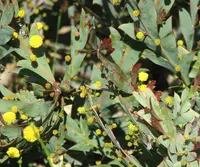
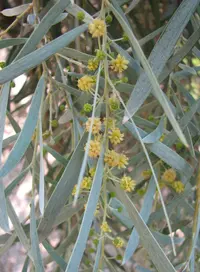
Flat wattle (Acacia glaucoptera) is a compact Australian shrub known for its unusual flattened, wing-like stems instead of typical leaves. New growth often shows bronzy or reddish tones that mature to blue-green.
The plant usually forms a low, spreading mound, making it useful as a feature shrub or groundcover in mild, dry climates. It produces small, golden, ball-shaped flowers along the stem wings, adding seasonal color.
This species comes from southwestern Western Australia, where it grows in well-drained, often sandy or gravelly soils. It generally prefers full sun, low to moderate moisture, and dislikes heavy, waterlogged ground, which influences how to care for Flat Wattle.

Care Difficulty
Moderate Care

Light Preference
Full Sun

Water Requirements
Low Water

Temperature Preference
Warm Climate

Hardiness Zone
9–11

Soil Texture
Sandy, Loamy, Rocky

Soil pH
Acidic (5.5–6.5), Slightly acidic (6.5–7.0)

Soil Drainage
Well-drained

Fertilization
Minimal (feed rarely)
Scan your plant to receive care tips personalized for your specific plant
Available on iOS and Android
This Australian shrub prefers bright, open conditions that mimic its native heathlands.
This species prefers infrequent, deep watering rather than constant moisture.
This shrub thrives in mild, Mediterranean-type climates with cool wet winters and warm dry summers.
This species tolerates a wide humidity range and rarely needs special humidity management indoors or outdoors.
Acacia glaucoptera prefers lean, sharply drained soil that mimics its native, sandy habitat.
This species adapts well to container growing when provided with excellent drainage and a stable pot.
Acacia glaucoptera is adapted to lean soils and needs only light, careful feeding in cultivation.
Thoughtful pruning helps maintain the compact, architectural form of Acacia glaucoptera and supports flowering wood.
This species is usually grown in the ground, but young or potted plants may need occasional transplanting to maintain healthy root growth.
Propagation of Acacia glaucoptera is usually done from treated seed or semi-hardwood cuttings under controlled conditions.
This Western Australian shrub prefers mild winters and benefits from simple measures in colder climates.

Plant Health Check
Not sure what's wrong with your plant? Check your plant's health inside the app.
What looks like leaves on this species are actually flattened stems called phyllodes, which carry out photosynthesis and give the plant its distinctive zig-zag, winged appearance.
This species typically flowers in late winter to early spring in its native Southwestern Australia, producing spherical, golden flower heads along the stems when many surrounding plants are still relatively dormant.
In its natural habitat, this species is adapted to fire-prone heath and woodland, with seeds that can be stimulated to germinate by heat or smoke after bushfires.

Acacia glaucoptera has a naturally low, spreading, almost ground-hugging growth form in the wild, which helps it resist wind damage and makes it function as a stabilizing shrub on exposed sandy or gravelly soils in its native Western Australian range.
Blooming is reduced by insufficient light, heavy or constantly wet soil, excessive nitrogen fertilizer, or pruning at the wrong time, which removes flower buds. Give it strong sun, free‑draining soil, low phosphorus, and prune lightly just after flowering.
Keep your plants happy and healthy with plant identification, disease detection, and easy care guidance.